


Antilla · Caribbean series · Rum
You can’t separate rum from the culture and life of Barbados.
Sugar cane, molasses, stills, casks, exports. But also villages, rum shops, families, workers, transmission and identity. In Barbados, rum goes far beyond what is in the bottle. The island presents itself as one of its historic cradles and remains a major producer: in 2024, it exported a little over 10 million litres of rum for US$40.2 million, mainly to the United States, France, Canada and the United Kingdom.
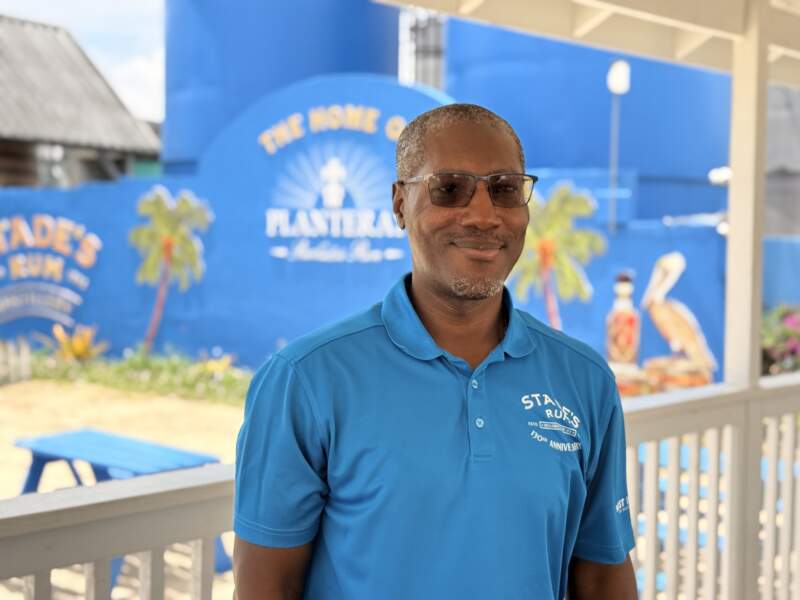
To understand this world from the inside, we met Don Benn at the West Indies Rum Distillery (WIRD) in Brighton, near Bridgetown. An engineer by training, he joined the company in 1998 and is today Operations Manager and Master Distiller. He speaks about technique with precision, but keeps coming back to something else: people, history, Barbadian culture and the place rum has yet to win in the world.
When you talk about rum today, you can feel that it is deeply part of Barbadian life. What memories of it do you keep from your childhood?
I grew up in a village, and in Barbados villages are very close-knit. Everyone knows everyone. On Sundays, families would get up, dress to go to church, then come home to prepare lunch.
Along the way, sometimes over just a few hundred metres, you might walk past several small shops. And almost all of them sold rum.
The rum shop was truly part of the village. But you shouldn’t picture it only as a place where people came to drink. It was a shop, a meeting place, almost a rallying point. You bought milk there, a few provisions, whatever you needed for the house. You could walk past when the door seemed closed, knock on the side, and someone would come and open up. And sometimes you’d be told: “Take what you need, you’ll pay tomorrow.”
That was the closeness. People knew one another, trusted one another, exchanged the news. Some sat outside, chatting, playing dominoes, joking. When I think back on it, the rum shop was almost part of the village’s extended family.
Of course, our parents also reminded us that rum had to be drunk in moderation. Passing certain men sitting with their glass, they might tell us: “You see, you have to be careful.” It was their way of teaching us responsibility.
But as a child, I didn’t yet see everything rum represented. I only saw those little shops, the people gathering, the conversations, the dominoes, village life.
And certainly not that one day rum would become my profession.
It was only much later that I understood it had been there from the start, in the landscape of my childhood, in the habits, in the encounters and in a part of Barbados’s memory.
And yet you have been here for nearly thirty years. How does one become a Master Distiller when, to begin with, rum was not at all your intended path?
I’m a mechanical engineer by training. I studied for four years in England, with training in management as well. When I came back to Barbados, I still wasn’t quite sure which direction to take. I had sent applications both here and in England.
The distillery called me for an interview on a Thursday. On the Friday, they phoned: “Can you start on Monday?” I accepted.
On the Monday morning, I arrived wearing a tie. It was the first and the last time! I think everyone was wondering a little what I was doing there. (Laughs.)
I started as Assistant Production Manager. Very quickly, I wanted to understand what was really happening behind each stage. I spent a lot of time in the distillery, watching the fermentation, the stills, the processes, looking for why something worked, or on the contrary didn’t.
About five months after I arrived, the production manager left and I was given more responsibility. I had to learn very fast, but above all to learn from those who were already there, some of them for far longer than me. One of them was Henderson “Digger” Skinner, who would eventually retire after 45 years at Stade’s West Indies Rum Distillery. Before him, his father had distilled there for 47 years. Between them, that represents 92 years of knowledge about making Barbadian rum, passed down through two generations.
Then the responsibilities widened naturally: engineering, maintenance, investment, the warehouses, ageing, blending, then bottling.
So I didn’t become Master Distiller overnight. It was built up over time, learning the craft in the field, step by step.
At what point did you understand that your work here went beyond the purely technical side?
After I arrived at the distillery.
At first, I looked at everything with my engineer’s eyes. A machine breaks down, why? How do you repair it? How do you improve the process? That was my world.
Then, little by little, I began to see what lay behind the machines. All that sugar cane I had seen since childhood suddenly took on another meaning. Cane becomes sugar, sugar produces molasses, and that molasses becomes rum.
And you then understand that you are working with something that has accompanied Barbados for centuries, something that is deeply woven into its culture, its identity and its history.
From then on, my job was no longer only an engineer’s job. It also touched on history, on culture, on part of who we are. Here, rum is not simply a product that you make. It belongs to the life of the island.
But this very Barbadian story now produces a rum that travels enormously. Can Barbados absorb what it produces?
No, of course not. We are a small island, with a limited population, so naturally not all of the rum produced here is consumed locally. Barbadians have a strong relationship with rum, whether through culture, tradition or everyday life, but tastes are varied, as they are anywhere. So a large part of our production naturally goes to export. In a way, that is part of what makes Barbadian rum so special: it is deeply rooted here, but it travels all over the world, carrying a little of Barbados with it.
In 2024, the island exported a little over 10 million litres of rum and tafia, mainly to the United States, but also to markets such as France, Canada and the United Kingdom.
We are a small country, but our rum has an international reach and appeal.
You work at the Stade’s West Indies Rum Distillery. What weight does SWIRD really represent in Barbados’s rum industry?
SWIRD is one of the most important distilleries in Barbados and the island’s leading contributor to rum exports. It is also one of the most versatile, producing a wide range of rum styles for both local and international markets.
But its importance is not measured in volumes alone. Since it was established more than 130 years ago, the distillery has played a very particular role in the Barbadian rum industry. When another distillery ran into difficulty, following a technical problem, a production stoppage or even a fire, its brands still had to be supplied. It could then turn to SWIRD and buy rum produced here.
That is one reason why the Stade’s West Indies Rum Distillery has sometimes been described as the backbone of the Barbadian rum industry. For much of its history, our business has not only consisted of producing our own rums, but also of producing for other players on the island who value our expertise and the quality of the rums we make.
This ability to supply large volumes, while crafting very different rum profiles, explains the particular place SWIRD still holds today in the Barbadian rum landscape.
And where does Stade’s fit in all this? Because one could easily confuse the distillery and the brand.
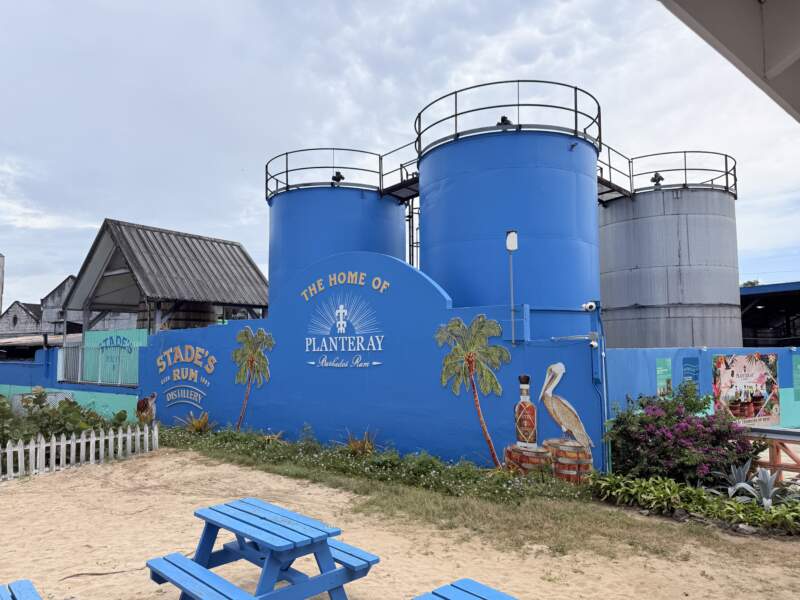
The official name of the distillery is Stade’s West Indies Rum Distillery, named after its founder, George Stade, who established it in 1893.
For a very long time, Stade’s was more a signature than a brand in its own right as we know it today. You might, for example, find a bottle marketed under another name, with just a more discreet mention indicating that the rum had been produced by Stade’s. That mention carried real weight: having a rum produced at Stade’s was seen as a mark of quality, a sign of the distillery’s expertise and the standards behind the liquid.
In recent years, we have chosen to bring this name back to the forefront. It gives us a way to tell the story of the distillery through its own history, reconnecting with its founder, George Stade, and the spirit of innovation that shaped it from the beginning. Above all, it links the rums we make today to more than 130 years of Barbadian distilling history.
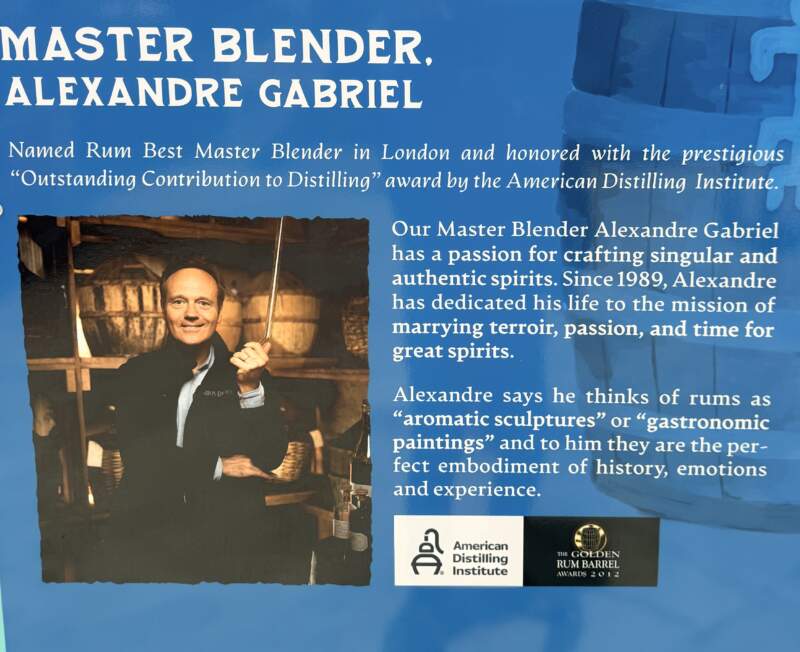
In 2017, Alexandre Gabriel, owner of Maison Ferrand, bought the distillery. What did this new stage change for WIRD?
Two things, mainly.
The first was a renewed commitment to the distillery itself — to its history, its know-how and the people who carry it forward. We have always been proud of what we do here, but since 2017 there has been a much stronger determination to preserve that heritage properly, to understand it, document it and give it the place it deserves in the way the distillery continues to evolve.
The second is investment. The change of ownership opened a new phase of development, with a very clear will to modernise the plant, improve the facilities and invest in the women and men who work here.
Alexandre made quite a strong choice: the resources generated by the distillery are reinvested on site. He draws neither salary nor dividends from WIRD, and there are no management or consultancy fees flowing back to France.
When you look at what has been done since — the visitor centre, the tanks, the new equipment, the training programmes, the rise in pay — you can see concretely where that investment goes. It stays here, in Barbados, and contributes to the development of the distillery as well as of the people who work in it.
What kind of boss is Alexandre Gabriel?
He is very present and very hands-on. He comes to Barbados frequently and often stays for extended periods of time.. What has always struck me is that he knows the people. He doesn’t just come to tour the distillery or attend meetings — he spends time with the teams.
I particularly remember one of his early visits. We had organised a photo shoot with casks on a beach on the east coast. As we were about to leave, the truck got stuck in the sand.
And there was Alexandre, the owner of the distillery, under the truck, digging out the sand with his bare hands to try to free it, while everyone watched.
I think I understood that day what kind of leader he was. He’s not someone who stays on the shore telling others what to do. His attitude would be more like: « Come on, let’s do it”
Does your industrial strength rest precisely on this ability to multiply production techniques and rum profiles?
Yes, it’s one of our great strengths. We have several pieces of equipment and different distillation techniques. So we are not obliged to produce all our rums in the same way.
One rum can combine distillates from two different stills, another can combine three, and we can then vary the proportions depending on the profile we want to achieve .
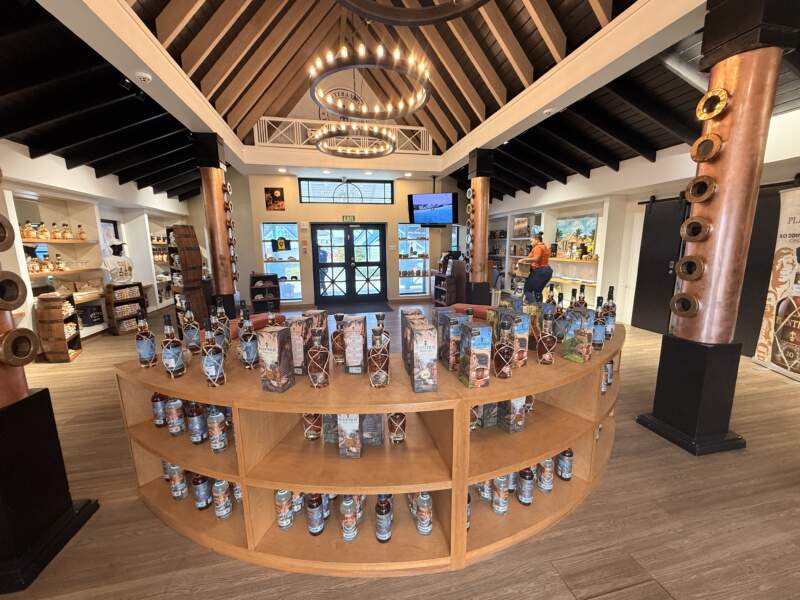
Our distillery reflects that diversity very clearly. We have what we call our Pot Still Alley, bringing together some of the oldest rum pot stills in the world. One of the most remarkable is the Rockley still, which had been silent for decades before we decided to bring it back to life. It was restored by Maison Ferrand’s own coppersmiths, with more than 2,000 hours of work dedicated to preserving its original character while making it operational again. When Rockley finally returned to distillation, it was not just about restoring an old piece of equipment. It was about putting historic knowledge back to work and learning from it again.
But you have to understand one essential thing: taste does not begin in the still. It begins well before, with fermentation.
People talk a great deal about stills when they talk about rum, but probably not enough about fermentation. Yet it plays a fundamental role. The choice of yeasts, the length of fermentation, the work with the bacteria present in the process — each of these decisions helps create different aromatic compounds.
That is why our Yeast Nursery is so important. There, we cultivate specific yeast strains, including strains that naturally thrive in the environment around our seaside distillery. It gives us another level of precision and another palette to work with when shaping the character of our Barbadian rums.
Distillation comes afterwards. If you want to understand why a rum develops such-and-such fruitiness, power or complexity, you cannot look at the still alone. You have to go back to what happened during fermentation. That is where the profile of the rum really starts to take shape.
With this diversity of tools and know-how, are you able to create an almost bespoke rum?
Yes. Imagine you come here and say: “I want to create my own rum brand. I don’t have a distillery, I don’t yet have any liquid, but I have a precise idea of what I’m looking for.”
You can describe the profile you want to us. Something very fruity, with notes of banana or pineapple? A smokier rum? Aromas that lean more towards chocolate?
From there, our job is to work out how to reach that profile by playing on fermentation, distillation, the different pieces of equipment and their combinations.
Today, we probably produce between 30 and 40 different styles of rum. Technically, we could produce many more.
That, in the end, is the whole strength of this distillery: having a major industrial tool, but one flexible enough not to produce a single rum on a large scale. On the contrary, this tool allows us to create a wide diversity of profiles and identities.
What is the difference between a rum from a pot still and a rum distilled in a column?
The pot still generally gives more powerful, more structured rums, with more body and matter. You can find a lot of fruit in them, sometimes smokier or deeper notes, and above all a very marked personality.
The column, for its part, allows you to obtain lighter, finer and often more delicate profiles.
What is particularly interesting in the Barbadian tradition is precisely the search for a balance between these two expressions. The idea is to keep enough of the character and richness brought by the pot still, while seeking the finesse that column distillation can offer.
For me, when you talk about a great Barbados rum, there is one essential word: elegance.
A rum must have taste, character and a real personality. But it must never become brutal. Everything is in the balance.
When you say rum around the world, people think of the Caribbean. For us, it’s also a way of representing our country.
Is it ultimately this identity specific to each territory that makes the richness of Caribbean rums?
Absolutely. Each country has built its own tradition, with its methods, its know-how and its aromatic profiles. That is precisely what makes the world of rum so interesting.
You go to Jamaica, you discover a certain way of producing and very characteristic rums. In Guyana, you find something else again. In Martinique, it’s a different tradition, notably with AOC rhum agricole.
I’ve never been to Martinique yet, but I’ve had the chance to taste several of its rums in France, and colleagues back from Martinique or Guadeloupe have also brought me bottles. I love discovering what other producers do.
When I travel, that’s actually something that interests me a great deal. I want to understand how others work, which stills they use, how they run their fermentations, how long they age their rums, what role they give to wood. At home I have bottles from many countries.
Of course, my preference remains Barbados! (Laughs.) But I’ve tasted absolutely remarkable rums elsewhere in the Caribbean.
With Martinique, the difference begins with the raw material. The Barbadian tradition rests mainly on molasses from sugar making, whereas Martinican rhum agricole is made from fermented fresh cane juice. In Martinique, the AOC also very precisely governs the conditions of production, distillation and ageing.
It is precisely these differences that make the richness of Caribbean rum. We share a common regional history around cane and rum, but each territory has turned it into an identity of its own.
Is an older rum necessarily better, and what then explains the sometimes high price of these very old rums?
No, age does not automatically make a rum’s quality. Ageing can bring it a great deal — the wood enriches the liquid, develops new aromas, adds complexity and gradually transforms its profile. But there is also a point where the cask can take up too much room.
I’ve already tasted fifteen-year-old rums thinking they had probably stayed too long in the wood. The tannins dominated, the rum became astringent and lost its balance. You don’t want to drink something that makes you feel you’ve bitten into a tree! (Laughs.)
For Barbados rums, I find you often reach a very fine balance at around ten or twelve years. But there is no absolute rule. A rum from a column and a rum from a pot still don’t evolve in the same way, and the type of cask also plays a decisive role. So the real challenge is not to age a rum as long as possible, but to know when it reaches its best balance.
On the other hand, the longer the ageing, the higher the cost. Over all those years, part of the rum disappears naturally through evaporation — what we call the angels’ share. So you tie up a product for ten, twelve or fifteen years, with storage and monitoring costs, all while knowing that at the end of ageing you will have less rum than at the start.
That is also what explains the price of old rums. But their value doesn’t lie only in the number of years shown on the bottle. It lies above all in what those years have really brought to the rum.
“We need innovation to preserve authenticity.”
You talk a lot about technology. But is a very technological rum still authentic?
For me, the question is almost the other way round.
You need innovation to maintain authenticity.
We obviously no longer make rum exactly as in 1893, and that’s a good thing.
Today, a distillery runs on boilers, pumps, compressors and powerful equipment. So our first responsibility is to protect the people who work there. That requires modern safety systems, sensors able to track the process precisely, but also compliance with strict health standards.
We also have to guarantee a certain consistency. When a consumer buys a rum today, they must be able to find the same level of quality and the same profile tomorrow.
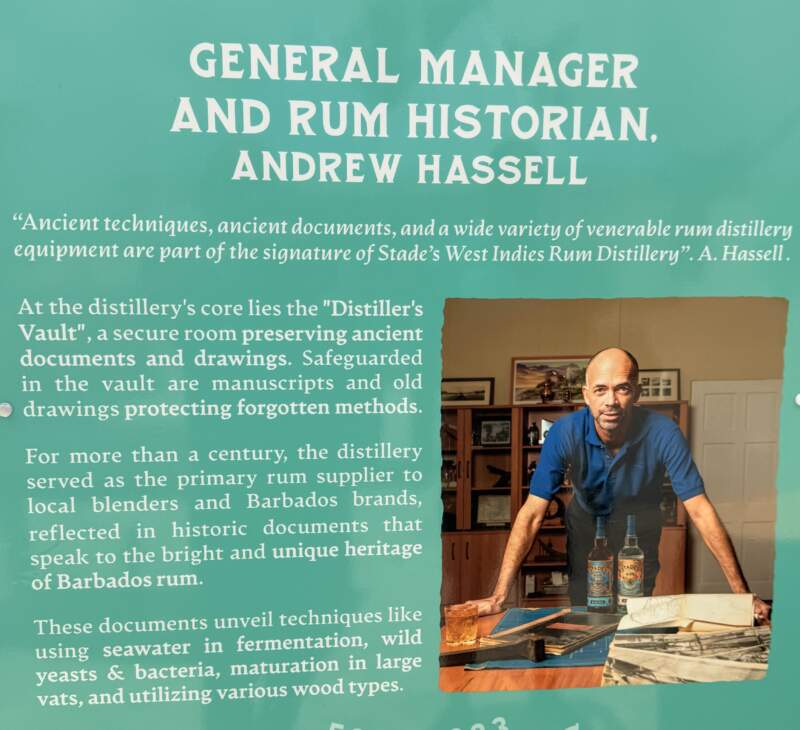
But technology does not mean turning our backs on the past. In fact, much of our innovation comes from looking closely at it. That is very much the idea behind our Distiller’s Vault. George Stade was an inventor who documented his work extensively — his equipment, his experiments, his ideas. We still have access to that technical heritage today, alongside historic stills and generations of knowledge at the distillery.
The Distiller’s Vault allows us to go back into those archives, study old techniques and equipment, and ask what they can teach us now. Sometimes that means restoring a historic still and putting it back into production; sometimes it means revisiting an old method with the precision and safety that modern technology allows.
In 1893, there were obviously no computers. Yet using digital tools today takes nothing away from the authenticity of the rum.
Innovation and authenticity are not opposed. Innovation can actually help us understand, preserve and continue traditions that might otherwise disappear.
Take care of people, and people will take care of the rest.
Your first concern when you arrive at the distillery in the morning — what is it? The rum? The machines?
People. Always people.
That’s the first thing I think about. I want to know who’s here, who’s missing, whether everyone is all right. Do the employees have what they need? Do they feel comfortable and safe? Is there a problem we haven’t yet identified?
Because in the end, a company rests first of all on the people who bring it to life. Equipment matters, procedures too, but it’s the women and men who allow all of it to work every day.
My philosophy is ultimately quite simple: take care of people and people will take care of the rest.
How many people work here?
The permanent core is around 65 people. But a distillery like this one gives work to many more. You have the outside contractors, security, the hauliers who bring the molasses, the suppliers, the people who service the equipment.
RUM, ALSO A SECTOR FOR TRAINING AND SKILLS
For Don Benn, one of the challenges of Barbadian rum plays out well before you enter a distillery: at school.
He recalls that, when he was a pupil, no one came to explain what this industry really represented. Rum belonged to the everyday environment, to the rum shops and to popular culture, but far less to the world of careers young people could aspire to. He himself was thinking more of the classic paths of engineer, doctor, lawyer or accountant.
His view changed when he discovered what lay behind a bottle: agriculture, fermentation, microbiology, mechanics, chemistry, industrial maintenance, quality control, logistics, ageing, blending, international trade…
Hence, today, a wish to bring education and the rum industry closer together. Don Benn mentions visits organised for schoolchildren, pupils’ projects devoted to the sector, but also talks and collaborations with the university.
He cites in particular programmes aimed at young people from STEM disciplines — science, technology, engineering and mathematics — with a question that goes well beyond rum: how do you turn a scientific discovery or an idea born in a laboratory into innovation, and then into economic activity?
For Don Benn, this transmission is also a matter of image. He believes a young Barbadian should be able to see rum careers as a way of taking part in the development of their country and of representing it abroad, on the same footing as other flagship sectors.
When you say rum around the world, people think of the Caribbean,” he explains. For him, this association can also become a source of skills, careers and professional pride.
You also insist on working conditions. Why?
First, because everyone must be able to live decently from their work. Barbados is a country where the cost of living is high, so it’s essential to pay employees fairly.
But pay alone is not enough. We also invest in training and in giving people opportunities to grow. One example is Maison Ferrand’s exchange education programme, which allows colleagues from Barbados to spend time at our distillery in Cognac, and teams from Cognac to come here in return. The idea is simple: people learn from one another, share techniques, compare ways of working and build a deeper understanding of the different spirits we make.
We also offer training on subjects that sometimes go beyond the strict scope of the job. We have, for example, offered sessions on managing personal finances.
We also organise days devoted to health, with professionals coming to carry out checks, such as taking blood pressure, but also to talk with employees about prevention. And we make a point of keeping moments of conviviality, because a company is not just about daily work.
What matters is that a person can say to themselves: “I work here, I’m respected, I’m learning, I’m progressing and I have prospects.”
Because when people feel respected, supported and able to progress, they are more likely to want to build their future with the company.
When you look back on your career, what are you most proud of? A rum? An installation?
There’s one rum I’m particularly proud of, but not necessarily for the reasons one might think.
We had three employees here. Two had spent forty years at the distillery, the third twenty. Forty, forty and twenty — that made a hundred years between the three of them. We wanted to mark the occasion.
So we created a blend especially for them, working with different rums and different ages to reach, symbolically, those hundred years. This rum was never meant to be sold. It was for them, quite simply.
I still remember the first time I smelled and tasted it. I said: “Don’t touch a thing. This is exactly how it should be.”
But, deep down, it’s not even the taste of the rum that I remember most. It’s their faces when we presented them with the bottle. That moment, I won’t forget. And that’s probably what I’m most proud of.
I’m also proud when someone passes through this distillery, learns here, then goes on their way and succeeds elsewhere. Former employees sometimes come back to see me and tell me: “What I learned here served me afterwards.” To me, that has a lot of value.
A company should not only seek to keep people. It must also allow them to grow. If someone leaves here more skilled, more solid, better prepared for what comes next, then we too have done our job.
So rum is an industrial product, but also a social one?
Yes, absolutely. Rum is part of everyday life in many different ways, and I think that social dimension deserves to be talked about more.
Of course, responsible consumption matters. But rum is also deeply connected to moments of conviviality, celebration and sharing. It can bring people together, be part of cultural and social traditions, and become associated with memories, places and important moments in people’s lives.
That is especially true in Barbados, where rum is so closely linked to the island’s history and identity. It is not only something we produce; it is something that has accompanied generations of Barbadians and continues to be shared with people around the world.
For me, that is part of rum’s richness: it is a spirit with an industrial and economic importance, but also a very human and social dimension.
Does the famous Barbadian rum shop still belong to this culture?
Yes. If you go into a rum shop, especially for white rum, you’ll still see certain habits. Someone might drink their rum and then take what we call here a “chaser.”
It can be water, coconut water, Sprite, Coca-Cola. The idea is to drink something just after the rum.
When you explained to me that in Martinican Creole you had a practice you compared to “kras,” I understood right away what you meant. It’s also these little things that show the islands are different but that there are cultural kinships across the Caribbean.
On that note, are Caribbean producers really able to work together when they are competitors?
Yes, and far more than before. When I started in 1998, it wasn’t like today. Now I know many production and operations managers in Caribbean distilleries. If I have a technical problem, I can call someone, and vice versa. We share experiences on sustainability, raw materials, molasses, equipment — today even artificial intelligence.
WIRSPA*, which brings together the rum producers’ organisations of several Caribbean territories and works notably on standards, trade issues and technical cooperation, has done a great deal to create this environment. The region has had a CARICOM standard for rum since 2008.
We have to grow Caribbean rum together.
But when you’re facing a Jamaican rum, do you remain competitors?
Of course! (Laughs.) I want Jamaican rum to succeed. I want people to say: Caribbean rum is excellent. But then I want them to say: the one from Barbados is the best! And the Jamaican will say exactly the same about his rum.
That’s normal. What you mustn’t do is say: “My rum is good because yours is bad.” I can say: “I think mine is the best,” while acknowledging that you also make a very good rum.
We have to grow Caribbean rum together.
Martinique has had an AOC for thirty years. In Barbados, why is there still no recognised geographical indication for rum?
I’m 100% in favour of a geographical indication for Barbados.
But you shouldn’t have a geographical indication simply to be able to say that we have one. It has to be good, but above all you have to reach a broad enough agreement within the industry on what Barbados rum is and on the rules we want to apply to it.
That’s where the debate lies, and we don’t all fully agree on what this geographical indication should contain — even though I don’t think we’re necessarily very far from an agreement, but there are still matters to settle.
Then, of course, there’s the whole procedure with the government and the bodies in charge of registration. WIRSPA confirms that the Barbadian debate on the geographical indication is primarily a matter for producers and national authorities, and that positions on its content have been discussed for several years.
Does sustainable development also change the way rum is produced?
Inevitably. Sustainability forces you to look at the entire process, not just at what happens inside the still. Water, energy, raw materials, packaging, transport, waste — every part of the chain matters.
Take something as simple as a bottle. We don’t manufacture glass in Barbados, so the bottle has to be made elsewhere and shipped to the island. That immediately raises questions: can we make it lighter? Can we use less glass? Can we reduce the amount of material we transport?
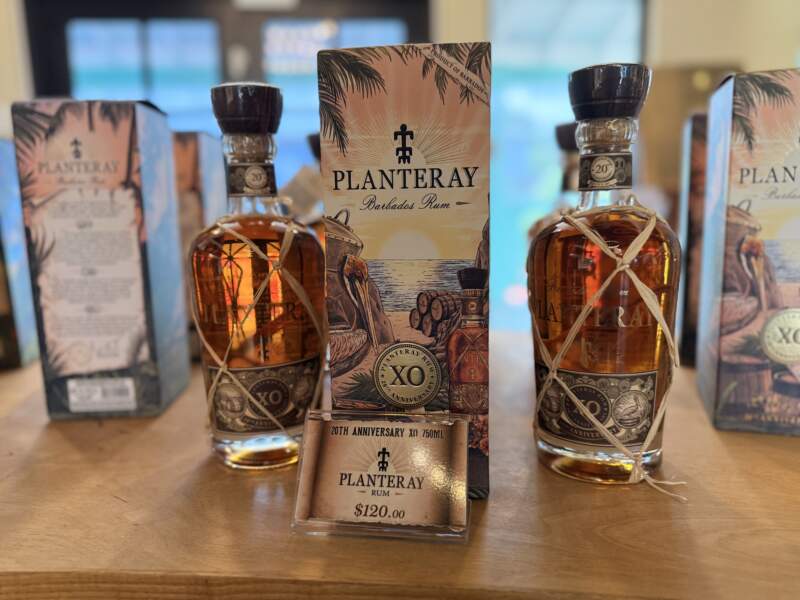
And in some cases, we have already done exactly that. For Planteray XO, the brand’s most iconic expression and a 100% Barbadian rum, we reduced the bottle weight by 30%. It may sound like a small change, but when you look at the volumes involved, it can make a real difference in terms of glass use and transport impact.
At the distillery, we also use solar energy and are working on ways to reduce our overall energy consumption, recover water and make better use of the by-products and waste generated during production, including exploring their potential as sources of energy. It is not one single project; it is a series of improvements that we work on every day.
We are also looking further upstream, at agriculture. We work with the West Indies Central Sugar Cane Breeding Station to develop sugarcane varieties suited to Barbados and to rum production, and we have planted selected varieties at our own Kendal Farm. Stade’s West Indies Rum Distillery also became the first Caribbean distillery to achieve Bonsucro certification.
But sustainability is also about people. You cannot call a company sustainable if you protect the environment but neglect the people who work there. For us, the two have to go together: reducing our environmental impact while investing in our teams, our local agricultural ecosystem and the long-term future of rum production in Barbados.
You mentioned earlier a paradox: rum can be extremely sophisticated, yet it doesn’t always have the upmarket image of whisky or cognac. Why?
I think part of it comes down to perception and to how the category has presented itself over time.
Whisky and cognac have had many years to build a very clear language around provenance, ageing, craftsmanship and rarity. Rum has all of those things too, but perhaps we have not always made them as visible or as easy to understand.
And yet, when you look closely at what goes into a great rum, the level of complexity is extraordinary: the raw material, fermentation, the choice of stills, the way different distillates are combined, the casks, ageing, blending. There is a huge amount of knowledge behind every decision.
For me, that is the opportunity for rum today. Not to imitate whisky or cognac, but to speak more confidently about what makes rum unique, and to help people understand just how much craftsmanship, history and diversity there is in the category.
And while rum is trying to move upmarket, the younger generations are drinking less. Is that a threat?
I see it more as a shift in habits than a threat. Younger consumers are simply approaching alcohol differently, and we have to understand that. I see it around me. I meet young people I knew as children, and suddenly they call me “Uncle Don.” I think: wait, if you’re now 25, that means I’ve got older too! (Laughs.) But their way of drinking is often different. They may be looking for something easier, more immediate, with less preparation involved.
That helps explain why Ready To Drink products are becoming more important. Convenience matters, and for some consumers a simple, well-made serve can be more appealing than having to build a cocktail from several ingredients. At the same time, I don’t think that means there is less interest in quality or in premium rum. It just means the way people discover and enjoy it is evolving. A fifteen-year-old rum may not be the first thing a younger consumer reaches for, but that doesn’t mean they won’t become curious about it later.
Does that explain your caution when you talk about the future?
Yes, partly. The global spirits market is going through a more challenging period than it did in the years immediately after Covid, and like everyone in the industry, we feel those changes.
But I remain optimistic because rum still has so much potential.
For us, the future is about continuing to raise the level of quality, innovating with purpose, understanding how new generations want to enjoy spirits, and working more closely across the Caribbean.
And we also have to become better at explaining what makes rum so special, not simply telling a story for the sake of it, but helping people understand the craftsmanship, the heritage, the people and the places behind the liquid.
If you had to recommend just two of your rums?
Without naming my own favourite, which isn’t a commercial product! For anyone discovering rum, the Planteray XO: round, balanced, with pastry, fruity and chocolatey notes — a rum that makes you sit down and savour it, and that speaks as much to the seasoned enthusiast as to the beginner. And then our Stade’s white rum, today sold only in Barbados. White rums are underrated. This one is surprisingly fruity and wonderfully versatile in cocktails.
To finish, if you had to sum up the future of Caribbean rum in one sentence?
Difficult times lie ahead, but we are in a position to take rum towards something truly special. It won’t be easy.
BARBADOS, A WORLD LABORATORY OF SUGAR CANE
Barbadian rum doesn’t begin at the distillery. Its scientific history also begins in the fields.
During the interview, Don Benn draws attention to an institution little known to the general public: the West Indies Central Sugar Cane Breeding Station, based at Groves, in the parish of St. George.
Its importance goes well beyond Barbados. The station presents itself as the oldest continuously operating sugar cane breeding programme in the world, its origins going back to work undertaken in Barbados from 1888. It still supplies genetic material and cane varieties to its members today and continues research and breeding programmes.
This history is closely tied to that of Caribbean agriculture. From the late 19th century, Barbadian researchers worked to obtain canes that were more productive, more disease-resistant and better suited to local conditions. Some varieties selected in Barbados would later spread to other Caribbean territories and beyond. Varietal research has had a measurable impact on cane yields in Barbados.
Don Benn, for his part, mentions more than 3,000 cane varieties developed in Barbados over the course of this history, and stresses the station’s role in the survival and improvement of the regional sugar sector. SWIRD itself works with this institution.
The subject therefore goes beyond sugar alone. To breed a cane is to work on its yield, its resistance, its sugar or fibre content, its adaptation to climate and disease. So many parameters that directly concern an economic chain running from the field to sugar, then from molasses to rum.
This dimension recalls a reality sometimes forgotten behind the image of the spirit: rum is also the end product of several centuries of Caribbean agronomy, plant breeding and scientific research.
Interview conducted in Barbados by Philippe Pied/Antilla. Caribbean series on rum.