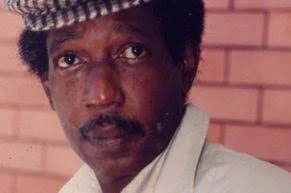
I had the good fortune to be introduced to Fanon’s thought by Vincent Placoly, with whom—as a middle school student—I used to discuss revolution in class […] especially since these discussions heralded a new dawn, redefining the role of women in postcolonial and revolutionary societies.
Vincent Placoly
A few decades later, upon rereading this “initiatory” essay […] nothing should ever be the same again. That is the essence of his argument.
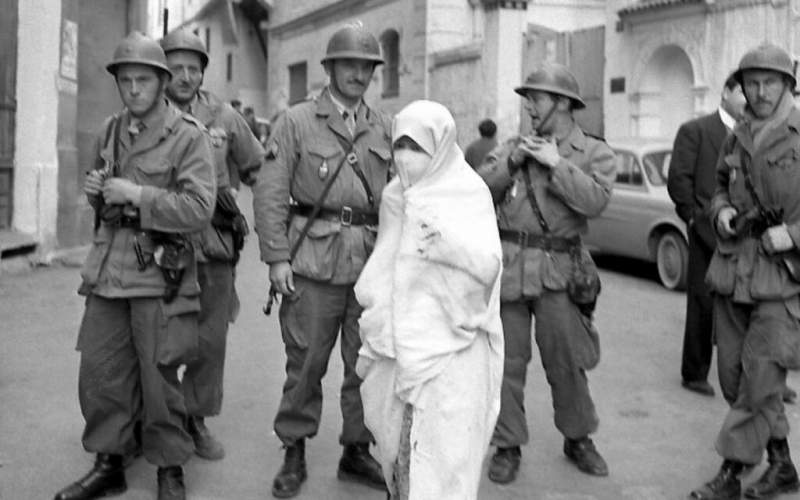
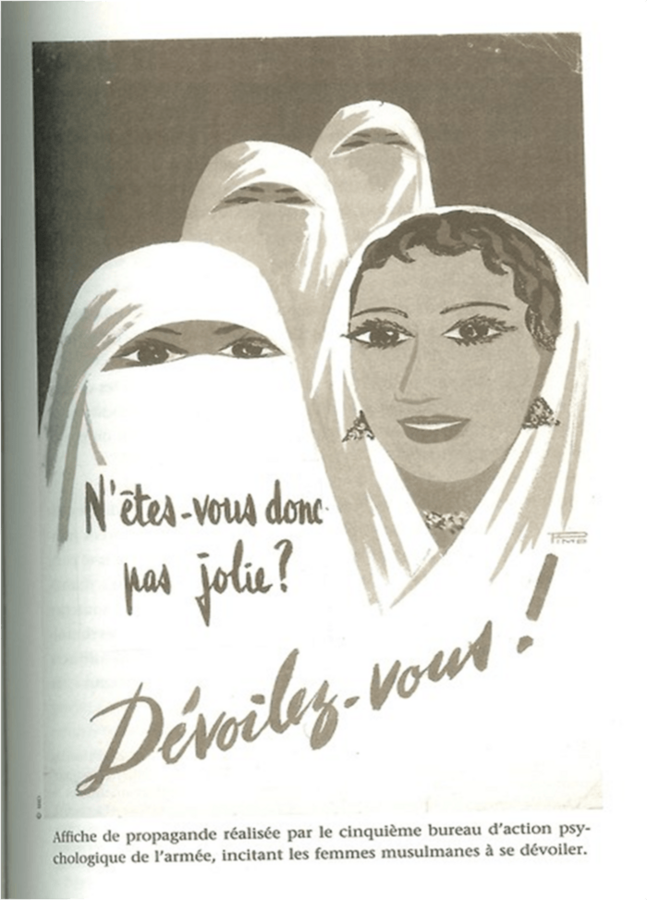
While it begins with a sociological—or even ethnological—analysis of clothing […] their emergence in the armed struggle.
A Revolution Within the Revolution: The Transformation of Social Relations
It is worth highlighting Fanon’s innovative approach, in which he theorizes the impact of women’s engagement […] to encourage their involvement.
Beginning with an analysis of the situation of Algerian women, Fanon observes a profound disconnect between colonial discourse and reality […] the few training centers that have been opened to them confine young women to domestic or craft-based tasks […]
”Overall, Algerian women remain bound by the shackles of traditional rules […] which gives rise to a certain degree of outrage against the veil and confinement."
Algerian women are called upon to play «a fundamental, crucial role» […] because ”the occupier wants to expose Algeria.”.
The FLN's Rejection: When Liberation Excludes Women
»This passive resistance is followed by women taking part in the war […] Those who accompany these women must be punished by death.".
However, the FLN eventually recognized the crucial role played by these female activists […] Their commitment put them in a situation just as dangerous as being in the maquis.
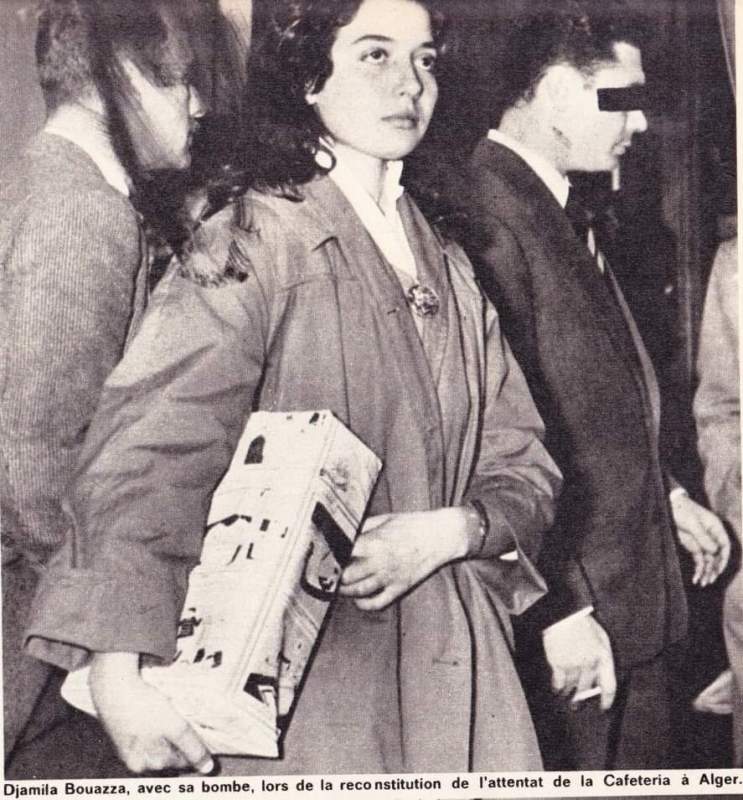
But Fanon chooses to focus primarily on those who, from behind the veil […] carry revolvers and hundreds of fake ID cards …
These successes are, first and foremost, victories over themselves; these “cracks in colonialism are, above all, subjective.” […] It is without training, without stories, without history, that she takes to the streets with three grenades in her purse or an activity report for a zone tucked into her blouse…
After the Revolution: Broken Promises, Dashed Hopes
But Fanon never lived to see an independent Algeria […] Thirty-five years after the war, some women were posthumously awarded the Medal of the National Order of Merit.
Their aspirations have simply been ignored […] women continue to be subject to a code that establishes inequality in fact and in law.
The popular protests—the Hirak—that have taken place since 2019 […] through the reemergence of a massive emancipatory force led by women
Fanonian Echoes in the Hirak
So, did Fanon perhaps err on the side of idealism or revolutionary enthusiasm? […] the emancipation of society as a whole.
In writing these lines in 1959, Fanon prophesied a new society, a new world. […] more than just a young woman … A Woman, a Revolution, a Founding Tragedy
Michèle LATOUCHE – July 2025
References
*Most of the quotations are taken from: “L’Algérie se dévoile,” in Sociologie d’une Révolution—2nd edition—Paris, March 1972—FM / Petite Collection Maspero.
Note: The subheadings were added by the editorial staff.