




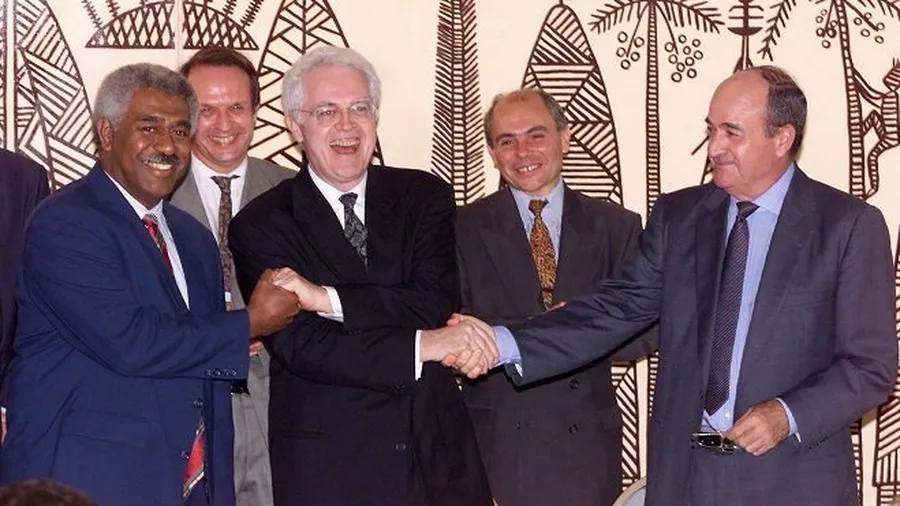
Lionel Jospin, former prime minister, has died at the age of 88.
Among the political developments that have left a lasting mark on the relationship between the French state and its overseas territories, the years 1997–2002 hold a unique place. As head of a pluralistic left-wing government, Lionel Jospin launched a reform that marked a decisive shift: the gradual recognition of the unique characteristics of the overseas territories within the republican framework.
At the heart of Jospin’s approach lies a simple idea: equality does not imply uniformity. This concept is reflected in the Framework Law for Overseas Territories of December 13, 2000.
This text aims to reduce structural inequalities and adapt public policies to local realities.
An Unfinished Structural Transformation of the Overseas Economies
Despite the changes introduced in the late 1990s, the structural transformation of the overseas economies remains largely incomplete. The fundamental imbalances that characterize these territories persist with remarkable stability.
Dependence on imports continues to fuel outward-oriented economic cycles, while the weakness of the local productive sector limits the capacity for capital accumulation and innovation. Added to this is a high vulnerability to external shocks—whether energy-related, trade-related, or financial.
In this context, the lack of a coherent, long-term industrial strategy represents a major constraint. Public policies have prioritized measures to support demand and provide social compensation, without bringing about any real transformation of production.
Furthermore, insufficient regional integration deprives the overseas territories of opportunities to expand their markets and diversify their trade.
The result is an economic model characterized by heavy reliance on government transfers, limited export capacity, and constrained international integration.
In this regard, Lionel Jospin’s actions cannot be reduced to a mere administrative measure. They represent a step in a longer-term process: that of redefining the relationship between the State and the overseas territories.
A shift without a break
Overall, the record is mixed but consistent. Lionel Jospin helped to make the republican framework more flexible, to recognize the diversity of situations in the overseas territories, and to improve social conditions. However, he did not undertake the economic and political transformation that would have made it possible to overcome structural weaknesses in a sustainable manner.
It is in this sense that his approach can be described as a shift without a break. A necessary step, no doubt, but insufficient to fully address contemporary challenges.
And perhaps that is ultimately where its relevance lies: in the questions it raised rather than in the answers it provided. JPB