




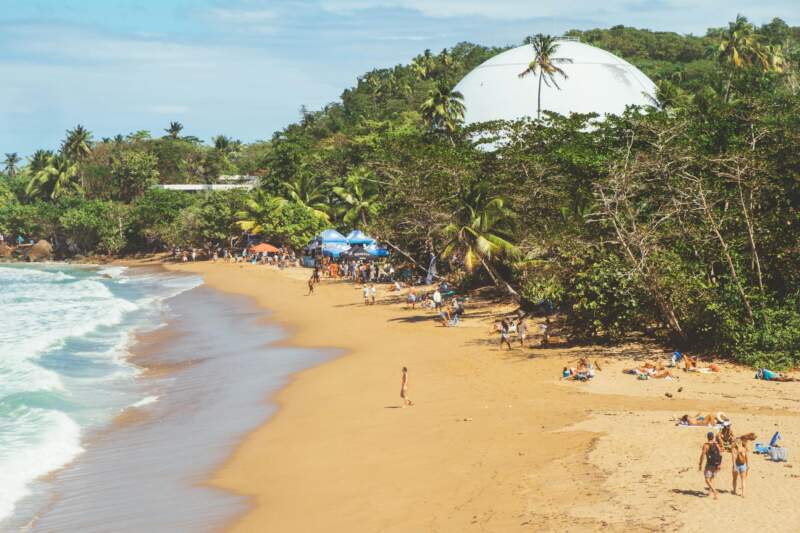
In March 2026, Caribbean tourism reached unprecedented heights. Hotels are reporting an occupancy rate of 79.6 %, a record high. Destinations are shattering their own all-time records. This exceptional season presents major opportunities—and structural risks that should not be ignored.
Caribbean tourism breaks all records
The Caribbean has never performed better. In March 2026, regional hotels achieved an occupancy rate of 79.6 %, up 6.3 % year-over-year. In April, the momentum held steady at 73.9 %, representing a 5.8 % increase over the same period in 2025.
In one month, these institutions generated more than $3.03 billion in revenue. This represents a 10.3 % increase year-over-year. This trend is part of a long-standing and solid growth trajectory.
By 2024, the Caribbean had already recorded 34.2 million international arrivals. This represents an increase of 6.1 % compared to 2023, surpassing pre-pandemic levels. In 2026, the trend will accelerate even further.
Cuba Is Collapsing, and Caribbean Tourism Is Reaping the Benefits

The Cuban Crisis is one of the major drivers of this unexpected boom. The island saw an 18.% drop in international visitors in 2026. The reasons? Fuel shortages led to the cancellation of more than 1,700 flights. Three hotels in the Meliá group had to temporarily close.
The North American market has evaporated. Arrivals from the United States fell by 50 %. Arrivals from the Cuban diaspora plummeted by 40 %. In Canada—Cuba’s largest source market—several airlines have suspended their flights until at least November 2026.
As a result, bookings for Cuba plummeted by 86 % in March 2026 compared to March 2025. This business shifted to other destinations. Bookings to the Dominican Republic surged by 142 %, according to the Ontario-based agency Durham Travel.
Mexico is going through a rough patch
In addition, Mexico experienced some turmoil. In February 2026, cartel-related violence in Puerto Vallarta stranded Canadian tourists for several days. As a result, bookings for Mexico fell by 15 % that month.
According to Marc-Antoine Vachon, holder of the Transat Chair in Tourism at the Université du Québec à Montréal (ESG-UQAM), «physical safety is now a factor in travelers» decision-making.” This is an unprecedented development for the tourism sector.
Destinations such as Aruba, Barbados, Martinique, and Guadeloupe are attracting a growing share of Canadian travelers. Nova Parker, director of the Toronto-based agency Total Advantage Travel and Tours, confirms this trend. Demand for Caribbean travel from Canada has been rising sharply since January.
Emerging destinations are breaking their own records
Several islands stand out clearly in this favorable context. The Cayman Islands are experiencing their best start to the tourist season in their history. In March 2026, the archipelago welcomed 64,213 overnight visitors.
This is the first time the Cayman Islands have exceeded 60,000 monthly land arrivals. Total arrivals reached 221,731 people, up 12.6% year-over-year. This growth is remarkable for such a small destination.
Dominica, too, is experiencing spectacular growth. The nature-focused island saw a 30 % increase in visitors in 2025–2026. Its positioning as a high-end ecotourism destination is driving this success. In addition, Antigua and Barbuda and Saint Kitts and Nevis are expanding their airport infrastructure. These investments will help meet the growing demand.
How can we ensure the sustainability of this boom in Caribbean tourism?
However, this massive influx raises structural issues. The overuse of natural sites threatens the ecological balance. Pressure on water resources is increasing. Real estate prices are rising across the board in the most sought-after areas.
Several island governments are already considering regulatory mechanisms. Possible measures include entrance fees or visitor quotas for sensitive sites. This cautious approach aims to balance the island’s appeal with conservation efforts.
For Martinique, the challenge is unique: attracting a share of the regional tourist flow while preserving its cultural and environmental identity. The Martinique Tourism Committee (CMT) is focusing on high-quality tourism. The goal? To target visitors with higher purchasing power rather than chasing volume. That is why upgrading the hotel offerings remains a stated priority.
Caribbean Tourism: Seizing the Opportunity Without Sacrificing the Future
This boom in 2026 presents a rare window of opportunity for the region. However, the destinations that will make the most of it will be those that combine appeal and resilience starting now.
Efforts to promote Creole heritage must also be stepped up. However, growth and local identity must not be sacrificed for the sake of short-term gains. This is the real challenge facing Caribbean tourism in this decade.