




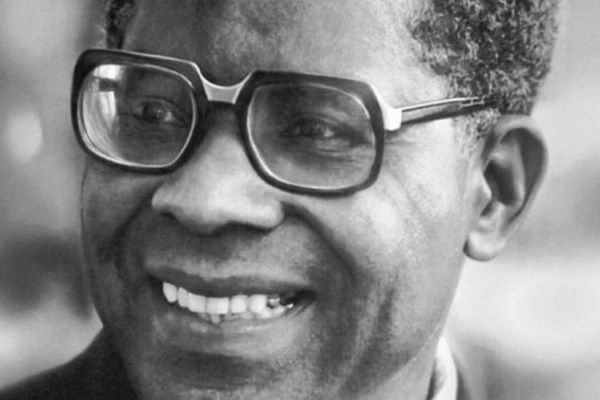
Speech delivered on July 21, 1945, by Aimé Césaire on the occasion of the traditional Victor Schoelcher celebration.
There is one fact on which future historians will, unfortunately, all agree: that from 1918 to 1939, democracy was in a very poor state. And just as there will be no hesitation regarding this observation, there will be no hesitation regarding the diagnosis. A sick democracy—by which I mean a republican democracy that was, admittedly, still republican in form, but one that was distrustful of itself, uncertain of itself and its principles, a democracy that had lost its sense of purpose, in which an analyst would easily recognize a certain timidity more akin to the spirit that animated the bourgeois monarchy of Louis-Philippe than to the impetuous genius of 1789 and 1793. In my view, the most immediately telling sign of this malaise is that, from 1918 to 1939, everything unfolded as if the Republic were ashamed of its great events or its great men; that it was ashamed of the Convention, ashamed of Robespierre, and ashamed of the Commune.
And if we are to speak only of our Martinican democracy in particular, I would say that the sign that it was ailing is that—apart from a few generous voices, among which I still seem to hear that of Jules Monnerot—the sign that it was ailing is that, ashamed of its origins, ashamed of its past, it bargained with Victor Schoelcher.
She was skimping on Victor Schoelcher—or rather, she was pettyly trying to sweep Victor Schoelcher under the rug, as if one could hide that formidable shadow that tirelessly stands guard at one of the gates of human consciousness.
But since 1939, much has changed in the world. Having matured through suffering, and having been subjected to a bloody regime of tyranny and cruelty, the peoples have once again learned to value freedom above life itself.
Likewise, we—who are proud of our past of suffering and struggle, we who know that to love Victor Schoelcher is to give full force to the cause of human rights If, in the midst of our work, there are thoughts that encourage us, the most inspiring of all is surely this: that perhaps the people of Martinique in the future will say, when speaking of our workers’ and proletarian team, “It was these men who rediscovered…” the Schoelcherist mystique. These are the men
who, through their dedication, have truly rediscovered the spirit of Victor Schoelcher.
If I had to use words to paint a picture for you of the admirable man that Victor Schoelcher was, I would turn to the most solemn words in the dictionary; and to describe the lifestyle of this benefactor, that way of life in which ethics governs even the slightest thought and the slightest reflex, I would say that Victor Schoelcher sought to be—and was, throughout his entire life—a conscience.
And then, to continue my attempt to evoke this idea, I would choose a broad word, a solid word, a powerful word—and that word would be “honesty.”. Victor Schoelcher was honest, for he never compromised.
Etymologists tell us that the original meaning of the Latin word *onos* is «burden.» Victor Schoelcher was an honest man, for he was a man of responsibility. Throughout his life, Victor Schoelcher shouldered his responsibilities, and when he became animated, when he grew indignant, and when he struck out, It is because it encompasses and protects the cradle of a people and the birth of a civilization.
Finally, to round out the foundation of my moral character, I will pair the word “honesty” with a word that is just as solid, a word that is like a brother—and that would be the word of encouragement. And in fact, of all the forms of courage, I see none that Victor Schoelcher lacked. By “courage”—if we mean physical courage—I immediately picture Victor Schoelcher on a barricade, standing beside Baudin, offering his chest to the bullets of the Prince-President’s accomplices, the future Napoleon III.
If by “courage” we mean specifically moral courage, I see Victor Schoelcher defying all forms of herd mentality and daring to stand alone against everyone. As for intellectual courage, no one will deny it to this man who, having established a principle with clear-headed judgment, fearlessly followed its course from one consequence to the next; who, for example, having accepted once and for all that all men are born free and equal, allowed no deviation from this principle, no exception, no derogation—whether based on name, race, or color.
So, drawing on the broad foundation of these three interrelated words—honesty, courage, and conscience—I will launch two magnificent words like vibrant arrows: one as sharp as steel, the other as glorious as the sun. The first is boldness; the second is generosity.
Yes, Victor Schoelcher had boundless courage and generosity. When that towering man rose to his feet among a Senate of petty, cautious men, when he stood tall in that assembly of penny-pinchers and bourgeois Orléanists or Decembrists, it was, truly, an extraordinary sight: standing tall, hands outstretched, and humiliating a cluster of old men—the specter of adventure and generosity.
I talked about the man. And now I’d like to tell you about the work.
First, the written work. I know of none that is at once more passionate and more reasoned, more lofty and more sensible. In it, we see Victor Schoelcher standing up against the abhorrence of slavery, against colonial sadism, against stupidity and hypocrisy. We see him countering argument with argument, patience with fanaticism, the tenacity of reason with the tenacity of prejudice. Never has logic been more effective—and more deadly. All the scholars of the world mobilized, along with all the politicians and theologians—the Black man decreed to be a son of Ham and therefore cursed, the Black man cast out from humanity and thus legitimately flogged—Lescabot, Grotius, Hobbes, Bossuet—who knows who else?
There is no armor that can withstand Schoelcher. Whether you are learned theologians, statesmen, or financiers, Schoelcher grabs you by the throat and forces you to confess, pitiful and confounded, that you have lied about it—that the “negro” is described as a “monkey” in Déterville’s dictionary and in Panckoucke’s dictionary only because our constitutional stupidity was indispensable to the peace of certain consciences as well as to the prosperity of certain fortunes.
If I add that, according to the commercial principle that colonial prosperity is possible only through slavery, Schoelcher was able to contrast the revolutionary principle of the human right to self-determination ; that against the argument of the natural stupidity of Black people, Schoelcher was able to counter with the most recent discoveries in ethnography; that against the fallacy that Black people do not desire freedom, Victor Schoelcher skillfully countered with the fact of periodic slave revolts; that he was able to eloquently highlight the cruelty of a labor system in which the whip is the ultimate expression; that he was able to demonstrate beyond a doubt that the system’s so-called sadistic anomalies are merely its natural and abominable consequences; and finally, by protesting against the slow and gradual abolition of slavery that some advocated in place of its immediate and total abolition, Victor Schoelcher was able to uphold the principle of human freedom high above all haggling and compromise, and that along the way, Victor Schoelcher dispelled all false perspectives by drawing upon the most compelling evidence of science and the most well-established tenets of philosophy.
It will become clear what I mean when I say that Schoelcher’s entire body of work deserves to be reread, and that it offers—for every colonizer and every colonized person, for every politician and for every human being, quite simply—a manual on dignity and a compendium of wisdom.
And now I come to Schoelcher’s finest work—a work that is unwritten, yet very much alive. A work revealed by thousands of faces and etched into thousands of hearts: on April 27, 1848, a people who for centuries had been trampled upon in the shadows, a people whom the whip had for centuries kept trapped in the depths of history, a people tortured for centuries, a people humiliated for centuries, a people from whom their country, their gods, and their culture had been stolen—a people from whom their tormentors sought to strip even their very humanity—, On April 27, 1848, thanks to Victor Schoelcher and the will of the French people, that nation broke its chains and, under the promising sun of an unprecedented spring, burst onto the world stage.
And here is the marvel: what was offered to these men who had risen from the abyss was not a diminished freedom; it was not a partial right; they were not offered a probationary period; they were not placed under observation—instead, they were told: «My friends, for too long there has been an empty seat at the table of humanity. It is yours.».
And right from the start, we were offered complete freedom, all our rights, all our duties, and all the light. Well, here it is—the legacy of Victor Schoelcher! Schoelcher’s legacy is thousands of Black men rushing to schools, rushing to the polls, rushing to the battlefields— it is thousands of Black men rushing wherever the battle is for humanity or for ideas, and showing—so that no one may be unaware—that neither intelligence, nor courage, nor honor is the monopoly of a chosen race.
I know that this bold act by Schoelcher, This emancipation of Black people, followed by their full acceptance into French society, has often been dismissed as madness. On the contrary, Schoelcher displayed admirable foresight. It was a stroke of genius by the liberator, who—by linking the words “France” and “Liberty” in our minds—bound us to France with every fiber of our hearts and the full power of our minds.
And so we are led to Victor Schoelcher’s final transformation—his transformation from a pamphleteer and doctrinaire into a statesman, and I have no hesitation in saying that he was the most far-sighted and wisest man who ever addressed the colonial question. I know that at present one of France’s concerns is to ensure that the ties between the «metropolis and the colonies» are both flexible and strong. Allow me to say that in this regard, as in so many others, Victor Schoelcher is the great pioneer, and that the entire Brazzaville Conference is already embodied in Victor Schoelcher—only more boldly and more resolutely. Two ideas here seem essential to me.
Above all, while many were urging the Metropolis to adopt a policy of colonial indifference—a policy concerned above all with avoiding complications— Victor Schoelcher never ceased to declare that the Motherland, even out of a desire for peace and quiet, must not shut itself off in a policy of laissez-faire. «Let’s avoid creating difficulties for ourselves,» cried the ministry’s pundits. Victor Schoelcher replied: “If we do not want colonial action to be an unjustifiable undertaking, it is not creating difficulties for ourselves that we must guard against, but becoming complicit in any attack on human dignity.”.
And when the colonists cried out, «We need slaves to work our land,» Victor Schoelcher replied magnificently: “France has the right to no longer want slaves.”.
And he added this memorable sentence: «A mother watches over all her children—whether strong or weak—with care, and to deny her the ability to protect the weak from the strong, to use her authority to rein in the older ones when they oppress the younger ones, is to deny her her noblest prerogative.».
And he added, taking precautions against the vagaries of a sensibility that is quickly aroused but just as quickly weary: «After all, what we are proposing here is not a one-day task; these are not a few vague improvements to be tossed to the islands, like alms to a pestering beggar; it is a long series of tasks for the reformer: it is a serious vision to pursue, a future to create…. justice, come what may!» And even that was not enough for Schoelcher. He was not content merely to arm the central government for good. He also wanted to disarm it from doing harm. And so Schoelcher wrote this astonishing sentence, a veritable charter for the colonized: «The European Parliaments, in our view, would have to, first and foremost, issue a Declaration of Colonial Human Rights, which would serve as the basis for legislation governing all administrative orders and as a bulwark against all ministerial whims.”.
»Resistance—even armed resistance—to any royal or other act that would violate these principles would be lawful and commendable.".
This is the profound lesson taught by Victor Schoelcher. I believe it is worth I believe, to reflect on this at a time when France is seeking its path, at a time when France is concerned about its own destiny and is wondering about the best way to govern the thousands of people living in what is commonly called the Empire. Victor Schoelcher is a man of our time in every sense of the word.
Victor Schoelcher possesses every quality required by the gravity of the moment. There is an antidote to timidity in undertaking projects: the spirit of Victor Schoelcher. There is an antidote to the tendency toward tyranny: the spirit of Victor Schoelcher. Against prejudice and injustice, there is an antidote: the spirit of Victor Schoelcher.
He will not even fail, as is sometimes believed, to think lucidly, in a modern way, about the conditions of freedom: to realize that leaving Black people free but destitute in an anarchic face-off with the wealthy colonizer is to expose Black freedom to all the vagaries of a false democracy; that where economic security does not exist, the foundation of freedom is nonexistent; otherwise, it wobbles, otherwise it cracks and falters, mesmerized by its own downfall, crushed by its own weight…
Aimé Césaire
Victor Schœlcher and Aimé Césaire *Le Progressiste* – Wednesday, May 27, 2020 – No. 2575