

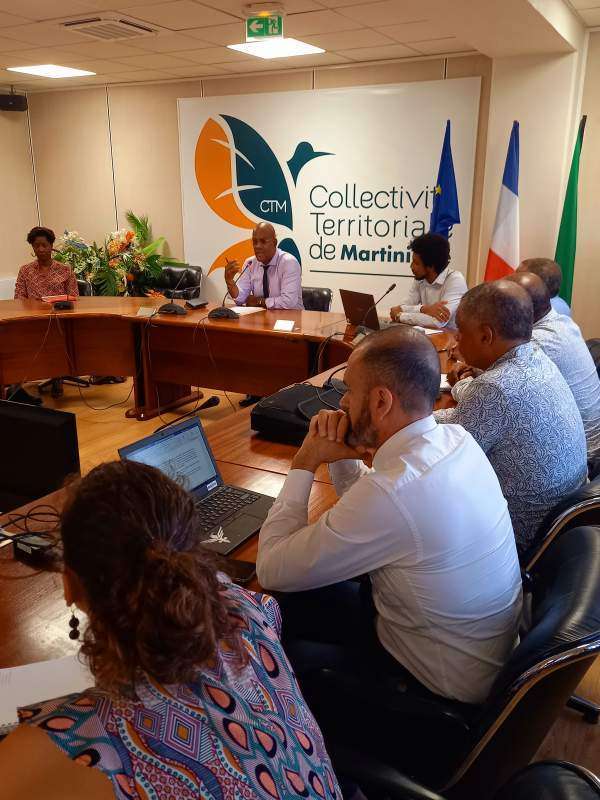
Changes in regulations and the end of dedicated financial programs require a quick decision on two major waste management projects in our region: a «combustion unit» known as CSR (Recovered Solid Fuels) and a sorting center dedicated to packaging. With the goal of defining the «best regional strategy» for the construction of these facilities, Serge Letchimy, president of the CTM Executive Council, organized a working meeting a few days ago with the leaders of our three urban communities—CACEM, CAESM (Espace Sud) and Cap Nord—as well as representatives from the SMTVD* and ADEME-Martinique. Here’s a closer look.
What is the purpose of this «CSR combustion unit»? To ensure the continued operation of the current «Municipal Solid Waste Incineration Plant» (UIOM) and divert waste from landfills, according to the stakeholders. As for the packaging sorting center, project stakeholders presented it as essential, particularly to «integrate new waste streams in the region resulting from an ‘Extension of Sorting Guidelines’ (ECT).’ ’ The first topic discussed during this working meeting was this RDF (Recovered Solid Fuel) combustion unit; a facility designed to recover energy and generate electricity from non-hazardous, non-recyclable waste, at a cost ranging from 60 to 125 million euros. Jean-François Mauro, director of ADEME-Martinique, provided an explanation regarding these CSR facilities. »This includes all waste that is sorted but cannot be recycled,« he explained. »Today, we can give plastic a «second life,‘ but there are materials for which that’s not possible. The ultimate solution is either landfilling or energy recovery—that is, generating energy from this waste. In other words, an incineration plant.’ The director then emphasized: ’But this last resort—landfilling—is no longer acceptable from a regulatory or even a moral standpoint. The trend of the times is to make the best possible use of our waste and to treat it as a resource that can be given multiple lives.’
As we mentioned, the construction of a new sorting center (representing an investment of 22 million euros) was also a topic of discussion at this meeting. To provide some context, in Martinique, only a portion of packaging—primarily plastics, paper, and cardboard—is sorted for the well-known yellow trash cans and recycling bins. But ‘in the future,’ nearly all packaging could be deposited in these collection points, which could make sorting easier for the people of Martinique. However, this ’Expansion of Sorting Guidelines’ (ECT) will generate an additional flow of packaging at the current sorting center—a facility described as being at capacity and therefore unable to be expanded at its current site. To handle these new volumes of packaging, a more efficient, larger sorting center located elsewhere must therefore be planned. Stay tuned.
Another challenging reality—and, at first glance, certainly not the least of them : The «deadlines» are approaching for renewing and securing new funding, particularly from the European Union through the ERDF. Regarding the «CSR line,» for example, local governments have less than six months to conduct a feasibility study and prepare an application. Otherwise, funding is likely to be suspended. As for the sorting center, financial assistance is expected to be limited after 2025. We must therefore act promptly to ensure that this new center is built and can handle the increase in waste resulting from the Expansion of Sorting Guidelines (ECT). Did you say «countdown»? It should be noted, however, that the institutions in charge of this overall “project” are considering requesting exemptions in order to secure the time needed to obtain the funding essential for the construction of this new infrastructure.
«We have a timeframe—between 2024 and 2025—to build this sorting facility…»
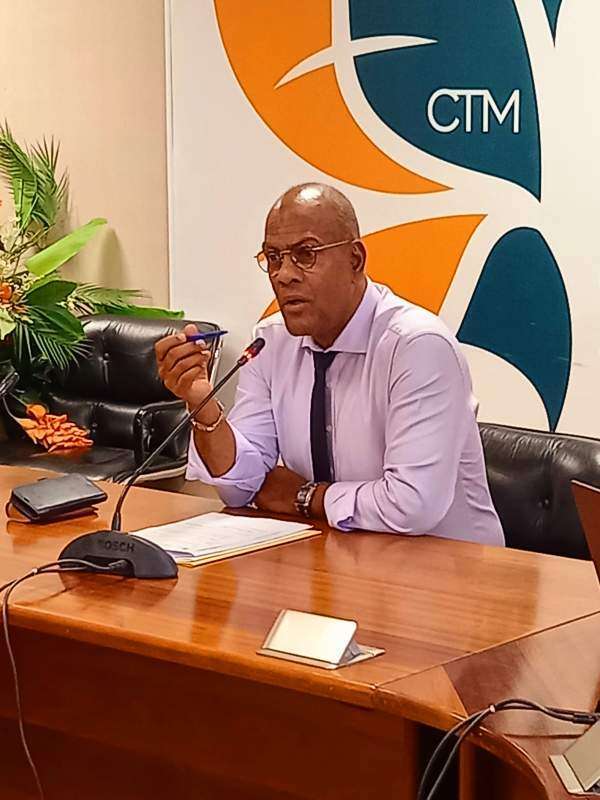
« »We have an obligation,« Serge Letchimy told the media following the meeting, ‘We must not get sidetracked by the prospect—admittedly very interesting—of amending the Constitution, but if we fail to demonstrate our ability to address the day-to-day needs of the people—that is, water, electricity, garbage collection, and so on— Today, what are known as the ’yellow bins’ are sorted, but we absolutely must expand this sorting effort; this is very important, and to do so, we have national targets that must be met, since we have a deadline—between 2024 and 2025—to complete this sorting facility. We’re currently exploring various options, and whether or not these plans come to fruition will depend on the three presidents of the EPCI (urban communities, ed.). ’ The chief executive added: »We also have a somewhat more complex issue, namely packaging, bulky items, and a range of waste that we are unable to sort, in addition to problems with construction materials, etc. So here we need to find a solution that involves incineration. In this regard, there are several options, including at the current incineration facility in Martinique. But it could also involve other municipalities, to build a new incineration facility. « A progress update on the discussions and proposals from stakeholders is expected to take place in the coming weeks.
Mike Irasque
*SMTVD: Martinique Waste Treatment and Recycling Union.