



Close Menu
ANTILLA MARTINIQUE | Avec vous depuis 1981

    Subscribe

    Get the latest creative news from ANTILLA on art, design, and business

    Current Trends

    Diversification agricole : la Martinique doit obtenir une réforme structurelle du POSEI

    August 14, 2026

    « Que représente la CARICOM pour la jeunesse ? » : La jeunesse caribéenne répond

    August 14, 2026

    Les centres de formation technique et professionnelle de Sainte-Lucie se font l’écho de l’appel régional aux compétences

    August 14, 2026
    Facebook X (Twitter) Instagram
    ANTILLA MARTINIQUE | Avec vous depuis 1981ANTILLA MARTINIQUE | Avec vous depuis 1981
    • Sections
      • Editorial by Henri PIED
      • Ecology / Environment
      • Art/Culture
      • Caribbean
      • Companies
      • Gdc's Perspective
      • Heritage
      • Politics
      • Health
      • Sports
      • Opinion Pieces
    • Our Files
      • Great Figures
        • Édouard Glissant
        • Aimé Césaire
        • Frantz Fanon
        • Pierre Aliker
        • Camille Darsières
        • Alfred Marie-Jeanne
        • Patrick Chamoiseau
        • Raphaël Confiant
        • Serge Letchimy
      • Key Issues
        • Sargassum
        • Rum
        • High Cost of Living
        • The Press in Martinique
      • Profile or Investigation
    • About
      • About Us
      • Media Kit
    • Contact
    • Change language to Français
    annonces
    SUBSCRIPTION
    ANTILLA MARTINIQUE | Avec vous depuis 1981
    Home » Ebola in the Caribbean: Preparing Without Panic
    Caribbean

    Ebola in the Caribbean: Preparing Without Panic

    June 13, 2026No Comments
    Facebook LinkedIn WhatsApp
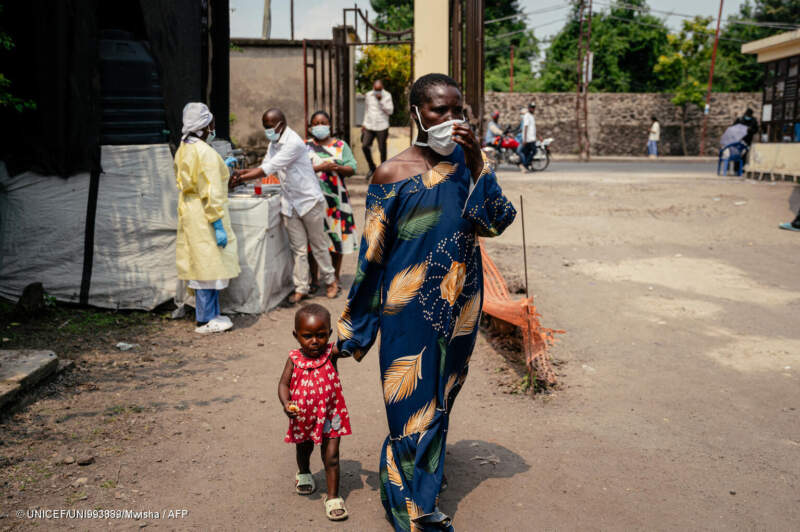
    A woman wearing a mask as a preventive measure enters Kyeshero Hospital after passing through a checkpoint for handwashing and health screening in Goma on May 18, 2026. The first case of Ebola virus infection has been reported in Goma, a major city in the eastern Democratic Republic of the Congo controlled by the M23 armed group, prompting the WHO to declare an international health alert on May 17, 2026. (Photo by Jospin Mwisha / AFP) TERMS OF USE FOR THIS ASSET: This is a non-exclusive stock asset for UNICEF, valid for use for 1 year only from the date the stock asset was shot. The credit line associated with the asset must be used. This includes use in all UNICEF documents; on UNICEF social media channels and websites; UNICEF fundraising and communication activities; and to illustrate press releases on UNICEF platforms. This asset may NOT be used for media outreach and may NOT be distributed to partners. TERMS OF USE FOR ANY FURTHER VIDEO MATERIALS CREATED BY UNICEF USING THIS ASSET: Any video products subsequently created by UNICEF using this asset may not be altered or further edited due to licensing restrictions, may be used for one year only, must include an on-screen credit to AFP, and may be shared with partners and the media. When uploaded to WeShare, the newly created video material must include the restrictions in the prefix field to match the licensing period of the stock asset used in the newly created video product. The restriction is [THIS VIDEO MAY NOT BE ALTERED OR FURTHER EDITED DUE TO LICENSING RESTRICTIONS OF THE NON -EXCLUSIVE STOCK ASSET INCLUDED IN THIS VIDEO. THIS VIDEO MAY BE USED FOR 1 YEAR FROM THE DAY THE STOCK ASSET WAS SHOT]-© UNICAF

    On May 17, 2026, the WHO declared an international public health emergency related to the Bundibugyo Ebola outbreak. PAHO has activated its incident management system for the Americas and the Caribbean. Ebola in the Caribbean: No cases have been reported in the region, but concrete measures are being taken to maintain vigilance.

    Ebola in the Caribbean: An African Threat That Requires a Regional Response

    On May 17, 2026, the Director-General of the WHO declared the Ebola outbreak a public health emergency of international concern. At that time, the Democratic Republic of the Congo had recorded 344 confirmed cases and 60 confirmed deaths. Uganda had reported 15 confirmed cases, including one death.

    This outbreak presents a unique challenge. There is no approved vaccine for the Bundibugyo variant. Existing vaccines, including Ervebo, target only the Zaire strain. Consequently, the usual therapeutic arsenal does not apply here. The response therefore relies on rapid detection and isolation of cases.

    Ebola Preparedness in the Caribbean: Activation of the PAHO System

    The Pan American Health Organization responded immediately. As early as May 18, it issued recommendations to its member states. On June 4, it took the matter a step further. It formally activated its incident management system, a tool used only during major crises.

    In this context, PAHO works directly with ministries of health. The goal is to strengthen four essential pillars: epidemiological surveillance, biological diagnostics, and infection prevention and control. Furthermore, operational coordination remains central. Every country in the region must be able to detect any suspected cases quickly.

    394 Professionals Mobilized to Prepare for Ebola in the Caribbean

    On June 3, PAHO’s Emergency Operations Center hosted a major regional technical session. A total of 394 participants from 30 countries in the Americas attended. Among them were Ebola preparedness professionals and representatives of the Global Alert and Response Network.

    The agenda included laboratory diagnostics, biosafety, and clinical management. In addition, twelve speakers from leading institutions participated in the discussions. Johns Hopkins University, Emory University, and Doctors Without Borders were represented at the event. A follow-up session was then held on June 10 to further discuss the deployment of regional experts.

    Testing reagents shipped to the Caribbean islands

    Specifically, PAHO is preparing shipments of reagents and materials for the detection of the Bundibugyo Ebola virus. These shipments are intended for member states, including small island states in the Caribbean. This logistical effort fills a critical gap. Several islands lack the diagnostic capacity to detect this specific strain. Strengthening this link remains essential for early detection.

    Why the Risk of Ebola in the Caribbean Remains Low but Real

    Experts agree on one key point. The risk of Ebola being imported from the Caribbean remains low for several reasons. Transmission requires direct contact with the bodily fluids of an infected person. Unlike COVID-19, Ebola is not spread through the air. The direct flights between the epidemic zones and the islands remain very limited.

    However, globalization calls for caution. A traveler from Central Africa passing through a major airport hub could theoretically introduce the virus. That is why PAHO is emphasizing the need to strengthen controls at airports and seaports. Training health care workers to recognize the signs of Ebola also remains a priority.

    Ebola in the Caribbean: Prepare Without Panic

    The message from regional health authorities remains consistent: Being prepared does not mean panicking. The Caribbean has demonstrated its ability to activate collective response mechanisms. The chikungunya, Zika, and COVID-19 outbreaks are proof of this. The Caribbean epidemiological surveillance networks, coordinated in particular by the Caribbean Public Health Agency, provide a solid foundation.

    The activation of PAHO’s incident management system reflects the maturity of a regional healthcare system. It does not signal an imminent threat to our islands. Rather, it reflects a preference for taking a proactive approach. In the face of Ebola in the Caribbean, the region is opting for a level-headed approach to preparedness. That is precisely the right response.

    To learn more about the measures to Epidemiological Prevention in the Caribbean, check out our related articles. The PAHO-WHO Regional Cooperation plays a fundamental role in this collective preparation.

    Related Posts

    « Que représente la CARICOM pour la jeunesse ? » : La jeunesse caribéenne répond

    August 14, 2026

    Les centres de formation technique et professionnelle de Sainte-Lucie se font l’écho de l’appel régional aux compétences

    August 14, 2026

    Saint Lucia Officially Launches a 1,000 EC$ Allowance for Newborns

    August 4, 2026
    Add A Comment

    Comments are closed.

    Caribbean News
    Caribbean

    « Que représente la CARICOM pour la jeunesse ? » : La jeunesse caribéenne répond

    St Lucia Times PaKherim Nelson À l’occasion de la Journée internationale de la jeunesse, les jeunes des Caraïbes ont pu exprimer à la CARICOM ce…

    Les centres de formation technique et professionnelle de Sainte-Lucie se font l’écho de l’appel régional aux compétences

    August 14, 2026

    Saint Lucia Officially Launches a 1,000 EC$ Allowance for Newborns

    August 4, 2026

    OECO delegates review Sargassum management strategies following their mission to French territories

    August 2, 2026

    Pierre: Emancipation is incomplete without economic freedom.

    August 2, 2026
    SUBSCRIBE TO OUR CHANNEL!
    Post Your Legal Notices

    Subscribe

    Get the latest news from Antilla Martinique.

    Thank you! Your request has been received.

    View legal notices
    View our back issues
    Our Different Sections
    Archives
    © 2026 Copyright ANTILLA. All rights reserved. Programmed by ANTILLA.
    • CONTACT
    • MARKETING
    • LEGAL NOTICE
    • LEGAL NOTICES
    • ABOUT ANTILLA

    Type above and press Enter to search. Press Esc to cancel.