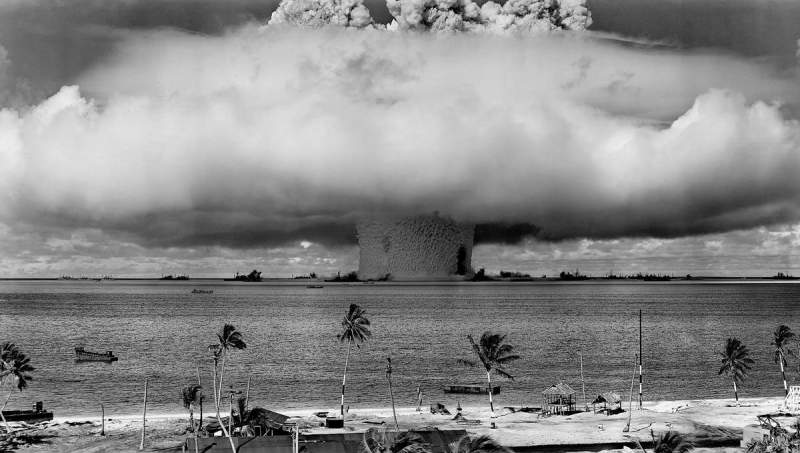




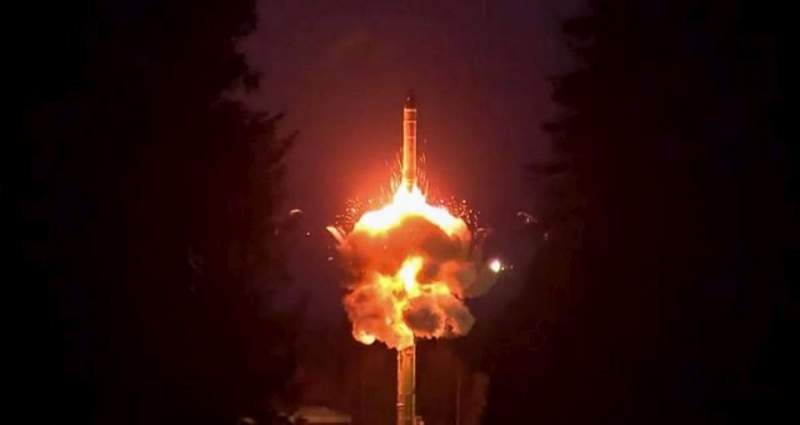
Given their distance from the major nuclear powers, the French West Indies appear to be on the periphery of a global nuclear conflict. However, their geopolitical status and the military presence there could indirectly expose them to certain risks.
Fort-de-France, August 2025
As international tensions escalate among several nuclear-armed powers—notably the United States, China, and Russia—the issue of the security of overseas territories, and in particular the Caribbean, is taking on a new dimension. Far from the major military capitals, are the Caribbean islands really safe from a large-scale nuclear conflict?
A strategic distance… reassuring at first glance
Martinique, Guadeloupe, Saint Martin, and Saint Barthélemy are located thousands of kilometers away from the world’s major nuclear powers: Washington, Moscow, Beijing, London, and Paris. In the event of a targeted nuclear war, the first strikes would logically target strategic urban centers, mainland military bases, and major industrial infrastructure.
In this regard, the West Indies appear to be peripheral regions, far from the front lines and spared by the initial waves of destruction. No nuclear arsenal is deployed locally, and the populations have not, to date, been incorporated into specific civil defense measures related to a nuclear attack.
A French military presence
But this apparent isolation must be put into perspective. As territories of the French Republic, the Antilles fall under the sovereignty of a member state of the “nuclear club”—a signatory to the Non-Proliferation Treaty but one that possesses its own nuclear deterrent. Martinique is home to, among other things: the High Command of the Armed Forces in the Antilles (COMSUP), a naval base in Fort-de-France, the RSMA, and elements of the internal security forces.
These areas could, as part of a strategy to weaken French power bases, become secondary targets. In a scenario of all-out war, even so-called peripheral territories could be targeted in a second wave—not for their intrinsic strategic value, but for their symbolic and logistical value.
Favorable winds, but a threatened global climate
Another safety factor lies in the prevailing weather conditions. The easterly trade winds that blow over the Caribbean reduce the risk of radioactive fallout from Europe, North America, or Asia in the event of strikes concentrated in the Northern Hemisphere.
But that does not mean that the Caribbean would be spared the global effects of a worldwide nuclear conflict:
– Nuclear winter, falling temperatures, and global agricultural disruptions; ;
– Contamination of the oceans by radioactive fallout; ;
-Global economic shock affecting supply chains.
Even without a direct impact, the side effects could profoundly disrupt life in island regions.
A geopolitical position that could become sensitive
Finally, the Caribbean Sea, long considered a strategic «backyard» of the United States, is once again becoming an area of strategic interest. If a conflict were to involve Latin America (through an alliance, a geopolitical shift, or the establishment of foreign bases), the French West Indies could be perceived as NATO outposts or logistical support zones.
The historical precedent of the Cuban Missile Crisis (1962) serves as a reminder that the Caribbean could once again become a theater of indirect confrontation between major powers.
Relative security, but not absolute
In short, the Caribbean has an undeniable geographical advantage in the event of a nuclear war: its distance from centers of power makes it a peripheral region in terms of priority targets. However, their political status, military environment, and integration into global defense strategies expose them to collateral risks.
The issue of their security in the event of a world war cannot, therefore, be addressed without a broader examination of the role of the overseas territories in the national defense strategy, and of the ability of local authorities to anticipate and manage a global crisis.
Relative safety does not mean immunity. When it comes to nuclear threats, no region in the world can truly claim to be out of reach.