

,
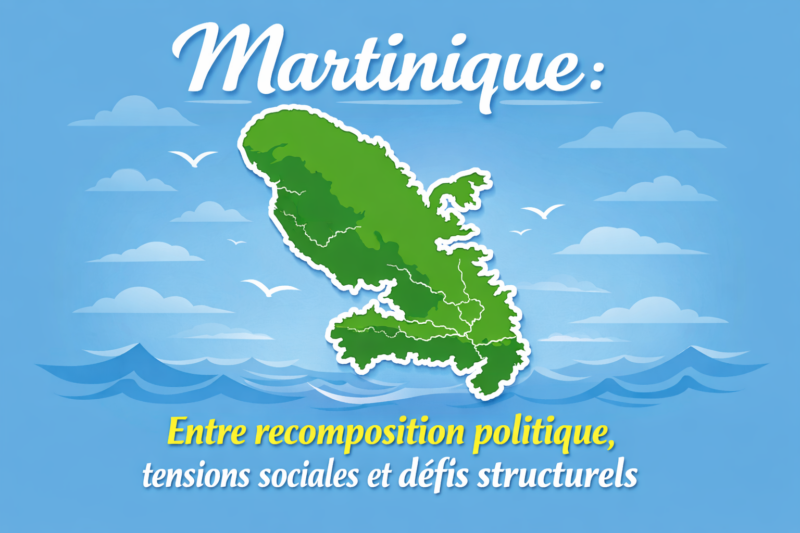
In the wake of the 2026 municipal elections, Martinique is entering a new political phase marked by the apparent stability of local governments, but also by persistent tensions on the economic, environmental, and social fronts. Behind the return to institutional normalcy, an island in the midst of transformation is taking shape, confronted with its structural vulnerabilities.
A Deceptive Sense of Political Stability
The post-election period confirms a reality that is now firmly established in the political landscape of Martinique: changes in government remain limited, but the political balance is becoming more fragile.
In Fort-de-France, the re-election of the incumbent mayor reflects political continuity, but it should not obscure the gradual erosion of traditional electoral bases. In several municipalities, the incumbent teams were re-elected—sometimes by a comfortable margin, sometimes under more uncertain circumstances—revealing a more volatile and demanding electorate.
This relative stability reflects not so much widespread support as a loyalty to local figures and community networks. Local politics remain highly personalized, which slows down profound shifts but does not prevent them from gradually emerging.
Social and legal pressure remains intense
Recent news has also been marked by a particularly serious criminal case, the impact of which extends beyond the judicial sphere. The conviction of a man for serious offenses involving a minor has stirred strong emotions among the public.
Beyond the news story itself, this episode highlights broader issues: social vulnerability, family breakdown, and the need to strengthen child protection systems. It serves as a reminder that social tensions in Martinique are not solely driven by economic factors, but also by deeper divisions.
Sargassum: An Ongoing Environmental Crisis
On the environmental front, the situation remains a cause for concern. The launch of a new round of consultations on the Sargasses III plan confirms that the phenomenon is now structural.
Massive brown algae blooms continue to affect coastal areas, with significant health, economic, and tourism impacts. Despite the measures put in place, the public response is struggling to keep up with the scale of the problem.
The management of Sargassum highlights a broader challenge: that of adapting public policies to hybrid crises—which are both local and global—in a region with limited resources.
Economic Indicators Under Pressure
The economic climate is also fueling concerns. The reorganization of air travel—with Air France flights being concentrated at Roissy—is changing the conditions for entering the country and could have an impact on tourist flows and travel costs.
At the same time, international tensions in the energy markets are raising concerns about another rise in fuel prices in a region already grappling with the high cost of living and a heavy reliance on imports.
These developments highlight the structural vulnerability of Martinique’s economic model, which is highly exposed to external shocks.
A Society That's Always on the Move
In this context, however, local life continues to show real vitality. Economic events, cultural initiatives, and community gatherings punctuate daily life and demonstrate a capacity for resilience.
But this vitality should not obscure the underlying challenges. The island continues to face a complex dilemma: maintaining social cohesion while having to fundamentally overhaul its development model.
Taken together, recent events paint a picture of a Martinique in transition. Political stability, which is often highlighted, increasingly appears to be a facade behind which economic, social, and environmental tensions are mounting.
The issue is no longer simply one of managing the present, but rather one of transforming the model. Caught between continuity and the need for change, the island finds itself at a pivotal moment in its contemporary history.
Gdc