




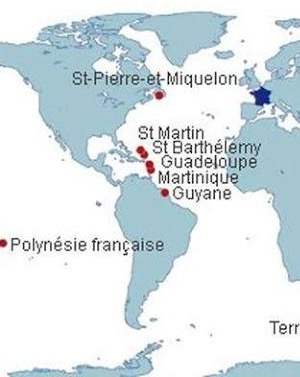
At regular intervals, the temptation resurfaces in public debate: What if France were to «get rid of» Martinique, Guadeloupe, or French Guiana, citing the financial burden they represent? This simplistic and dangerous idea is based on a profound misunderstanding of the reality of these territories. Their importance far exceeds mere budgetary considerations: it involves military, economic, cultural, and environmental issues that place these overseas departments and regions at the heart of France’s and Europe’s future.
Geopolitical strongholds
Located in the Caribbean, Martinique and Guadeloupe enable France to be a regional power in a coveted area, at the crossroads of maritime routes and strategic rivalries. French Guiana, for its part, provides access to South America, sharing land borders with Brazil and Suriname.
These territories also serve as military and scientific hubs: nearly 3,000 military personnel ensure security in the Antilles-Guyana region, particularly against drug trafficking. In Kourou, the Guiana Space Center—a key European infrastructure—has guaranteed independent access to space for more than half a century. Can we seriously talk about «abandonment» when French sovereignty is so directly at stake there?
Cost savings that are more strategic than one might think
Admittedly, the local economies are fragile, dependent on imports, and struggling with the high cost of living. But they are nonetheless vital. In Martinique and Guadeloupe, agribusiness (bananas, sugarcane, rum) supports tens of thousands of families, and tourism fuels the regional economy. In French Guiana, the space industry alone accounts for nearly one-sixth of GDP, while gold and biodiversity further enhance this potential. Far from being dead weight, these territories serve as France’s footholds in the Americas, counterbalancing American, Brazilian, and Chinese ambitions.
A Heritage and a Culture
These societies bear the marks of slavery and colonization, yet they have transformed this history into an intellectual and artistic heritage that extends far beyond their shores. Aimé Césaire, Édouard Glissant, Léon-Gontran Damas: their voices resonate around the world and serve as a reminder that French universalism was also forged in Fort-de-France, Cayenne, and Pointe-à-Pitre. To overlook this aspect would be to deny a part of French reality
Irreplaceable Ecological Reservoirs
French Guiana is home to an intact Amazon rainforest covering 95 % of its territory: a treasure trove of biodiversity that is essential to the global fight against climate change. The French West Indies, for their part, serve as research laboratories for studying the resilience of coral reefs. When France advocates for the environment on the international stage, it is also thanks to these territories.
A Necessary Political Overhaul
The institutional question remains. Debates remain heated between Article 73 of the Constitution, which preserves legislative identity, and Article 74, which paves the way for autonomy. The referendums held in 2003 and 2010 rejected autonomy in Martinique and Guadeloupe, but the desire for greater control over local affairs remains strong. As the precedents in New Caledonia have shown, stability depends on keeping one’s word, on negotiation, and on a collaborative process that respects the peoples involved.
Don't Shirk Your Responsibilities
In a changing world, talking about «abandoning» these territories is not just a political blunder—it’s a strategic mistake. France needs Martinique, Guadeloupe, and French Guiana just as much as they need France.
- The role of local elected officials is now clear: to remind Paris that the future cannot be built on neglect or contempt, but rather on shared responsibility and the recognition of potential.
The question is not how much these territories cost, but what their loss would cost—for France, for Europe, for France as a whole.
Gérard Dorwling-Carter