



A Decisive Election for Political Stability
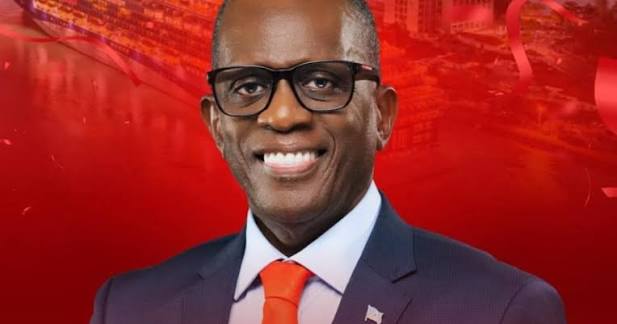
The general elections held on December 1, 2025, re-elected Philip J. Pierre as head of the government of Saint Lucia. His party, the Saint Lucia Labour Party (SLP), won another landslide victory, thereby consolidating the change in government that took place in 2021.
This result marks an exception in Saint Lucian politics, a country where outgoing governments are often voted out after a single term.
A decisive and unequivocal victory
The SLP has secured a strengthened majority in the House of Assembly, with approximately 14 out of 17 seats, according to initial consolidated projections.
Voters thus reaffirmed their confidence in the incumbent prime minister, whose campaign focused on fiscal stability, the continuation of infrastructure projects, and prudent management of public finances.
The campaign's main themes
Three main issues shaped the election period:
– the economic situation, which is still affected by the aftermath of the pandemic; ;
– the rise in violent crime, which is perceived as a major concern among the public; ;
– Governance of the Citizenship-by-Investment Program: A Strategic Issue for the National Economy.
The United Workers Party (UWP), led by Allen Chastanet, had hoped to capitalize on these concerns, but failed to reverse the momentum in favor of the SLP.
A Look Back at the Previous Election: 2021 as a Turning Point
In July 2021, the SLP scored a resounding victory, winning 13 of the 17 seats and reducing the UWP’s representation to its lowest level in more than twenty years.
That election had symbolized a deep desire for change, against the backdrop of an economic and health crisis. The 2025 reelection confirms this lasting shift in the electorate.
An electoral system that amplifies political shifts
Saint Lucia elects the 17 members of its House of Assembly through a single-member district, first-past-the-post system.
This electoral system, based on the British model, traditionally favors clear majorities and abrupt changes in government.
The Prime Minister is then appointed by the Governor General, the monarch's representative, in favor of the majority party or coalition.
Political Dynamics: A Strengthened Caribbean Left
The SLP’s two victories in 2021 and 2025 are part of a regional trend in which several labor or progressive parties have recently won elections in the English-speaking Caribbean.
The SLP is now emerging as one of the main pillars of this movement, driven by a leadership considered pragmatic and financial management that has been praised internationally.
Summary Table of Recent Results
Election | Party/Bloc | Seats (out of 17) | Key Observations
———-|———————————-|————————-|————————–
2021 | Saint Lucia Labour Party | 13 | Returned to power with a large majority.
2021 | United Workers Party | 2 | A crushing defeat for the Chastanet administration.
2021 | Independents (formerly UWP) | 2 | Two incumbent ministers were reelected as independents.
2025 | Saint Lucia Labour Party | ≈14 | Philip J. Pierre's landslide re-election.
2025 | United Workers Party | Remains in the minority | Opposition weakened despite an active campaign.
A reelection with regional implications
With this new term in office, Philip J. Pierre has established himself as one of the most influential political figures in the Eastern Caribbean.
Regional observers point out that this political continuity could foster greater economic stability, strengthen institutional reforms, and promote increased cooperation within the OECS.
The major challenge for the next four years, however, remains violent crime, which has become a central issue in public debate and is likely to influence the country's political trajectory.
Jean-Paul BLOIS