



Good morning, everyone!
The composition of the new government leads us to three observations.
The first observation is that forming a 42-member cabinet—one of the largest in the history of the Fifth Republic—does not directly convey a message of fiscal restraint in a country facing serious budgetary difficulties. The example set—the main factor in gaining public support for a policy—is not the best one.
The second observation concerns the surprising reaction of certain overseas parliamentarians, who called on the new minister—formerly in charge of the colonies, now in charge of overseas territories—and the prime minister, who had barely taken office, to outline their vision for the overseas territories.
To which the new minister replied, without hesitation, that in his opinion, «the overseas territories are an opportunity for France»—a well-known phrase.
That doesn't get us very far.
Beyond this heartwarming statement, is it possible, for example, that the government’s vision for New Caledonia is the same as that for Saint Martin?
That's doubtful.
What is beyond doubt, however, is that it is up to each region to develop, together with all its stakeholders, its own unique vision and strategy, in consultation with national and European leaders, with a view to receiving operational, budgetary, and, where appropriate, legislative and regulatory support.
In fact, this is what the decentralization laws call for, but it has not been implemented.
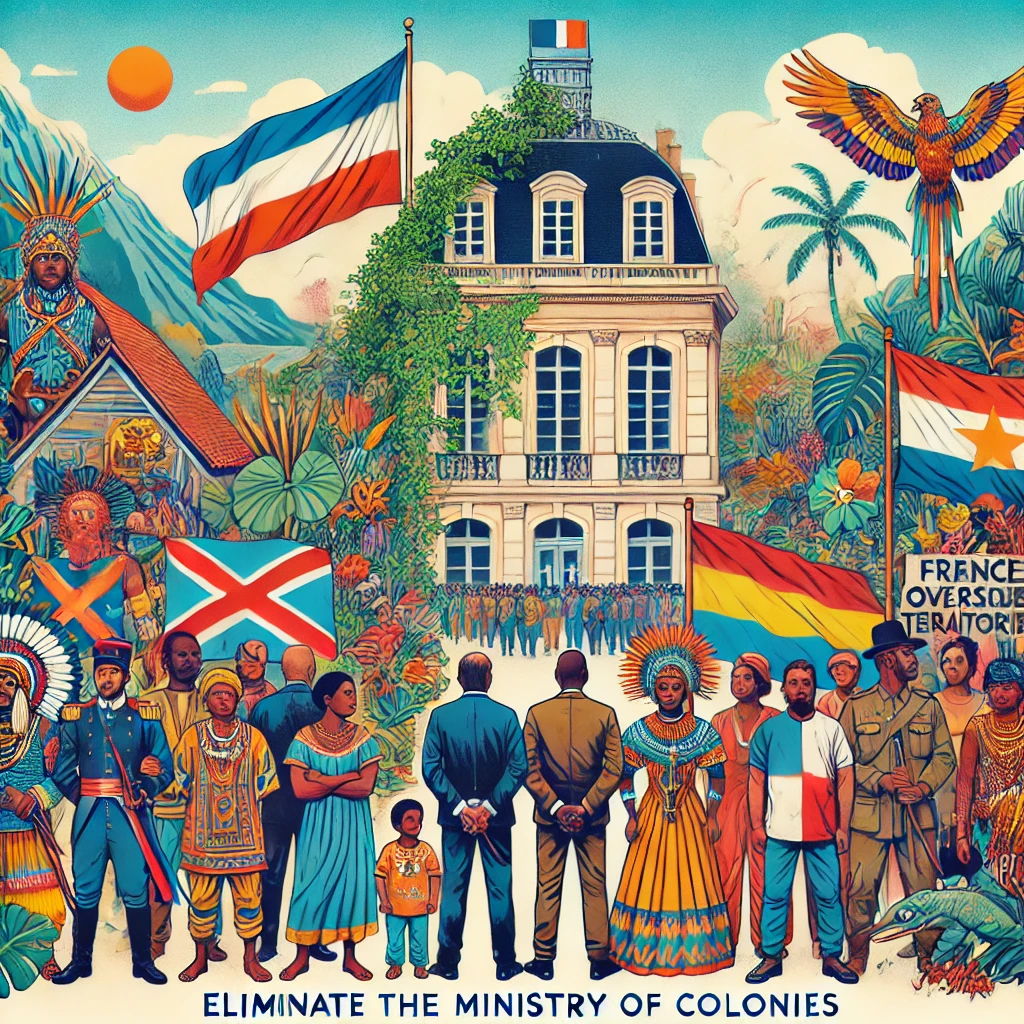
The third point is that at no point in the debates concerning the overseas territories is there any mention of abolishing the ministry itself, a remnant of the colonial era.
Not only would this elimination provide an opportunity to save some money, but it would also put an end to the quasi-apartheid situation faced by the various overseas territories, which are under the jurisdiction of a ministry still regarded as secondary, even though they give France a global presence that is the envy of many.
Ensure that each ministry takes cultural assets into account,
economic, botanical, and maritime resources found in the overseas territories;
to develop them alongside their diverse mixed-heritage populations, who foreshadow the world of tomorrow;
align them with the projects developed by each of them:
This is what an effective policy for France's overseas territories should look like, far from the
the grandstanding of lawmakers with vague ideas and the same old clichés we’ve been hearing for decades.
They in no way defend the interests of their constituents, who are woefully uninformed about the realities and their responsibilities in a world where Don Quixote-style stunts against windmills serve no one’s interests.
Is it any wonder, then, to see some of these voters taking to the streets, led by those who peddle death?
MANMAY, WE'RE COUNTING ON YOU!