



Fermer le menu
ANTILLA MARTINIQUE | Avec vous depuis 1981

    Abonnez-vous

    Recevez les dernières actualités créatives de ANTILLA concernant l'art, le design et les affaires

    Les tendances du moment

    Évolution institutionnelle : l’accord entre l’État et la Martinique publié au Journal officiel

    août 14, 2026

    Évolution institutionnelle : l’accord entre l’État et la Martinique publié au Journal officiel

    août 14, 2026

    BBS (LA MAUNY/TROIS-RIVIÈRES) : derrière la reprise par Les Bienheureux, un lourd défi industriel et financier

    août 14, 2026
    Facebook X (Twitter) Instagram
    ANTILLA MARTINIQUE | Avec vous depuis 1981ANTILLA MARTINIQUE | Avec vous depuis 1981
    • Rubriques
      • Édito de Henri PIED
      • Ecologie / Environnement
      • Art/Culture
      • Caraïbe
      • Entreprises
      • Le Regard de Gdc
      • Patrimoine
      • Politics
      • Santé
      • Sports
      • Tribunes
    • Nos dossiers
      • Grandes figures
        • Édouard Glissant
        • Aimé Césaire
        • Frantz Fanon
        • Pierre Aliker
        • Camille Darsières
        • Alfred Marie-Jeanne
        • Patrick Chamoiseau
        • Raphaël Confiant
        • Serge Letchimy
      • Grands enjeux
        • Sargasses
        • Rhum
        • Vie chère
        • La presse en Martinique
      • Portrait ou enquête
    • À propos
      • Qui sommes-nous ?
      • Kit média
    • Contact
    • Changer la langue en English
    annonces
    ABONNEMENT
    ANTILLA MARTINIQUE | Avec vous depuis 1981
    Home » The Haitian Revolution and the Hole in French High-School History.
    Tribunes

    The Haitian Revolution and the Hole in French High-School History.

    décembre 18, 2020Aucun commentaire
    Facebook LinkedIn WhatsApp

    Culture Desk

    By Lauren Collins


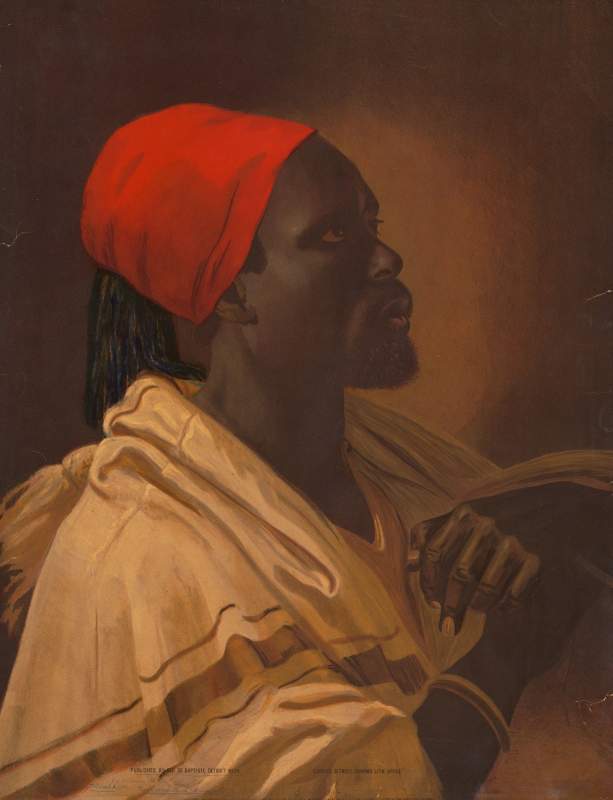
    Toussaint Louverture, according to the scholar Sudhir Hazareesingh, was “the first black superhero of the modern age.”

    Louverture was born enslaved on a sugar plantation on Saint-Domingue, a French colony on the island of Hispaniola, sometime in the early seventeen- forties. He was emancipated in adulthood and, at about fty, led the most important slave revolt in history, effectively forcing France to abolish slavery, in 1794. Next, he united the island’s Black and mixed-race populations under his military command; outmaneuvered three successive French commissioners; defeated the British; overpowered the Spanish; and, in 1801—despite having been wounded seventeen times in battle and having lost most of his front teeth to a cannonball explosion—authored a new abolitionist constitution for Saint-Domingue, asserting that “here, all men are born, live, and die free and French.” Napoleon Bonaparte rst sent twenty thousand men to overthrow him, reinstating slavery in the French colonies, in 1802. Louverture instructed Jean-Jacques Dessalines to torch the capital city, “so that those who come to re-enslave us always have before their eyes the image of hell they deserve.” Ultimately taken captive, Louverture was deported to France and died within months in a prison in the Jura

        Mountains. In 1803, Bonaparte’s army was defeated, having lost more soldiers (his brother-in- law among them) on Saint-Domingue than he would, twelve years later, at Waterloo. The next year, the revolutionaries established a new, independent, and free nation: Haiti, the world’s rst Black republic.

    For the moment, a typical French student completes her high-school education without hearing

    much about any of this. Despite Marcus Garvey’s assertion that Louverture’s “brilliancy as a

    soldier and statesman outshone that of a Cromwell, Napoleon, and Washington,” despite Aimé

    Césaire’s belief that Haiti was the place where “negritude stood up for the rst time and proclaimed its faith in its humanity,” despite the fact that Louverture—hailed as “the Black Spartacus,” hero of Frederick Douglass—embodied the ideals of the French Revolution and, then, the Haitian Revolution, which inspired the modern anti- colonial movement all over the world, France has not seen him and his ght as indispensable elements of its national narrative. “It’s thought of as a minor story, not la grande histoire,” Elisabeth Landi, a history professor in Martinique, said. In 2009, an inscription honoring Louverture was engraved in a wall at the Pantheon. The story of his country’s revolution is taught in high schools in some of France’s overseas territories. In metropolitan vocational high schools, whose students are more likely to come from working-class and immigrant families, the recently updated curriculum acknowledges the Haitian Revolution as a “singular extension” of the American and French revolutions. But it is not mentioned in the general lycée curriculum. A future pipe tter in Paris will thus know that enslaved Black people in a French colony sought and secured their own freedom, but an aspiring politician, having done all her homework at lycée, may understand emancipation simply as a right granted in 1848, by decree of the Second Republic.

    Lauren Collins has been a staff writer at The New Yorker. 

    ARTICLES SEMBLABLES

    « Et si le véritable changement était celui de la culture politique martiniquaise ? ». Par Franck A

    août 11, 2026

    BACCHA FESTIVAL : le succès au rendez-vous et quand les faits parlent d’eux-mêmes !

    août 10, 2026

    Antilles françaises : l’européanisation comme nouvel horizon ?

    août 10, 2026
    Ajouter un commentaire

    Les commentaires sont désactivés.

    Actualités de la Caraïbe
    Caraïbe

    Sainte-Lucie lance officiellement une allocation de 1 000 EC$ pour les nouveau-nés

    Source: St  Lucia times Par Quinn St. Juste Dans le cadre de ce programme, les mères de nouveau-nés éligibles et enregistrés recevront une allocation…

    Les délégués de l’OECO font le point sur les stratégies de gestion des sargasses suite à leur mission dans les territoires français

    août 2, 2026

    Pierre : L’émancipation est inachevée sans liberté économique.

    août 2, 2026

    Les recherches sur les requins menées aux îles Caïmans sont débattues sur la scène internationale.

    août 1, 2026

    Soufrière se classe deuxième parmi les destinations touristiques les plus heureuses au monde

    août 1, 2026
    INSCRIVEZ-VOUS À NOTRE CHAÎNE !
    Publiez vos annonces Légales

    Abonnez-vous

    Recevez les dernières actualités de Antilla Martinique.

    Merci ! Votre demande a bien été prise en compte.

    Consultez les annonces légales
    Consulter nos anciens numéros
    Nos différentes rubriques
    Archives
    © 2026 Copyright ANTILLA. Tous drois réservés. Programmé par ANTILLA.
    • CONTACT
    • MARKETING
    • MENTIONS LÉGALES
    • ANNONCES LÉGALES
    • À PROPOS D’ANTILLA

    Saisissez votre recherche ci-dessus, puis appuyez sur Entrée pour lancer la recherche. Appuyez sur Esc pour annuler.