


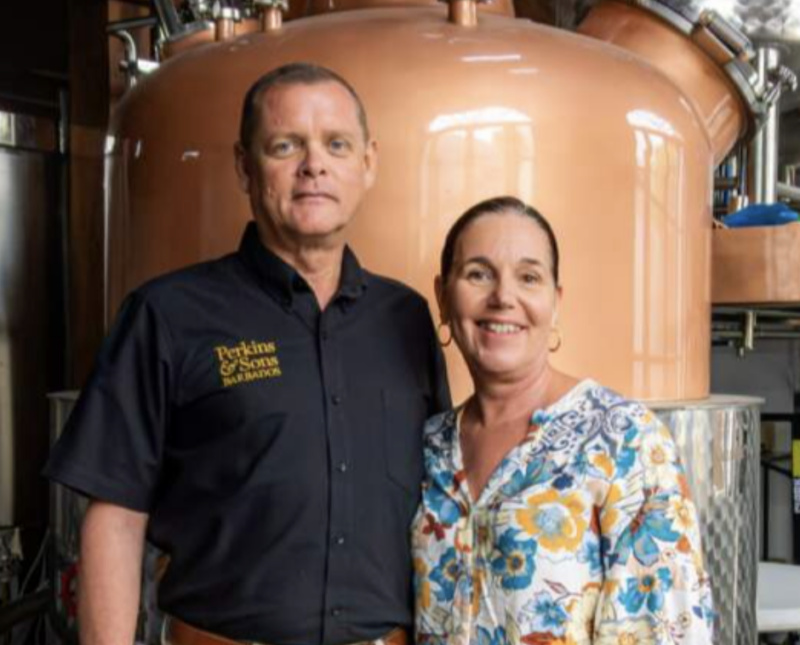
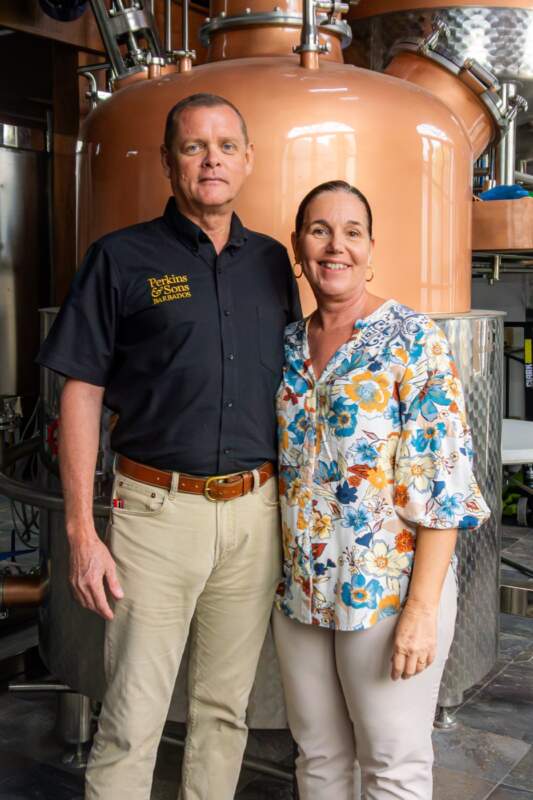
At Hopewell Plantation, Greg Cozier is reconnecting a family business founded in 1944 with a much older Barbadian tradition. Perkins & Sons spent decades ageing, blending and bottling rum. Today, at Hopewell Distillery, the company has begun distilling its own spirits, using small-batch production techniques and revisiting methods that disappeared centuries ago.
In brief
Who: Greg Cozier, Perkins & Sons / Hopewell Distillery, Barbados
Company founded: 1944
What is new: The company now distils its own spirits at Hopewell Distillery
Method revived: 1½ distillation, a Barbadian small-holder technique
First release: Single Batch Release no 1 — bronze medal, International Wine and Spirits Competition, London
At stake: The rules of a Geographical Indication for Barbados Rum
For Cozier, this is not simply about launching another premium rum. It is about returning rum production to its agricultural and historical roots, experimenting with forgotten techniques and defending a clear idea of what “Barbados Rum” should mean. From the revival of 1½ distillation to the debate over a Geographical Indication, he argues that the island’s future may lie precisely in rediscovering its past.
“I believe that our past is our future.”
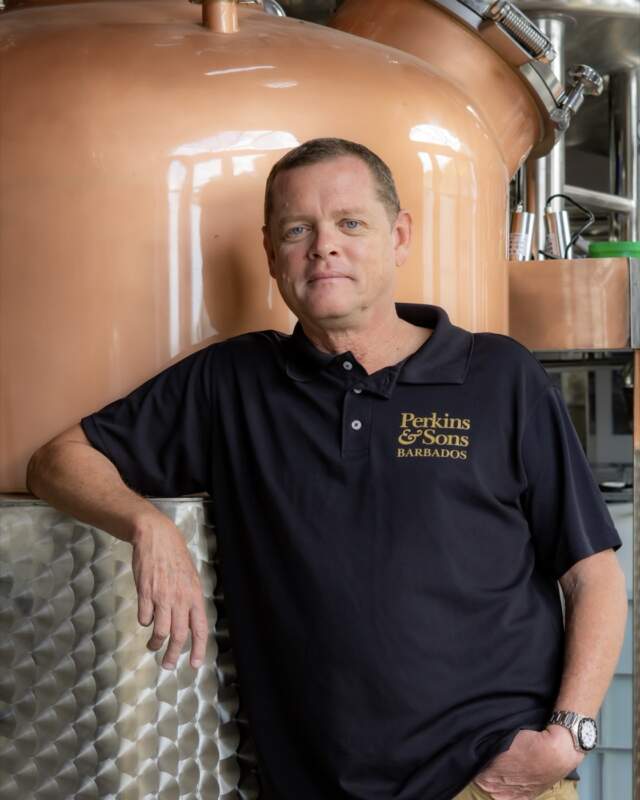
Perkins & Sons dates back to 1944, but Hopewell Distillery represents a new chapter in that family story. Why did you decide that the time had come to move from ageing, blending and bottling into distilling your own rum?
My family really has two histories that come together here. On the Cozier side, the family has been in Barbados since 1635 and was involved in the sugar industry generation after generation. I am actually the first one not to be a sugar planter.
On my mother’s side, the Perkins family also started here in 1635 and eventually were merchants in Roebuck Street, Bridgetown. My grandfather, I.O.C. Perkins, established Perkins & Sons in 1944, and his father, J.E. Perkins, had been manager of Mount Gay Plantation and Distillery long before that.
So my interest in rum is deeply historical.
We are also now in the age of premium spirits, the age of cheap brands and bulk spirits is changing. Craft distillation is growing, and we have an extraordinary opportunity at Hopewell Plantation because this is a historic sugar estate and we can actually distil in a place that was associated with sugar and rum production for centuries, in fact, from the very beginning. We have restarting distillation in the historical way, on a historical site.
I also believe Hopewell may not be alone. I have spoken to several people who are considering, building or in the process of financing small craft distilleries in Barbados. It is very unlikely new rum investors would build large column stills, the days of Barbados competing in the bulk-spirit world-market are long-gone. What we will see instead is a return to small-scale batch distillation and premium branding and finished-product distribution and export.
Ideally, we should have ten or fifteen small historic-process distilleries operating again on old sugar estates. That would reconnect Barbados rum with a part of its history that largely disappeared with industrialisation and has tremendous tourism appeal, which currently is our largest and only industry other than rum. We need to do a better job of connecting the two.
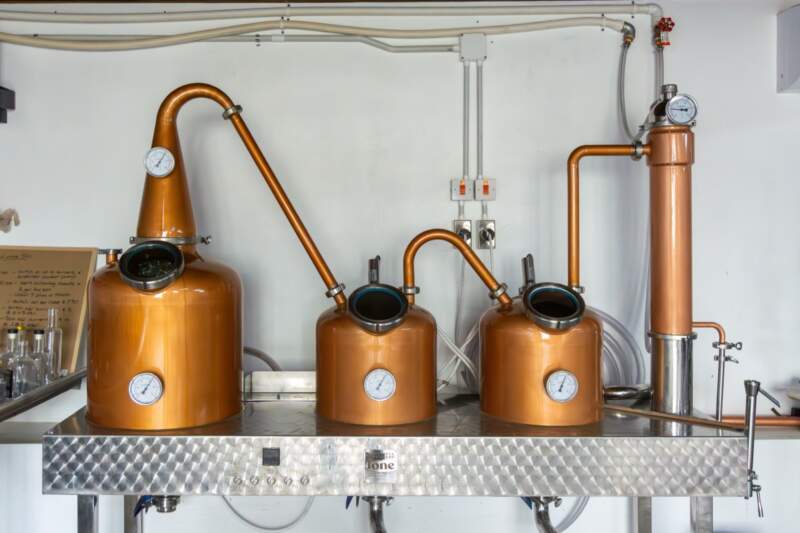
Your first Single Batch Release uses what you describe as a “1½ pot still” distillation method, a technique that had not been practised for nearly 200 years. How exactly does it work?
Let us start with the basics. Fermentation is yeast consuming sugars and producing alcohol and carbon dioxide. Distillation then separates alcohol compounds through heating due to their different boiling points, all lower than water.
Imagine that you have a fermented wash at around 10% alcohol. With a conventional first pot-still distillation, you might roughly reduce the volume by two-thirds while increasing the alcohol concentration approximately threefold. The resulting liquid is what we call low wines.
With traditional double distillation, you collect those low wines and distil them a second time to create your finished product.
The 1½ method is different.
Imagine very poor farmers on small-holdings of less than ten acres, mostly ex-indentures and none of whom could afford a sugar-works of windmill, boiling house, distillery. The best return on their small sugarcane crop would be to turn it all into rum. Imagine a 200-litre fermentation cistern made from local wood and a 120-litre pot still made from imported copper and fired by cane bagasse and trash. Take roughly half of that fermentation and distil it once to create low wines. Instead of collecting enough low wines to redistill, take that first batch of low wines and add them back to the remaining half of the original fermentation, then distil the mixture.
So part of what goes through the final distillation has effectively been distilled twice and part only once. That is why it is called one-and-a-half distillation. The product is described in one historical account as being called ‘spirit’ and tasting better than the rum available at the time.
What is interesting is that a much more pronounced character from the fermentation is retained. It is not a particularly efficient way of producing rum, but historically it made sense for poorer farmers who did not have several stills or a large boiling house.
We wanted to see what would happen if we recreated that method.
Our first rum competition entry of any kind, using this technique, won a bronze medal at the International Wine and Spirits Competition (IWSC) in London this year, so apparently other people also think the result is interesting. More importantly, it gives us a rum with a profile that is directly connected to a historically witnessed and recorded production technique.
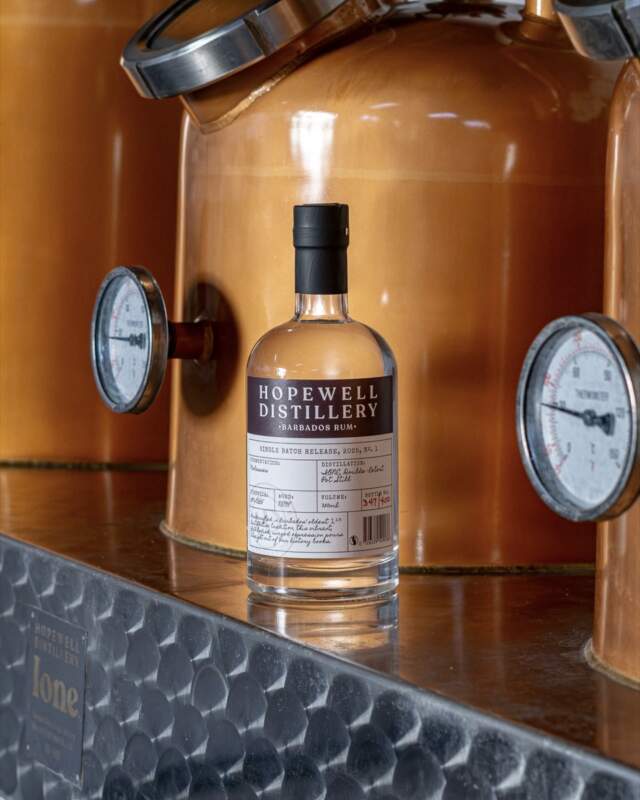
You use blackstrap molasses, dunder and water drawn from a limestone stream beneath the distillery. What makes Hopewell genuinely a Barbados rum rather than simply a rum distilled in Barbados?
That question goes directly to the heart of the debate around the Geographical Indication.
Historically Barbados produced enormous amounts of sugar for its size (over 200,000 tons in 1957 and 1967) and therefore enormous amounts of molasses. We stayed competitive in the sugar industry for centuries due to improving growing, grinding and extraction efficiencies, not space. Molasses was so abundant that rum production developed around a raw material that was effectively free due to sugar-production processes changing with the introduction of steam factories in 1848. Hopewell’s steam factory was built in 1865.
Today the situation is completely different. Barbados does not produce enough molasses for its own rum industry, so a significant amount has to be imported.
This raises the question of what actually creates the identity of Barbados rum.
In my view, with molasses rum, the decisive factor is not some idea of terroir attached to the molasses itself. Once cane juice has been processed into sugar and blackstrap molasses, that original agricultural distinction has disappeared.
What matters is the substantive transformation that occurs here, the fermentation, the distillation, the ageing, the blending and the culture and techniques surrounding those processes that have developed over centuries.
If we are talking about Barbados rum heritage, we also have to remember that column distillation is relatively recent in the island’s four-century rum history. Before the West India Rum Refinery began operating in 1898, Barbados rum was entirely pot-still distillation.
At Hopewell, I am deliberately exploring those older production techniques, traditional equipment and different approaches to fermentation, that is the niche we can develop in the very large rum world. I have no interest in exporting bulk rum for foreigners to profit from, that is the work of industrial distilleries and an obsolete idea.
Everyone familiar with rum knows that Barbados rum has a different identity from Jamaican rum, Spanish-style rum or French Caribbean rum. That is the identity we are exploring, while also finding ways to put our own signature on it.
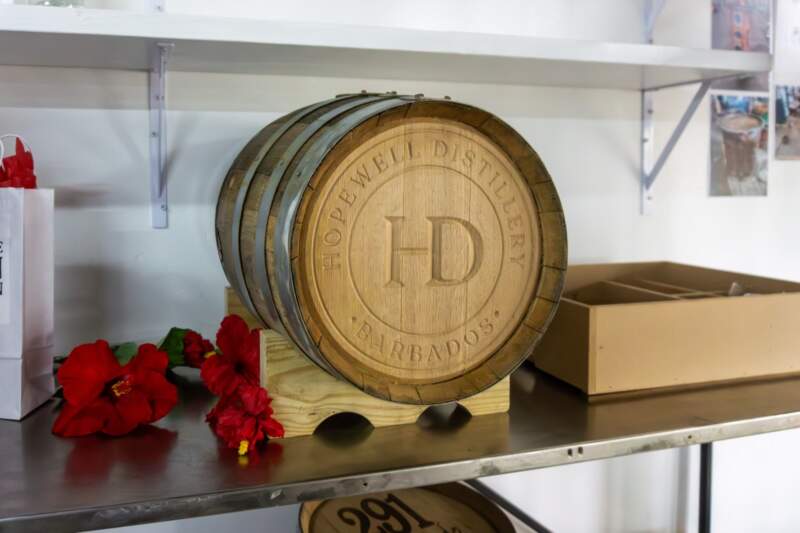
Your first production is only a few hundred bottles. What can you do at that scale that a large distillery cannot?
At this stage, we are using relatively small equipment because we are testing everything, the distillation processes, fermentation, equipment and the overall production system.
The objective is to establish methods that work and then scale them up. Our main double-retort pot still is 1,500-litres and can produce 10 barrels per week. If that business model works, we have enough space at Hopewell to expand further to two more 8,000 litre stills.
But I do not believe Barbados’ future is about competing with the biggest producers on volume. The opportunity is in collectors, enthusiasts and people who want something distinctive. That means single-batch releases, limited quantities and products that are not necessarily repeated.
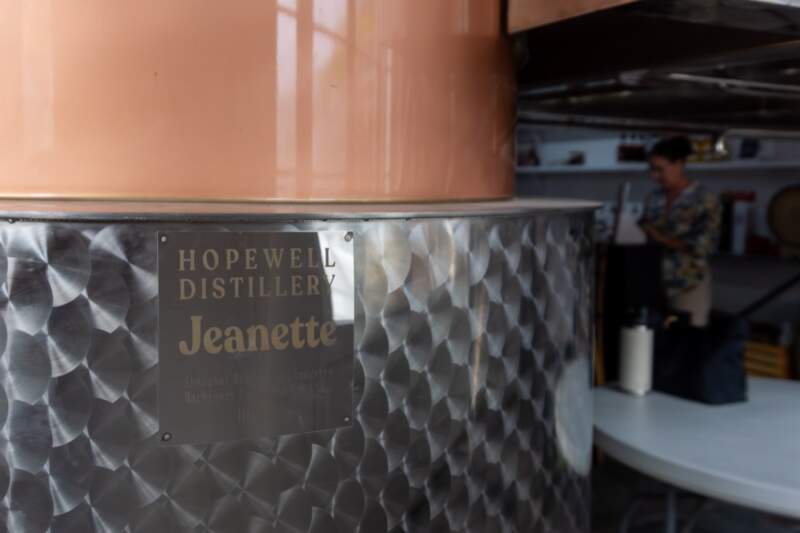
“Our future is in quality spirits marketed to bars and restaurants and direct to consumers through on-line distribution.”
For a small Barbados producer, trying to compete with international industrial-scale rum on price and volume is a nonsense, everything here is too expensive. Our model is craft distillation, very high quality, relatively low volume and products with a story and a genuine point of difference.
Hopewell combines two ideas that might seem contradictory, reviving very old methods while creating something new. Where does preservation end and innovation begin?
My focus is very clearly on preserving and rediscovering our agricultural, technical and cultural history, the equipment, how it was installed, where it was used and how people actually worked with it.
But rediscovering the past is not straightforward.
You can read an old description of a distillation method, but the person who wrote it may not have fully understood what they were observing. The description may be incomplete, the equipment misunderstood or mis-described.
When you actually have the equipment in front of you and begin trying to reproduce the process, you become almost like an archaeologist.
You ask: what did this person really mean? What were they actually doing? What information is missing? Can we reproduce it?
So, for me, experimentation is a form of archaeology.
Once we understand what was done in the past, we can decide whether it remains relevant and where we want to go next.
Innovation certainly has a place, particularly in fermentation. Historically, fermenters were simply left open and whatever wild yeast and bacteria entered the fermenter became part of the process. But we know that Barbadian rum producers were building tall, inverted cone fermenters to limit bacterial action to a small surface of the wash, while Jamaicans were culturing bacteria in muck pits. To this day our rums are completely different even though the environment, people and equipment were much the same.
Today we have access to yeasts from all over the world and far more control over fermentation. If you ask me where most future innovation in Barbados rum will come from, I would say fermentation. The French have become leaders in fermentation because there is no room for error with fresh cane juice. With molasses we have the time to play a little.
Barbados is still debating the rules of a Geographical Indication for Barbados Rum. What should that GI protect?
I think people sometimes overcomplicate this discussion, especially for decision makers who are disinterested in the technical details.
For me, the fundamental question is whether what is being sold in a Barbados rum bottle genuinely originates in Barbados.
Take a highly concentrated column-distilled rum exported in bulk. It may leave Barbados above 90% ABV. Water is then added overseas to reduce it to cask strength, maybe 65% ABV. It may be aged in another country, under a completely different climate, and then diluted again before bottling, perhaps down to 40% ABV.
At that point, a substantial proportion of what is physically inside that bottle, as much as 60%, was added outside Barbados. Where did the water come from? A French river? A Dutch dyke?
I have a problem with calling such a product “Barbados Rum” or Barbados anything else for that matter.
My position is straightforward: if a rum is fermented, distilled, aged, blended and bottled in Barbados, it should qualify for the Barbados GI.
I am much less concerned about dictating exactly which type of barrel wood somebody must use, how long they must use it, or preventing different fermentation and distillation techniques.
Barbados has historically used many forms of distillation, one-and-a-half distillation, double distillation, double-retort pot stills, Coffey stills and modern column stills.
So I do not think a GI should freeze the industry technologically.
It should protect origin, production and culture while leaving producers room to innovate.
For me, it comes down to two things: the bottle contents and the culture.
If you had to summarise the future of Caribbean rum in one sentence, what would it be?
I would actually hesitate to speak about “Caribbean rum” as though it were a single thing, because our Caribbean cultures are very different.
There are similarities between Barbados, Guyana, Saint Lucia, Saint Vincent and other eastern islands in terms of sugar industry history, but the cultures surrounding rum remain different.
That diversity is something we should celebrate.
When organisations such as WIRSPA bring Caribbean producers together, the point is not to try to make everybody identical. We are stronger together precisely because we have different traditions, different styles and different histories. That includes the French Caribbean which is considered to make very different rum than the English and Spanish. When we collaborate, from the most elaborate presentations to the smallest comment dropped over a drink, we make progress between people who have a deep technical understanding and are happy to share their experiences, processes and results.
As for Barbados, I think we are moving towards a new period of craft distillation. I believe producers whose business depends overwhelmingly on bulk rum are going to face increasing difficulties, and that we will see more small distilleries and more distinctive products emerging, with more opportunities for small, achievable investments. We all know worldwide liquor consumption is reducing but sales of craft spirits are increasing.
“Now is our time.”
Interview by Philippe Pied
Photographs: Perkins & Sons / Hopewell Distillery, Barbados.