




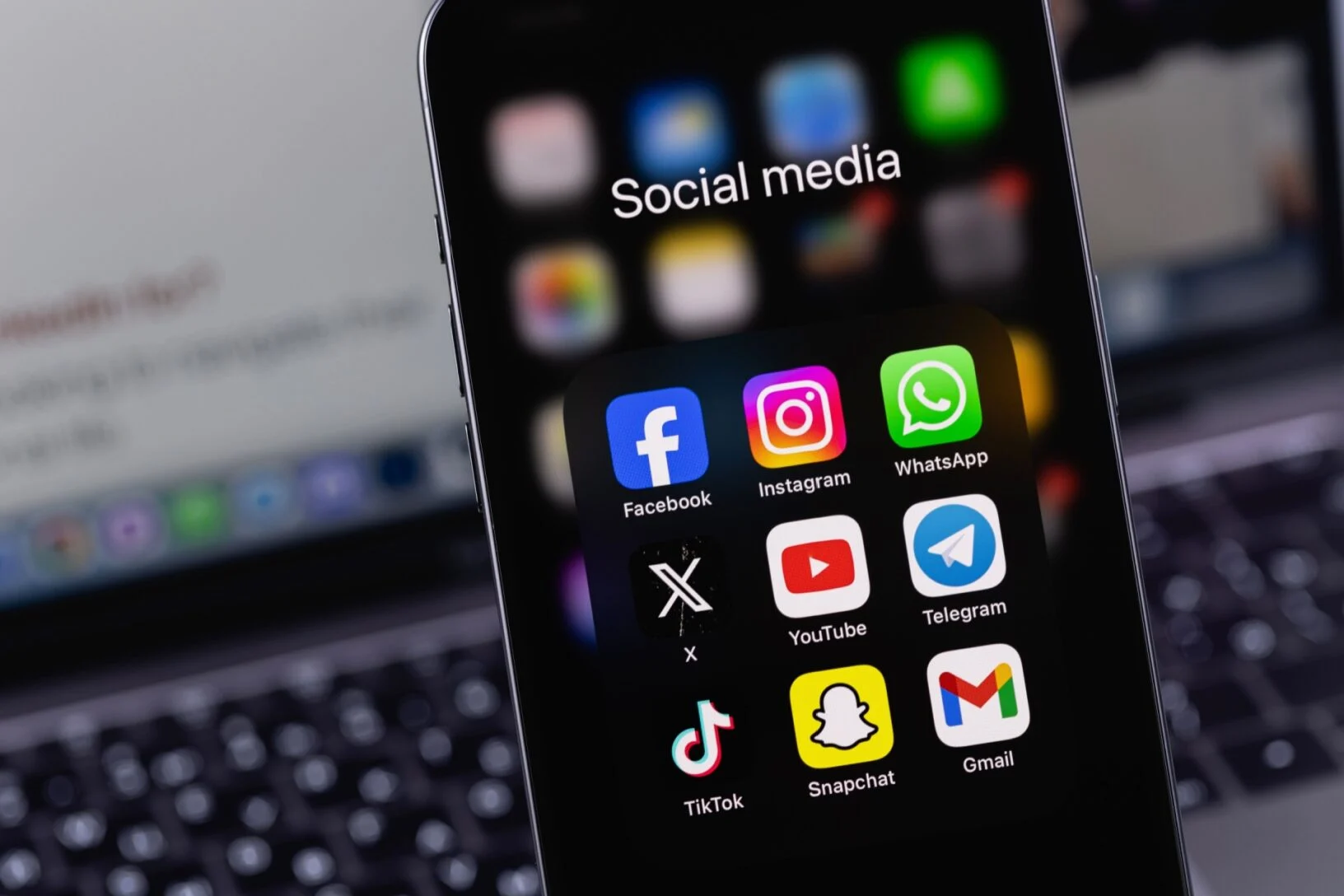
Source: https://www.presse-citron.net/ – By Romain Vitt – © Primakov / Shutterstock.com
A new study reveals that one-third of the content shared on social media is either completely false or highly toxic. And the platforms don’t seem ready to put a stop to it, as their algorithms tend to reward falsehoods.
The study is based on a representative sample of 500 pieces of content per platform and per country, weighted by their reach, which was scrutinized by professional fact-checkers following transparent and reproducible protocols. The result: what appears in users’ news feeds is the product of algorithmic architectures that favor false and toxic content.
TikTok, Facebook, and X: The Most Toxic Social Media Platforms
Not surprisingly, TikTok is by far the worst performer with approximately 20% publications containing factually incorrect information. Facebook follows with 13% and X (formerly Twitter) with 11%—levels that would be considered unacceptable in any serious news outlet.
If we add to this misinformation abusive content (hate speech, targeted attacks, etc.) as well as the “gray area” (posts that spread misleading narratives without containing easily verifiable errors), the situation becomes truly alarming. On TikTok, 34% of the content shown to users is misinformation. On X, this rate is 32%, or one in every three posts.
The only exception is LinkedIn, with only 2% of explicitly false content and a very low prevalence of toxic content. On the other hand, you have to put up with bullshit influencers there, but that’s another topic (which, incidentally, was the subject of from an investigation by Presse-citron).
The researchers also emphasize that the concentration of losses in a few highly exposed accounts. A small minority of actors—even though they have been identified as problematic—account for the bulk of disinformation traffic and enjoy disproportionate visibility.
The Business of Lies
The study shows that Health is the topic with the highest rate of fake news or harmful content, with 43% misleading posts detected. Scams, miracle cures, pseudoscience: viral content is often designed to exploit the vulnerability of internet users, rather than to inform them. Next come the war in Ukraine, domestic politics, climate change, and immigration—all topics in which emotion and outrage are exploited.
Because it is indeed emotion that drives these platforms. As proof, the scientists behind this study identified a kind of “visibility bonus” granted to misinformation by algorithms. With an equal audience, an unreliable account gets more views and interactions than an account that shares verified information, with up to eight times more engagement observed on YouTube for accounts deemed unreliable. In short, platforms favor sensational, scandalous, and conspiracy-theory content because such content grabs attention, generates reactions, and thus drives advertising revenue.
Platforms regularly cite freedom of expression to justify their reluctance to moderate such content, while highlighting reporting or labeling systems. However, the study’s authors note that these mechanisms remain marginal compared to the power of algorithmic recommendations, which massively amplify problematic content.
Furthermore, it appears that the platforms have let their guard down when it comes to moderation. While the Digital Services Act (DSA) requires them to document and reduce the risks of misinformation, they are backing away from their responsibilities without facing any penalties. A perfect illustration of this laissez-faire attitude: Facebook ended its fact-checking program in early 2025, when influential political figures, including Donald Trump, were openly encouraging platforms to defy European regulators and relax their moderation efforts.
Should we stop getting our news from social media?
What can be done about this alarming situation? The researchers who conducted this study recommend that European authorities take matters into their own hands, for example by enforcing stricter moderation, demonetizing problematic posts, and overhauling algorithms so that they stop promoting misinformation. Without these measures, they suggest that the toxic spiral we’re seeing today will only worsen as platforms continue to refine their recommendation models. It is difficult to imagine such a scenario at the moment: in recent weeks, Europe has seemed eager to ease the pressure on the platforms. It is even considering relaxing its rules, particularly with regard to the GDPR.
The only defense against this scourge is therefore the user. On TikTok, Facebook, and X, scrolling through your feed to “stay informed” no longer makes any sense. When up to a third of the content you see is false, biased, or hateful, it becomes nearly impossible to distinguish fact from fiction—even for a savvy internet user.
The effects extend far beyond the individual level. These platforms fragment our societies, create information bubbles, and normalize conspiracy theories, racism, and hatred of others. Continuing to view these platforms as legitimate sources of information amounts to accepting that a system designed to capture attention becomes a driving force for democracy.
So what should we do? Take the platforms for what they are. TikTok, Facebook, and X are not news outlets but entertainment platforms. They shut down our brains and trigger the release of dopamine to keep our attention focused on low-value content. But never—ever—do they seek to help us understand the world, learn, or stay informed. Quite the contrary—that would ruin their business model.