


Armed violence, drug-related homicides, the black market: drug trafficking is no longer just a news item. It has become a stark indicator of the limits of government action and a major obstacle to any economic, social, and political aspirations for Martinique.
How can we hope to resolve Martinique’s economic, social, and political problems when the government has, for years, failed to curb a phenomenon as widespread and pervasive as drug trafficking? The issue goes beyond public safety alone. It strikes at the very heart of the government’s credibility.
Drug trafficking is no longer a marginal, clandestine activity. It has established itself as a parallel economy—organized, violent, and equipped with its own distribution channels, capital, and intermediaries. Ports, airports, neighborhoods, social media: no space is spared. When a state allows such a dynamic to flourish, it is not only public order that is undermined, but political authority itself.
The Caribbean today embodies all the vulnerabilities of the system. Situated along international cocaine trafficking routes, facing a youth population with few prospects, a strained economy, and an overburdened justice system, the region appears to be the frontline flashpoint of an overwhelmed state. The drug-related homicides recorded in 2024 and 2025, particularly in Martinique, are not local anomalies: they are a symptom of a major shift.
In light of this reality, government announcements are coming thick and fast: customs plans, scanners, crackdowns, and ministerial visits. These measures are necessary, but they remain insufficient unless they are part of a comprehensive strategy. Changing the scale of the response does not mean simply piling on resources, but rather rethinking public action in all its dimensions.
Because drug trafficking thrives where schools fail, where the legal economy no longer offers opportunities for progress, where public discourse is weakened, and where the state seems distant, inconsistent, and sometimes weak.
In Martinique, this dynamic erodes collective trust, distorts the local economy, and imposes parallel standards that are often more transparent than those of the Republic.
Perhaps the greatest danger is no longer violence itself, but its gradual normalization.
When a society becomes accustomed to weapons, dirty money, and premature deaths, it slides toward the unacceptable without any apparent break. This is why states do not collapse suddenly: they erode slowly.
Martinique does not need more symbols or belated promises. It needs a government capable of truly regaining control, assuming its responsibilities, and understanding that the fight against drug trafficking is not just another issue, but a prerequisite for any credible development policy.
Without this clarity and resolve, what is happening today in Martinique will extend far beyond the scope of the overseas territories.
At that point, the entire Republic will have to face the consequences of its compromises head-on.
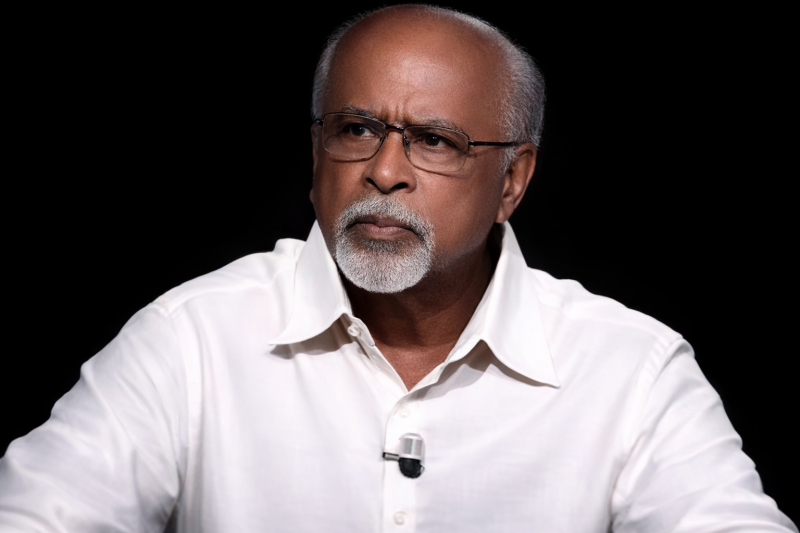
Gérard Dorwling-Carter