



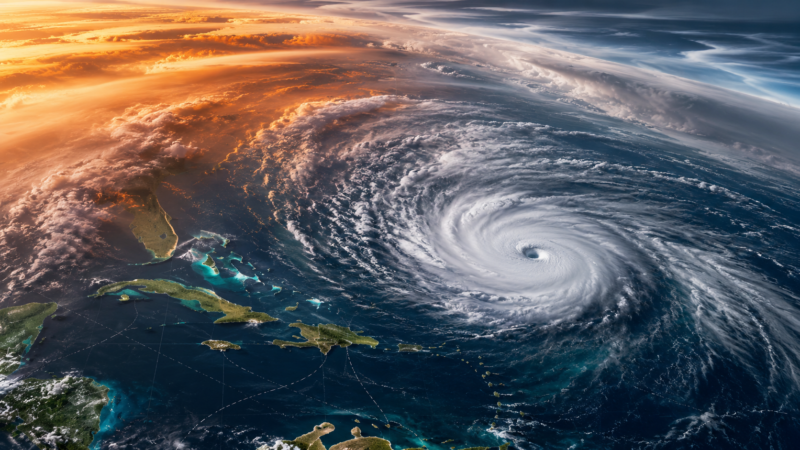
The 2026 hurricane season It opens on June 1 amid a paradoxical situation. El Niño suggests that activity will be less intense. However, CARICOF is warning of a worsening drought and early-season weather events. From Martinique to Antigua, the challenges are becoming more complex.
The outlook for the Caribbean appears mixed. On the one hand, major agencies are forecasting a A slow Atlantic season. On the other hand, regional climatologists are pointing to some worrying signs. Here’s an overview.
2026 Hurricane Season: NOAA Forecasts
U.S. forecasters released their forecast on May 21. NOAA forecasts a season with 8 to 14 named storms. It anticipates 3 to 6 hurricanes and 1 to 3 major hurricanes. Furthermore, the agency assigns a 55 % probability to this lower-end scenario.
The key factor can be summed up in two words: El Niño. This phenomenon is expected to reduce the number of tropical systems. It counteracts the temperature of the Atlantic Ocean and weaker trade winds. Together, these factors normally promote the formation of storms.
Ken Graham, director of the National Weather Service, cautions against excessive optimism. He points out that despite El Niño’s dampening effect, uncertainty remains. A single storm can turn a season into a very bad one. Vigilance is still called for.
Other institutions in line with the forecasts
Leading forecast centers are in agreement. The Weather Channel is predicting 12 named storms. It anticipates 6 hurricanes and 2 major hurricanes. North Carolina State University also forecasts below-average activity.
On the French side, Météo-France Martinique confirms the general trend. Forecasters are predicting 8 to 14 named cyclones. Of these, 3 to 7 hurricanes and 1 to 3 major hurricanes are expected. However, a crucial point has emerged.
Surface temperatures in the Atlantic Ocean will remain near or slightly above normal. This situation increases the likelihood of a higher proportion of intense storms. The total number may be lower, but the impacts could be more severe.
2026 Hurricane Season: CARICOF Drought Alerts
The Caribbean Regional Climate Center is significantly tempering the apparent optimism. Unusually warm conditions persist in the tropical North Atlantic Ocean. As early as April, this could lead to severe weather. Several areas within the region are affected.
Another major concern: drought. CARICOF reports a high risk of flash floods. Flooding is expected in April and May. A prolonged drought is imminent in Grenada, St. Vincent, Martinique, and Dominica.
In addition, this drought could spread to Saint Martin and Saint Barthélemy. The northern part of the Dominican Republic is also affected. The situation is becoming challenging for the eastern basin.
Fewer cyclones but more heat and drier conditions
Fewer hurricanes, but record-breaking temperatures and increased water stress. Neutral ENSO conditions in the Pacific will shift to a significant El Niño by July. The Caribbean season will be marked by increasing heat waves. High evaporation rates are contributing to continued drought in the east and south.
2026 Hurricane Season: Preparedness Efforts from Saint Martin to Martinique
On the ground, authorities are not letting their guard down. In Saint Martin, where memories of Irma remain fresh, the Collectivité is reiterating its guidelines. It is asking hoteliers and property managers to carry out tree-trimming work. The vegetation must be cut back as a precaution against a hurricane.
In addition, once a red alert is issued, gas station operators must close their facilities. All fuel dispensers are taken out of service. These measures reduce the risk of fire spreading.
In Martinique, the prefecture emphasizes individual responsibility. Étienne Desplanques, the prefect, summarizes the guidelines. Being prepared means having electric generators ready. Every family must have an emergency kit—water, flashlights, and a radio. Everyone must remove any hazardous objects. Tree branches must be trimmed. Anything lying around in the yard must be put away.
Constant vigilance despite the forecasts
The official message is therefore consistent across all the islands: even a single hurricane is enough. It can have a severe impact on a territory. It leaves behind a trail of catastrophic damage. Preparedness and response measures must be the same regardless of the expected activity.
Recent history is a lesson in humility. In 2024, three Category 5 hurricanes struck in quick succession. This was unprecedented since the beginning of the satellite era. The climate change increases the likelihood of intense events. Global forecasts become less predictive of actual impacts.
In other words, El Niño could shake up the 2026 hurricane season. That doesn’t mean anyone can stop keeping their emergency kit ready until November 30. Protection starts first and foremost with individual preparedness.