


Close Menu
ANTILLA MARTINIQUE | Avec vous depuis 1981

    Subscribe

    Get the latest creative news from ANTILLA on art, design, and business

    Current Trends

    Transports : l’unité et la responsabilité pour réussir la rentrée scolaire

    August 14, 2026

    Diversification agricole : la Martinique doit obtenir une réforme structurelle du POSEI

    August 14, 2026

    « Que représente la CARICOM pour la jeunesse ? » : La jeunesse caribéenne répond

    August 14, 2026
    Facebook X (Twitter) Instagram
    ANTILLA MARTINIQUE | Avec vous depuis 1981ANTILLA MARTINIQUE | Avec vous depuis 1981
    • Sections
      • Editorial by Henri PIED
      • Ecology / Environment
      • Art/Culture
      • Caribbean
      • Companies
      • Gdc's Perspective
      • Heritage
      • Politics
      • Health
      • Sports
      • Opinion Pieces
    • Our Files
      • Great Figures
        • Édouard Glissant
        • Aimé Césaire
        • Frantz Fanon
        • Pierre Aliker
        • Camille Darsières
        • Alfred Marie-Jeanne
        • Patrick Chamoiseau
        • Raphaël Confiant
        • Serge Letchimy
      • Key Issues
        • Sargassum
        • Rum
        • High Cost of Living
        • The Press in Martinique
      • Profile or Investigation
    • About
      • About Us
      • Media Kit
    • Contact
    • Change language to Français
    annonces
    SUBSCRIPTION
    ANTILLA MARTINIQUE | Avec vous depuis 1981
    Home » The debate continues… Jeanne Wiltord examines the legacy of assimilation and the transmission of history
    Debate

    The debate continues… Jeanne Wiltord examines the legacy of assimilation and the transmission of history

    August 7, 2026No Comments
    Facebook LinkedIn WhatsApp

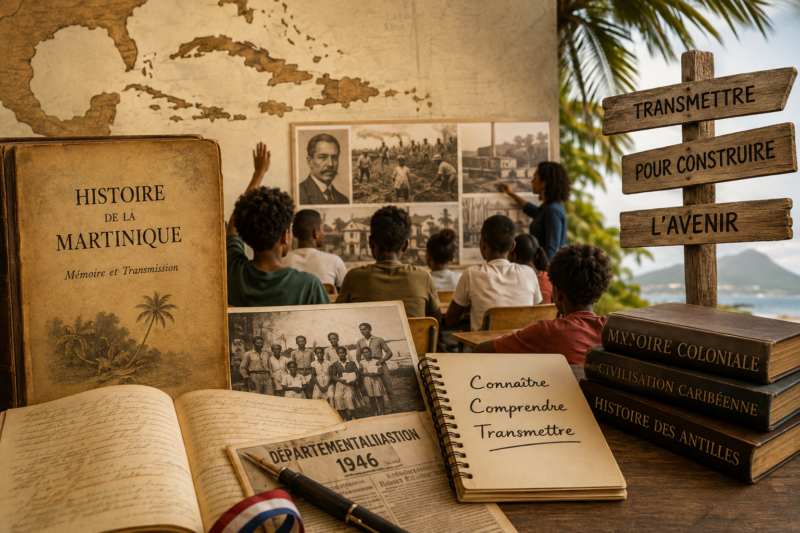
    Following the publication in *Antilla* of Max Pied’s op-ed, «Poverty in Martinique? Let’s Keep Things in Perspective,» Jeanne Wiltord sent us this article. In it, she discusses the 1946 departmentalization, the concept of ’full assimilation,« and, more broadly, our collective relationship to history and how it is passed down.

    In particular, she recalls the position of Guadeloupean representative Paul Valentino, who, as early as 1946, had warned of the possible consequences of complete assimilation.

    In his book But what exactly is a Black person?, Jeanne Wiltord devotes a section to a «psychoanalytic approach to the 1946 demand for full assimilation.» In it, she posits the hypothesis that this demand may have contributed, in Caribbean societies, to the establishment of a complex and paradoxical form of forgetting.

    In particular, it draws on the notion of «culturally instituted denial,» developed by psychoanalyst Brigitte Lemérer based on the Freudian concept of denial. This refers to a mechanism in which two contradictory realities or logics continue to coexist, as expressed by the well-known phrase: «I know… but still.».

    For Jeanne Wiltord, this issue goes beyond the field of psychoanalysis alone. It points directly to the collective work that needs to be done on colonial history—through the research of historians, archives, and oral histories—as well as the transmission of this history to younger generations.

    In particular, she cites several educational initiatives that she felt were important, such as the national contest «La Flamme de l’égalité,» but especially the history quiz Ti-Jo Mauvois, held in Martinique in honor of the activist historian Joseph «Ti-Jo» Mauvois.

    This contest, designed for students, was intended to expand their knowledge of local history and, more broadly, of Caribbean culture. Jeanne Wiltord said she was surprised to learn that it no longer exists, largely because there was a lack of new people to carry on the tradition and a failure to engage a new generation.

    She then raises a question that, in her view, deserves to be examined collectively:

    «Shouldn't we be asking ourselves why this competition was canceled?»

    Beyond the mere disappearance of a single initiative, his question therefore touches on a broader issue: how can we pass on knowledge of Martinican and Caribbean history to future generations, and how can we prevent certain parts of that history from gradually fading from the collective memory?

    The open debate surrounding Max Pied’s text thus extends to another realm: that of history, memory, and the way in which our societies construct their relationship to their own past.

    Related Posts

    Port tax: Didier Payen advocates for reform rather than its elimination

    August 13, 2026

    Port Tax: Yan Monplaisir Advocates for Reform Rather Than Elimination

    August 12, 2026

    Port Tax: What a Local Consumption Tax Would Really Change

    August 10, 2026
    Add A Comment

    Comments are closed.

    DISPONIBLE EN KIOSQUE
    Caribbean News
    Caribbean

    « Que représente la CARICOM pour la jeunesse ? » : La jeunesse caribéenne répond

    St Lucia Times PaKherim Nelson À l’occasion de la Journée internationale de la jeunesse, les jeunes des Caraïbes ont pu exprimer à la CARICOM ce…

    Les centres de formation technique et professionnelle de Sainte-Lucie se font l’écho de l’appel régional aux compétences

    August 14, 2026

    Saint Lucia Officially Launches a 1,000 EC$ Allowance for Newborns

    August 4, 2026

    OECO delegates review Sargassum management strategies following their mission to French territories

    August 2, 2026

    Pierre: Emancipation is incomplete without economic freedom.

    August 2, 2026
    SUBSCRIBE TO OUR CHANNEL!
    Post Your Legal Notices

    Subscribe

    Get the latest news from Antilla Martinique.

    Thank you! Your request has been received.

    View legal notices
    View our back issues
    Our Different Sections
    Archives
    © 2026 Copyright ANTILLA. All rights reserved. Programmed by ANTILLA.
    • CONTACT
    • MARKETING
    • LEGAL NOTICE
    • LEGAL NOTICES
    • ABOUT ANTILLA

    Type above and press Enter to search. Press Esc to cancel.