


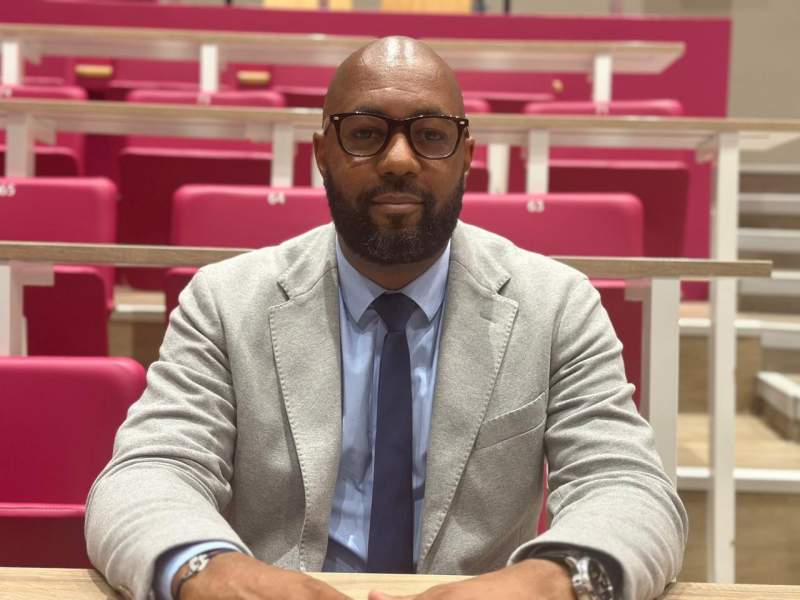
An event designed to foster connections among entrepreneurs. That is the goal Bokantaj has set for itself. On Thursday morning, for its third edition, the event organized by Martinique Développement is expected to bring together 200 participants at the CDST in Saint-Pierre. Interview with Alexandre Ventadour, president of Martinique Développement.
Why did you choose the city of Saint-Pierre for this third edition?
Bokantaj is an event we designed to move away from the central areas. A lot of activities take place in Schœlcher, Fort-de-France, and Lamentin. We wanted to help Martinique grow and enable business support professionals to reach out to other municipalities. The first two editions took place in Le Morne-Rouge and Sainte-Marie. This one is taking place in Saint-Pierre, but it’s not out of the question that Bokantaj could be held in the south. The idea is to bring together support services for businesses—from startup and development to growth, acceleration, and even winding down operations. Everyone is welcome. There will be many exhibitors, such as the CGSS (General Social Security Fund) and Réseau Entreprendre. These booths will be able to guide, assist, and support businesses in very practical ways.
What will visitors find in Bokantaj?
Bokantaj is a morning event and also a series of lectures on topics such as innovation within reach, the circular economy, artificial intelligence, and climate change. These are issues that shape the day-to-day operations or the future of businesses. The goal is to inspire, foster discussion, and provide business leaders with a broader perspective. It’s an opportunity for them to step back from day-to-day operations and address concrete issues with France Travail or the CGSS. When we talk about artificial intelligence, it’s also about understanding how it can actually be applied in sectors that represent the future of business. For example, if a company is in the agricultural processing sector, what would innovation look like for it? It could involve the materials used, how it markets its product, creating a website, or using more sustainable and renewable materials. This is a forward-looking topic for a company.
The economic fabric of Martinique is overwhelmingly made up of very small businesses (TPE). Do you notice this during these meetings?
The first edition had 160 people; the second edition had 180. We hope to reach 200 this year. There could be many more. It’s not so much the fact that there are 85 or even 90% microbusinesses and small businesses—since this is a situation found in many regions across France—but rather that the vast majority of them operate alone. These are people who own their own pickup trucks and provide landscaping or other services. Attendance at Bokantaj is good, but it could be better. We also sense this in the questions people ask, which are very practical. Sometimes we have people sitting right in front of us who feel unsettled by these major changes. Every business will have to switch to electronic invoicing. It’s easier to set up when you’re part of a large organization with dedicated staff; it’s harder when there are only one or two people in the company and you have to be a jack-of-all-trades. So we need support. Bokantaj is here to let these businesses know they’re not alone. There are resources available. There are professionals—men and women—whose job it is to help. That’s the mission of Martinique Développement. We’re a unique community, but there’s a strong sense of closeness. This uniqueness of the local economic fabric makes it a place for very human interaction.
Interview by Laurianne Nomel