




Cayman Compass
This change led, at the beginning of the summer, to the appointment of a new director of the Department of Agriculture , a sign of increased institutional attention to food security and sustainable agriculture, in accordance with The Cayman Islands' Food and Nutrition Security Policy launched in 2022.
Wilbur Welcome, who succeeded Brian Crichlow, presented a plan aimed at empowering local farmers, improving agricultural practices, strengthening traceability, and addressing the islands' heavy reliance on imported food products.
Excessive dependence on U.S. food imports
Approximately 80 % of the Cayman Islands’ food imports come from the United States, arriving either directly or via U.S. ports as a transshipment point.
A Compass Mid-Year Report A study on food imports revealed that the Cayman Islands are the fastest-growing market in the English-speaking Caribbean for U.S. food imports, underscoring the scale of the challenge.
This dependence was highlighted in 2025 by the imposition of tariffs during Donald Trump’s presidency, which prompted a closer look at alternative supply chains.
Since 2023, Jamaica has become a growing source market for food products for the Cayman Islands, and in September, Seaboard Marine Ltd. has launched a twice-weekly refrigerated groupage service between Kingston and Grand Cayman.
Poultry and egg production is on the rise
Egg production remained a central focus of food security efforts in 2025. In August, the government inaugurated its first egg production facility run by the public sector, marking an important milestone in efforts to increase domestic supply while providing a training and demonstration facility for local poultry farmers.
This installation is part of the National Egg Strategy (NEST) , launched in 2023 and which continued to expand throughout the year. This program aims to cover at least 40 % of egg imports by supporting commercial-scale production, establishing quality standards, and improving market access for local producers.
By the end of 2025, the number of NEST-certified farmers had risen to 17.
The poultry sector's momentum continued in September with the arrival of the first commercial chicken hatchery in the Cayman Islands, producing both broiler chickens and laying hens and further strengthening local production capacity.
Progress Under Threat
In late November, the H5N1 avian influenza virus was detected in eight birds at a farm in West Bay, triggering a rapid, multi-agency response which put the resilience of the Cayman Islands’ rapidly growing poultry industry to the test.
In early December, authorities established a link between the outbreak and migratory birds. They acted quickly to stem its spread, temporarily banning the transport of live poultry between the islands and strengthening biosecurity measures throughout the country, with particular attention paid to West Bay, where the regiment was mobilized as reinforcements.
Mid-month, The government had approved additional funding of $500,000 for these measures.
To date, no human cases have been reported, and no animals—with the exception of birds on a farm—have been infected.
Other Food Security Initiatives
Progress made in local livestock farming and beef production was highlighted midway through the year thanks to the expansion of a genetic improvement and cattle breeding program focused on Red Poll breed . Originally imported from Jamaica in 2023, the Red Poll breed is perfectly suited to the climate of the Cayman Islands. Livestock auctions and the birth of new calves were part of a broader strategy to increase local meat production and reduce dependence on beef imports.
A Pilot Project on Home Gardening A smaller-scale initiative was launched in August to encourage household food production. This initiative provided free inputs to participating households, reflecting a policy shift aimed at empowering local residents and enabling them to contribute to their own food security.
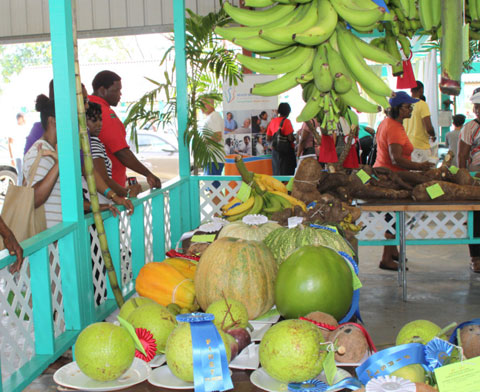
Throughout the year, entrepreneurs have emphasized the link between culture and food security, spotlighting farmers, chefs, and food producers in articles on the development of short supply chains and support for local food systems.
During the latter part of the year, a high-profile advocacy campaign helped raise public awareness of food security issues, with the announcement of a partnership between Tahiti Moorea Seymour, Miss Universe from the Cayman Islands, and the Ministry of Agriculture.