


Caribbean Investment Forum 2026: The Caribbean Aims to Turn Its Potential into Investments
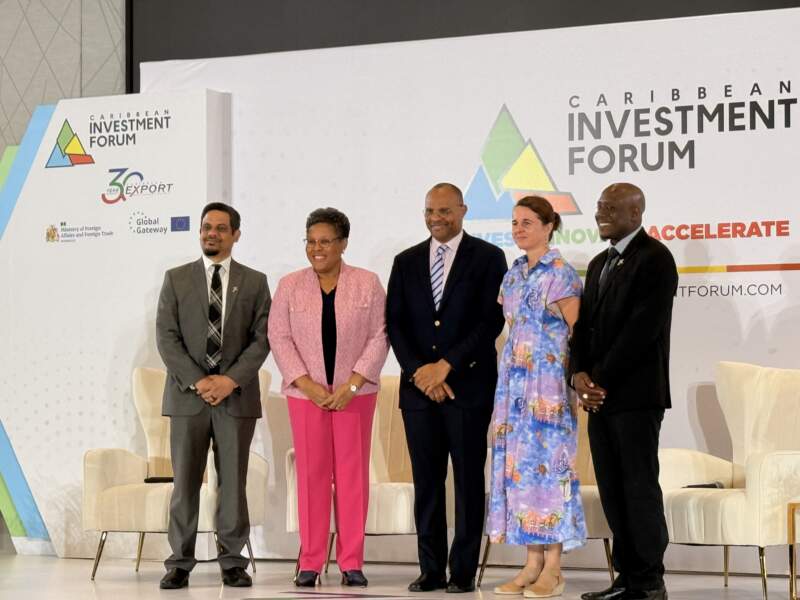
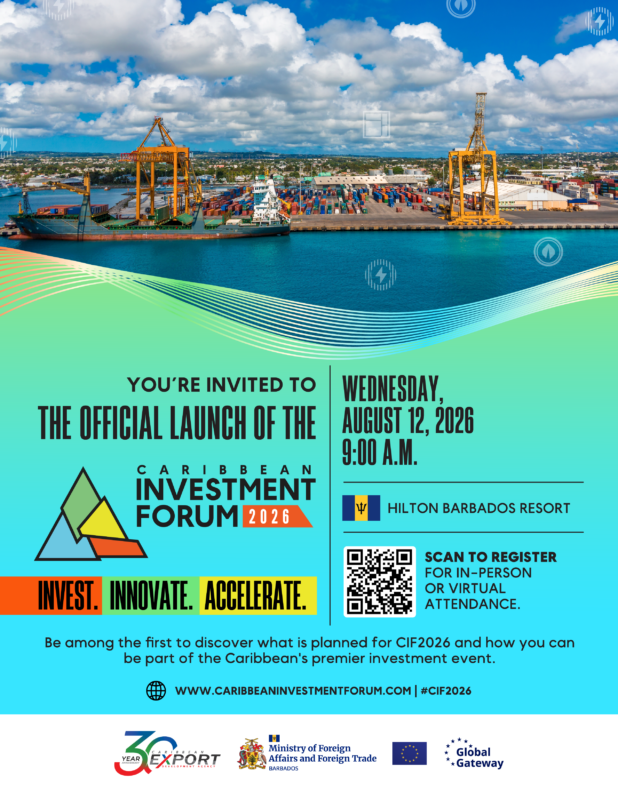
The Caribbean Investment Forum 2026 was officially launched on Wednesday, August 12, in Barbados. With Caribbean Export, the Barbadian government, the European Union, and regional banks and financial institutions all in attendance, a common theme emerged from the presentations: the Caribbean has opportunities, entrepreneurs, and capital, but needs to better facilitate their alignment. Project preparation, access to financing, regional integration, the green economy, digital transformation, agriculture, and logistics will be at the heart of the Forum, scheduled for October 5–7 in Barbados. We were there for you…
In Bridgetown this Wednesday morning, there was still no talk of signing contracts or announcing millions of dollars in investments. The event, held at the Hilton Barbados Resort, had a different purpose: to officially launch the Caribbean Investment Forum 2026 and, above all, to explain what the region plans to do with this event going forward.
This is because the CIF aims to gradually move beyond the scope of a traditional economic forum. The Caribbean Export Development Agency’s stated ambition is to turn it into a true platform for connecting Caribbean projects with international capital.
The next edition will take place from October 5–7, 2026, in Barbados and will bring together investors, entrepreneurs, financial institutions, government officials, and development partners. The event is organized by Caribbean Export, in collaboration with the Government of Barbados, the European Union, and the CARICOM Secretariat.
Lynette Holder: Changing Perceptions of the Caribbean
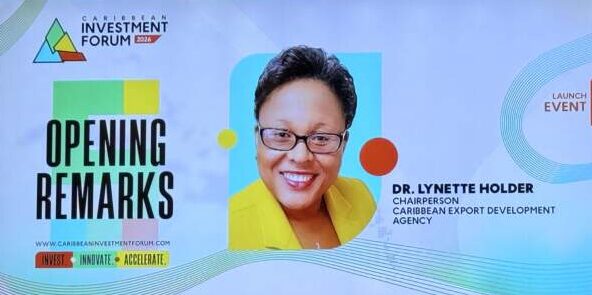
The first to speak, Dr. Lynette Holder, Chair of the Board of Directors of the Caribbean Export Development Agency, sought to redefine the Forum's scope to extend far beyond the three days scheduled for October.
His message is that the region needs to take greater control of how it presents itself to investors.
The Caribbean, she explained in essence, has the resources, skills, creativity, and entrepreneurs needed to attract more international capital. It must now succeed in transforming these strengths into opportunities that are sufficiently clear and credible.
The CIF should thus help shape a different economic narrative for the region, one based on innovation, resilience, and investment opportunities.
But Lynette Holder also emphasized the need for cooperation. Governments, the private sector, regional institutions, international partners, and financial institutions must work together to bring projects to fruition and create an environment in which investors can have confidence.
This confidence is one of the Forum’s guiding principles. After all, attracting capital does not depend solely on the quality of a project. It also depends on the stability of its environment, the quality of its governance, the ability of institutions to work together, and the continuity of economic policies.
Damie Sinanan: «Moving from Promise to Investment»
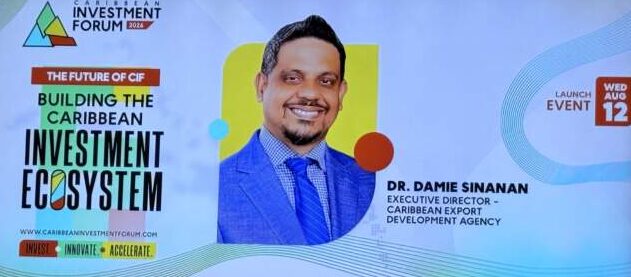
The second highlight of the launch was Dr. Damie Sinanan, Executive Director of the Caribbean Export Development Agency, with a very specific question: How can we build a true Caribbean investment ecosystem?
In his view, the CIF should no longer be merely a place where people discuss the opportunities offered by the Caribbean.
It should become a place where projects connect with investors.
This distinction is essential.
The region has no shortage of ideas or entrepreneurs. But between a good idea and a multimillion-dollar investment lies a step that is often underestimated: turning that idea into a proposal capable of convincing an investor.
Business plan, business model, market prospects, financing needs, governance, risks, profitability, and the project’s impact—all of these elements must be presented clearly.
It is precisely in this area of preparation that Caribbean Export aims to strengthen its efforts.
The CIF 2026 is therefore seeking advanced and commercially viable projects that can demonstrate a measurable national or regional impact. To be eligible for this edition, projects must have a capital requirement exceeding 3 million U.S. dollars.
The Forum will therefore not be limited to conferences. Project presentations, business meetings, and direct discussions with investors are intended to bring capital supply and demand much closer together in a practical way.
Four Sectors to Attract Investment
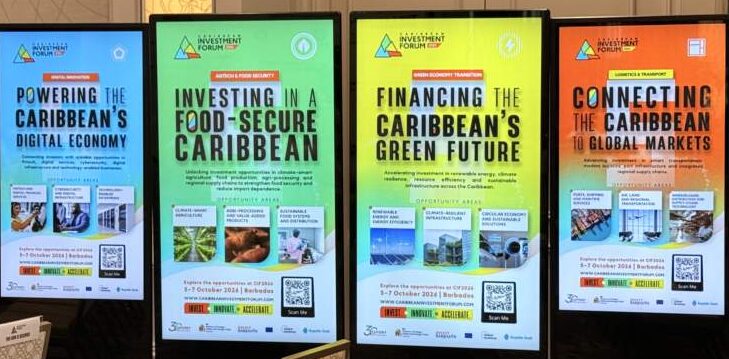
Four priority areas have been identified for 2026: sustainable agriculture, the transition to a green economy, digital transformation, and logistics and transportation.
This choice is not insignificant.
Agriculture is directly linked to the issues of food security and climate resilience. The green economy encompasses, in particular, renewable energy, recycling, emission-reduction technologies, and new production methods. Digital technology should enable Caribbean businesses to overcome the limited size of their domestic markets. Finally, logistics and transportation are likely among the main challenges facing a region composed of island territories separated by the sea.
This sector includes, in particular, maritime and air freight, warehousing, fleet management, transportation infrastructure, and new mobility solutions.
In other words, the focus is less on selecting «trendy» sectors and more on addressing several of the structural obstacles to economic development in the Caribbean.
Fiona Ramsey: Europe Wants to Support the Transformation
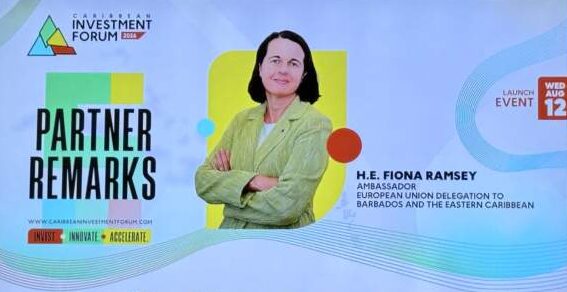
Fiona Ramsey, European Union Ambassador to Barbados and the Eastern Caribbean, then reiterated Europe's role in this strategy.
His remarks helped put the investment into the context of a much broader relationship between the European Union and the Caribbean.
Trade, investment, innovation, services, digital connectivity, energy, climate, transportation, health, and higher education are among the areas in which this cooperation can be developed.
The European partnership is linked, in particular, to the Global Gateway program, through which the European Union seeks to support investments in infrastructure, energy, digital technology, and sustainable development.
For the Caribbean, the stakes are high. The energy transition, climate change adaptation, digital infrastructure, and transportation all require levels of capital that island economies cannot always raise on their own.
Private investment must therefore be able to supplement public funding and funding from international institutions.
Christopher Sinckler: Thinking of the Caribbean as a Market
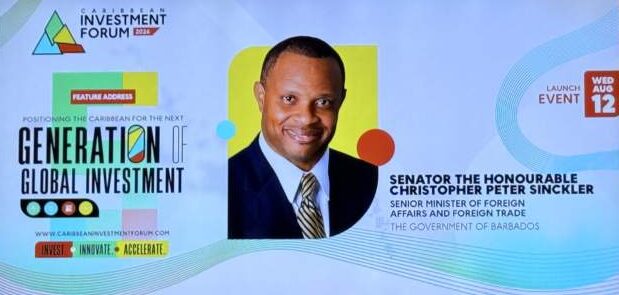
The speech by the Senator Christopher Peter Sinckler, Senior Minister of Foreign Affairs and Foreign Trade of the Government of Barbados, gave the debate a more political dimension.
His remarks focused in particular on how the Caribbean should position itself in the face of a new generation of global investments.
To achieve this, the region must first overcome one of its main weaknesses: its fragmentation.
Taken individually, Caribbean markets are often small. Taken together, however, they can offer a scale and diversity that are much more attractive to an international investor.
Regional integration then becomes a very concrete issue.
How can we make it easier for capital to flow? How can we enable companies to sell their goods and services in multiple countries? How can we further harmonize regulations? How can we improve transportation between the islands? How can we enable a company that started in a small market to become a regional company?
For Christopher Sinckler, attracting investment therefore means building a true Caribbean economic zone.
This also depends on skills. A region can attract technology and capital, but it must have the human resources capable of using them, developing them, and creating value locally.
Vocational training, technical education, digital skills, and worker mobility are thus becoming key components of investment policy.
When Capital Meets Caribbean Projects
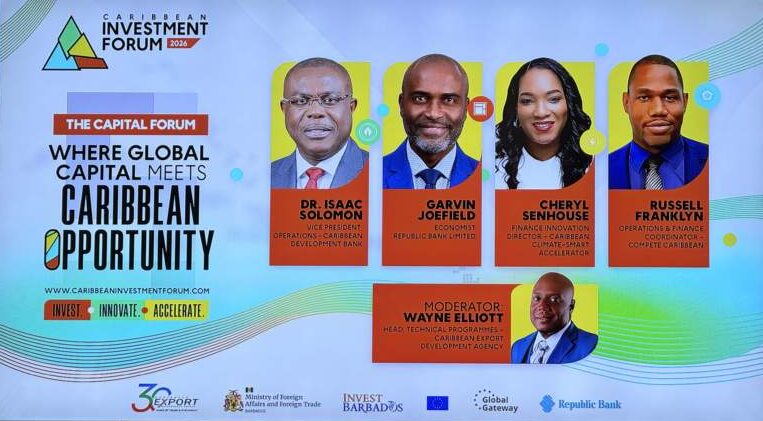
The major discussion on funding, titled «Where Global Capital Meets Caribbean Opportunity», then provided an opportunity to delve directly into the mechanisms that can facilitate—or hinder—investment.
Seated around the table were Dr. Isaac Solomon, Vice President of Operations at the Caribbean Development Bank, Garvin Joefield, an economist at Republic Bank Limited, Cheryl Senhouse, Director of Finance and Innovation at the Caribbean Climate-Smart Accelerator, and Russell Franklyn, Operations & Finance Coordinator at Compete Caribbean. The discussion was moderated by Wayne Elliott, Head of Technical Programs at the Caribbean Export Development Agency.
The question posed was, after all, a simple one: if capital is available and projects exist as well, why don't the two come together more often?
The discussions revealed several responses.
A good project isn't necessarily a project that can be funded
One of the main challenges lies in project preparation.
A company may have an excellent product, meet a real need, and have a potential market, yet still not be in a position to secure several million dollars in investment.
Investors want to understand the business model, growth prospects, risks, corporate governance, capital requirements, and the conditions under which they can earn a return on their investment.
Therefore, the technical quality of a project alone is not enough.
You also need to know how to structure it financially and present it.
The CIF’s experience shows that this is a real challenge. During the 2025 cycle, approximately 130 expressions of interest had been received from CARIFORUM member states. Following an analysis, 24 projects were deemed to have significant potential but did not advance to the next stage, primarily due to shortcomings in their investment readiness.
It is precisely this «missing link» that Caribbean Export and its partner institutions are now seeking to strengthen.
Not all investors are looking for the same thing
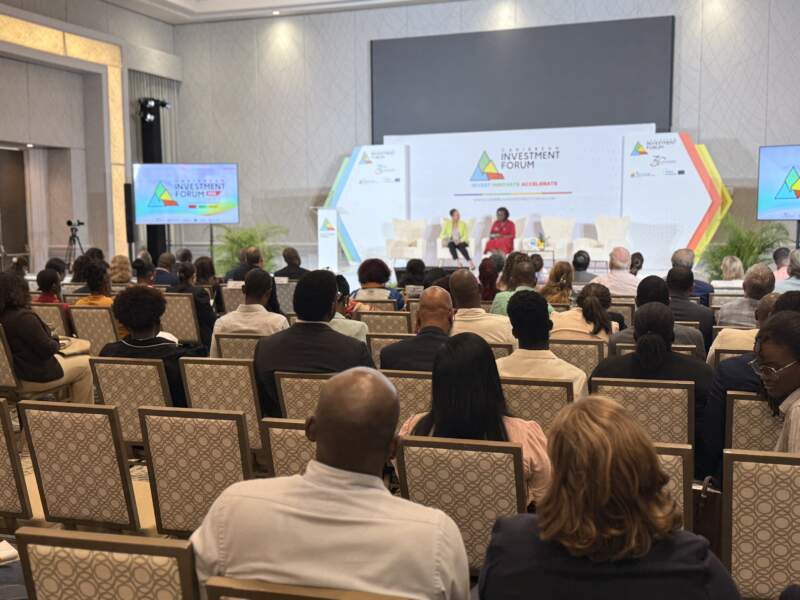
The discussions also highlighted a reality that project leaders sometimes overlook: there is no single source of funding.
A commercial bank, a development bank, an investment fund, a private investor, or a climate-focused fund do not all think the same way.
Some investors seek relatively quick returns. Others are willing to accept longer time horizons. Some may be willing to take on more risk when the project has a measurable environmental or social impact.
So the question isn't just, «Where can we find money?»
It also asks: «What type of capital is right for my project?»
This understanding of the various financial instruments is essential for Caribbean entrepreneurs.
Climate Finance: A Unique Opportunity
The Caribbean Climate-Smart Accelerator’s participation in the discussion also highlighted the growing importance of climate finance.
For small island states that are particularly vulnerable to the effects of climate change, this development represents both a necessity and an opportunity to mobilize new sources of capital.
Renewable energy, energy efficiency, adaptation, water management, resilient agriculture, and the circular economy may be of interest to specialized funds.
But even then, simply having a «green» project isn’t enough. You have to be able to measure its impacts, demonstrate its economic viability, and meet the criteria set by funders.
Transforming Fifteen Markets into an Investment Region
Behind the technical issues of financing lies, ultimately, a much broader issue.
The Caribbean suffers from its fragmentation, but it also has an opportunity: to transform several small markets into a regional economic area that is cohesive enough to attract larger investments.
Caribbean Export already advocates this approach. The agency believes that presenting the Caribbean as a unified entity makes it possible to overcome the limitations imposed by the size of individual national economies and to access larger amounts of capital.
This assumes, however, that companies can grow beyond their home markets.
A company from Barbados, Jamaica, Trinidad, or the Dominican Republic can no longer necessarily plan its growth solely within the context of its domestic market.
The relevant market may extend to the Caribbean.
From Potential to Actual Investment
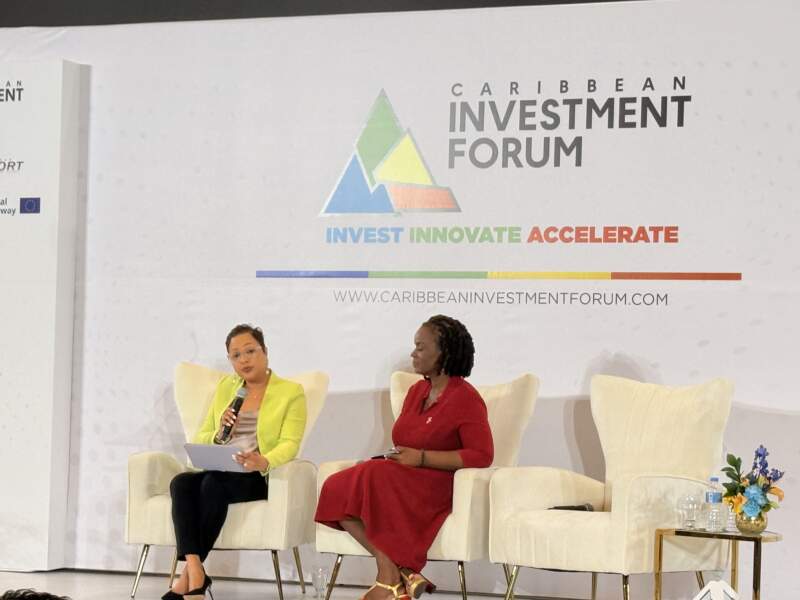
That is probably where the real challenge of the CIF 2026 lies.
At the 2025 event in Jamaica, the Forum brought together more than 450 participants from 39 countries and presented Twelve investment-ready projects representing more than 80 million U.S. dollars.
Barbados must now help us take another step forward.
Because the Forum's success cannot be measured solely by the number of participants, presentations, or business cards exchanged.
We’ll need to see how many projects have made progress, how many companies have found a partner, how much funding has been secured, and how many investments have ultimately materialized.
That is the essence of the message heard this Wednesday in Bridgetown: The Caribbean has no shortage of potential. The challenge now is to make that potential attractive to investors.
And behind this financial issue lies another, more fundamental one: the ability of Caribbean regions to work more closely together to achieve critical mass, grow their businesses, and gain greater influence in the global competition for capital.
The Caribbean Investment Forum 2026 aims precisely to occupy this space—where an idea becomes a project, where a project becomes bankable, and where capital can, at last, meet Caribbean opportunities.
Philippe PIED