


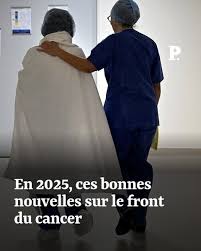
The year 2025 marks an important milestone in the fight against cancer.
While it is too early to speak of a definitive victory, the scientific and medical advances made in recent months confirm a positive trend, based on a better understanding of tumor mechanisms, more effective diagnostic tools, and increasingly personalized treatments.
One of the major advances involves early detection. Thanks to advances in artificial intelligence, the analysis of medical images, biological data, and weak signals makes it possible to identify certain cancers earlier, sometimes before clinical symptoms appear. This time savings is crucial, as it means less intensive, more effective treatments and a better chance of recovery.
Targeted therapies are also continuing to gain ground.
By targeting specific molecular abnormalities in cancer cells, these approaches help minimize side effects while increasing the effectiveness of treatments. These approaches are now being applied to both common cancers—such as breast, lung, and colon cancer—and rarer or particularly aggressive forms of cancer.
Immunotherapy, too, continues to transform patient care. New treatment combinations are showing encouraging results, particularly in reducing the risk of recurrence for certain ENT cancers or improving survival in situations previously considered unfavorable. Research on therapeutic cancer vaccines is advancing, opening up unprecedented possibilities.
Another notable advance: the growing use of biomarkers that can be detected through a simple blood test.
These tools make it possible to monitor the progression of the disease, quickly adjust treatments, and better anticipate relapses. They represent a key step toward truly personalized medicine.
Finally, clinical research remains extremely active, with numerous international studies involving French teams. These studies explore both new drugs and the impact of environmental, nutritional, and immune factors on the prevention and progression of cancers.
This good news should not obscure the persistent inequalities in access to healthcare or the challenges that lie ahead.
But they confirm a major trend: cancer is less and less an inevitable fate and more and more a disease that science is learning to circumvent, contain, and sometimes defeat.
Jean-Paul BLOIS.