




Citing the work of the commission of historians, the civil parties are calling for the investigation into the Bisesero massacre to be reopened.
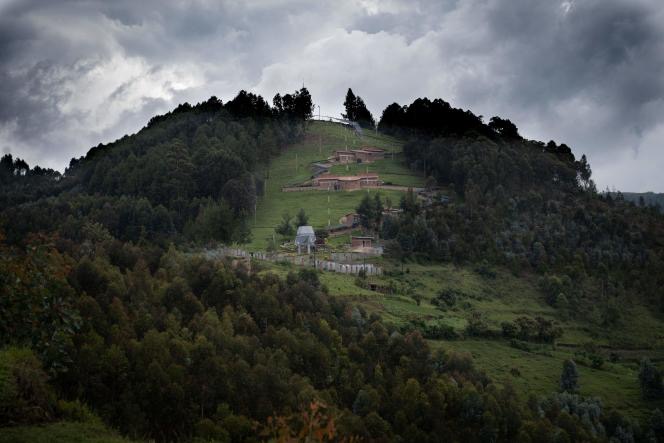
The Duclert Commission’s report on France’s responsibility in Rwanda (1990–1994) has advanced historiographical research. Published in late March, followed by the declassification of nearly 8,000 documents, it also provided reference material for legal experts, leading to legal proceedings that have been underway for two decades. This has resulted in a tangled web of dozens of investigations in France. On Thursday, April 22, attorneys for six civil parties sent a letter to the judges of the Crimes Against Humanity and War Crimes Division—who are jointly handling a preliminary investigation opened in 2005—inviting them to resume their investigations. and to take further action. At the heart of this investigation is the massacre of hundreds of Tutsis by Hutus on the hills of Bisesero, near Lake Kivu, in late June 1994, during Operation «Turquoise» organized by France. These complaints by survivors—filed in particular by the association Survie, the International Federation for Human Rights (FIDH), and the Human Rights League (LDH)—pertain to a three-day period between June 27 and 30. During this period, French military forces did not intervene to prevent the massacres. Was it negligence? A misjudgment of the situation? The answer lies in the information available to the soldiers, their chain of command, the nature of the decisions subsequently made in Paris, and their implementation. However, successive judges appeared to limit the investigation solely to the soldiers deployed in the field, rejecting the hypothesis of complicity in genocide. This accusation was also rejected by the commission of historians chaired by Vincent Duclert. No formal charges were filed during the preliminary investigation; only witnesses with legal assistance were heard. In June 2019, the judges refused to continue their investigations, but the prosecutor’s office, acting cautiously, has still not filed any indictments. «It may have something to do with the fact that we were waiting for the Duclert report, M leadse Patrick Baudouin, attorney for the FIDH. »Based on this document, it seems impossible to limit the investigation to the small group of military personnel present on site." A possible meeting in May between French President Emmanuel Macron and his Rwandan counterpart, Paul Kagame, could heighten interest in these French legal proceedings. The letter to the judges calls into question their refusal «to seek the truth regarding the inner circle of the then-commander-in-chief, the President of the Republic.». The letter states that «advisers, whether political or military» François Mitterrand and high-ranking officials from the Ministry of Defense should be questioned, or even prosecuted. Eight prominent figures are named, including Hubert Védrine, then secretary-general of the Élysée Palace; François Léotard, Minister of Defense; Bruno Delaye, the president’s advisor on African affairs; and General Christian Quesnot, chief of the president’s private staff. «Our requests were frequently denied on the grounds of national security, explains Mr.e Eric Plouvier, attorney for Survie. In Bisesero, massacres took place not far from French troops whose commanders were in contact—particularly for the purpose of gathering intelligence—with associates of the killers. These commanders were part of a chain of command that extended all the way to the highest echelons of the Élysée Palace, where the focus was on the Rwandan Patriotic Front (RPF), rather than on saving lives. This chain of command broke down because of this duplicity regarding the ultimate purpose of “Turquoise.” This military operation was launched on June 22, 1994, under the auspices of the Security Council, at a time when Rwanda had been plunged into the horror of the Tutsi genocide since April 6. The Duclert Commission examined the memos that were exchanged between French military personnel in the field and their superiors in Paris. It is difficult to draw definitive conclusions from them, given the informal nature of the decision-making process and the deliberate destruction of certain records, particularly at the Private Staff Office at the Élysée Palace. But what is clear, at the very least—without necessarily falling within the realm of criminal law—is a significant delay and misjudgment in assessing the situation. «Bisesero was both a failure and a tragedy. Even though the French command’s collective realization of what was happening came gradually, Bisesero marked a turning point in the recognition of the genocide, notes the Duclert report. »There's a 'before' and an 'after' Bisesero." The commission emphasizes that, as of the 1ster In June, the Military Intelligence Directorate (DRM) reported that Bisesero might be sheltering 1,000 Tutsis. However, problems with sources and the flow of information would hamper the French response. The initial assessments conducted on June 27 made no mention of massacres. The offensive by the Tutsi RPF—with whom all contact must be avoided—was the top priority in Paris. «The shift in the French assessment of the situation in Bisesero took place gradually throughout the day on June 28,», the commission writes. The credibility of the informants on the ground becomes highly questionable, and their ambiguity becomes apparent. On the 29th, the picture becomes clearer, and the figure of 2,000 Tutsi refugees is now being cited. It is very late. In the view of the attorneys for the civil parties, it is not legitimate to rule out the possibility of complicity in genocide, given that «Sharing the intent to commit genocide is not necessarily required for a finding of complicity.». The Duclert Report provides extensive documentation of France’s political and military support for the regime, despite its racist and hateful excesses, beginning in late 1990. The attorneys for the civil parties thus continue their analysis of the events at Bisesero: «The French soldiers were in the immediate vicinity of the crime scene; some of them were surrounded by the perpetrators and, moreover, were seen as figures of authority by the killers. Voluntarily refraining from intervening at the scene of a massacre can therefore, under these circumstances, be interpreted as acts of complicity in genocide.»Eight prominent figures mentioned
«A failure and a tragedy»