




An investigation based on Gaza’s civil registry records documents the extent of the demographic destruction since October 2023. Beyond the war’s statistics, it is the continuity of entire family lines that has been lost.
Since October 7, 2023, Israeli military operations in Gaza have erased 2,700 Palestinian families from the territory’s civil registry. In another 6,000 families, only a single survivor remains today—the sole bearer of the memory of a lineage whose permanent disappearance would be officially recorded upon that person’s death. These figures, drawn from a survey published in late January 2026 and confirmed by local media authorities, go beyond standard casualty counts: they describe not only the dead, but the severing of family lineages.
A «wiped-out family» is defined as a household in which three generations listed in the same civil registry record were killed. This demographic and legal definition makes it possible to measure the disruption of the family lineage itself. The 2,700 families that have been completely wiped out represent more than 8,000 people killed. Approximately 40,000 households are believed to have been directly affected, with an average of more than four members killed per family. Before October 2023, Gaza’s population stood at approximately 2.2 million.
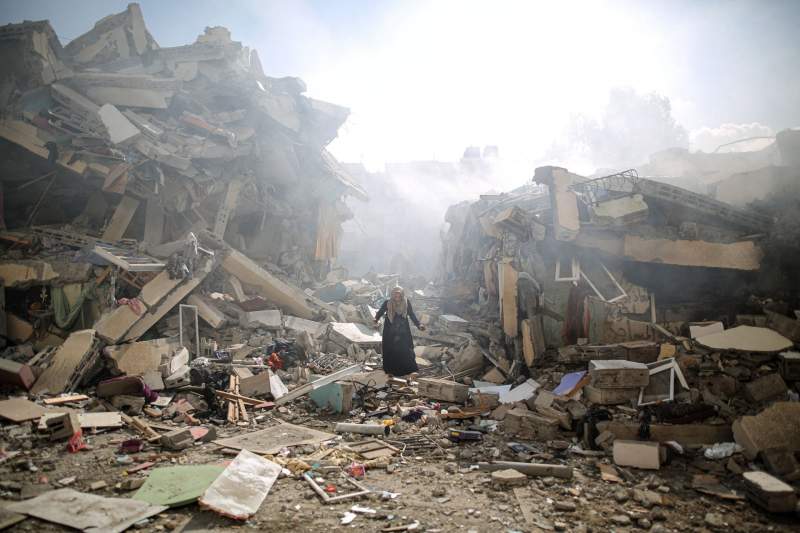
Behind these statistics lie individual stories. In Khan Younès, a single strike claimed the lives of more than twenty family members spanning several generations. A photograph taken shortly before the attack showed a young high school student surrounded by his family. Overnight, his parents, brothers, sisters, uncles, aunts, and cousins were gone. One survivor recounts returning to the rubble and finding nothing but clothing scattered by the explosion.
As of February 25, 2026, the Gaza Ministry of Health has recorded 72,082 deaths and 171,761 injuries since the start of the operations. These figures are considered reliable by the World Health Organization and the United Nations. However, an independent study published in February 2026 in *The Lancet Global Health* estimates that these figures may be underestimated by approximately 35 %. The researchers estimate the number of violent deaths to be between 63,600 and 86,800 for the period up to January 5, 2025, alone—representing approximately 3.4 % of Gaza’s total population. When indirect deaths linked to food shortages, disease, and the collapse of the healthcare system are factored in, the projections indicate even higher death tolls.
On the international stage, these findings have fueled an intense legal debate. Several UN reports have cited reasonable grounds to believe that acts falling under the definition of genocide have been committed. International nongovernmental organizations have also concluded that certain actions in Gaza fall within this legal framework. Israel and its allies dispute this characterization and denounce the analyses as biased. The International Court of Justice, to which the matter was referred in January 2024, ordered Israel to take all measures within its power to prevent the commission of acts of genocide.
A ceasefire has been officially in effect since October 10, 2025, but the violence has not completely ceased. Since that date, several hundred more Palestinians are reported to have been killed and more than a thousand wounded. For the thousands of sole survivors of families that have been almost entirely wiped out, the prospect remains that their names will be permanently erased from civil registries upon their death. Beyond the material and human destruction, the issue is now demographic in nature: the very continuity of family lines and collective memory.