




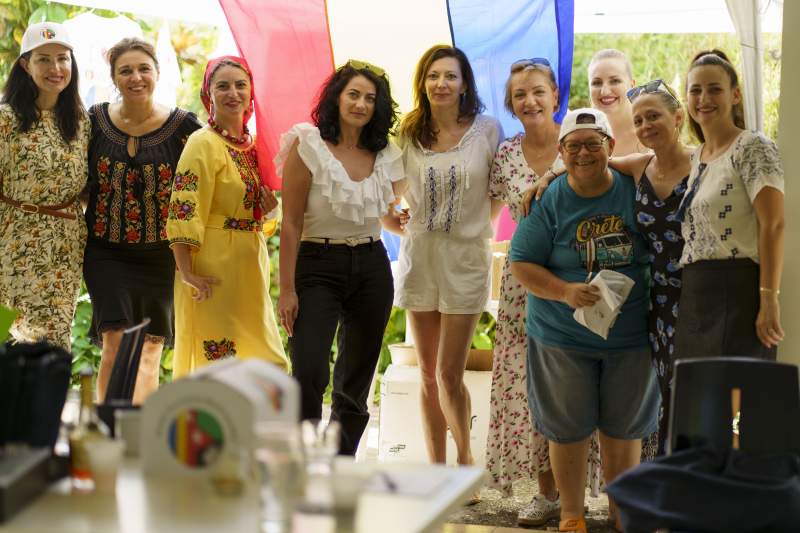
Toni Hrițac, A Romanian journalist currently in Martinique wanted, on the occasion of Romania’s National Day, to offer a comparative perspective between his home country and this Caribbean territory that is hosting him. His motivation is simple: to show that, despite the geographical distance and obvious differences, Romania and Martinique share surprisingly similar histories, challenges, and aspirations. This analysis aims to provide cultural, social, and geopolitical context to better understand what connects these two regions within the broader European family.
Similarities and Shared Challenges Between Romania and Martinique
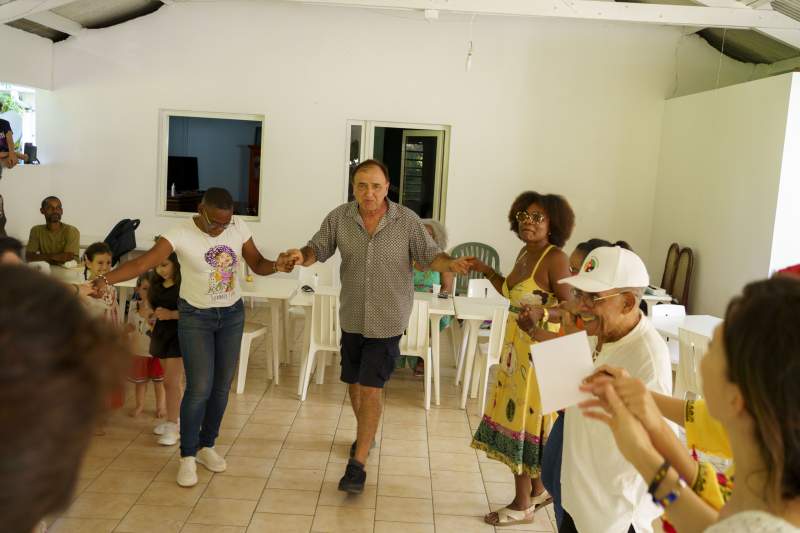
Romania celebrated its National Day on December 1. In Martinique, more than seventy Romanians and Martinicans gathered on Sunday in Le Diamant to mark the occasion, at the initiative of the Romania–Martinique Friendship Association. The association is represented by Dr. Ciprian Drăgănescu, a Romanian physician at the University Hospital, and Jean Crusol, an economist from Martinique.
Romanians have long maintained close ties with France. Prominent figures such as the playwright Eugène Ionesco and the writer Emil Cioran—both of whom are part of France’s literary heritage—were part of the Romanian exile community that vigorously denounced the postwar communist regime. The contemporary diaspora, however, is very different from that of the pre-1989 era: it stems primarily from Romania’s integration into the European Union and the free movement of labor, making Romania one of the countries with the largest number of citizens living abroad today.
Located at the crossroads of diverse cultural spheres—European, Slavic, and Eastern—Romania has long oscillated between several civilizational models, while aspiring to become a full member of the Western world. Its accession to the European Union in 2007 was therefore a historic moment.
In Martinique, many Romanians have benefited from this integration. They have strong professional training, with many specializing in medicine, engineering, economics, construction, or other technical fields.
SHARED MOBILITY AND GEOPOLITICS
The Diamant meeting also provided an opportunity to reflect on the similarities between Romania and Martinique, as well as their shared challenges. Despite obvious differences, certain points of convergence are emerging. First, mobility: Dr. Drăgănescu points out that a small group of Romanians is currently working in Martinique thanks to the free movement of people within the European Union, and that, conversely, several dozen students from Martinique have chosen to study in Romania.
At the institutional level, both territories must navigate complex relationships stemming from their peripheral position within the European Union. For Romania, the proximity of a Russia that has become aggressive in the context of the war in Ukraine directly influences the geopolitical landscape. For Martinique, Caribbean dynamics and the presence of external powers shape the strategic environment. In both cases, local communities seek to make the most of their resources and potential, while Brussels and Paris are sometimes perceived as out of touch with local realities. A delicate balance thus emerges between autonomy and interdependence, local identity and integration into a broader whole.
ECONOMY, SOCIETY, AND POLITICAL CHALLENGES
The similarities also extend to the economic sphere. Both territories face structural deficits, often linked to trade imbalances and social spending. Tourism and agriculture are considered key sectors for reducing these deficits, but they remain underutilized and struggle to fully adapt to European regulations or new technologies. Elites in both Romania and Martinique emphasize the need for modernization and innovation, placing higher education at the heart of this process. However, younger generations are growing up in a digital culture that is often superficial, and the most talented among them sometimes leave the region.
In an unstable global context, both territories are also experiencing a rise in anti-establishment movements, fueled by persistent local frustrations and discontent with governance, whether local or imposed from afar—Brussels for Romania, the Paris metropolitan area for Martinique. In Romania, an anti-establishment electoral wave—amplified by a digital campaign backed by external influencers identified as having ties to Russia—brought democracy to the brink of collapse in November 2024, when the first round of the presidential election was won by Călin Georgescu, an extremist, authoritarian, nationalist, and pro-Russian leader. The election was annulled by the Constitutional Council due to foreign interference. In the new election held in May 2025, the pro-European candidate Nicușor Dan was elected, backed by a diverse political coalition committed to the European path.
Romania and Martinique thus continue to grapple with the complex equation of the relationship between the center and the periphery, between the individual and the collective, and between the potential of a well-structured but politically polarized community and the need to fit into a broader cosmopolitan framework.
However, the strongest similarity lies in the warmth and sense of familiarity that both places inspire. Just like in the opening lines of an old Romanian ballad—«on a peaceful hillside, at the gates of paradise»—Romania and Martinique share the same spirit of hospitality, community, and belonging. It was this feeling that carried Sunday’s celebration in Le Diamant, a true corner of Martinican paradise.
Toni Hrițac, a Romanian journalist