




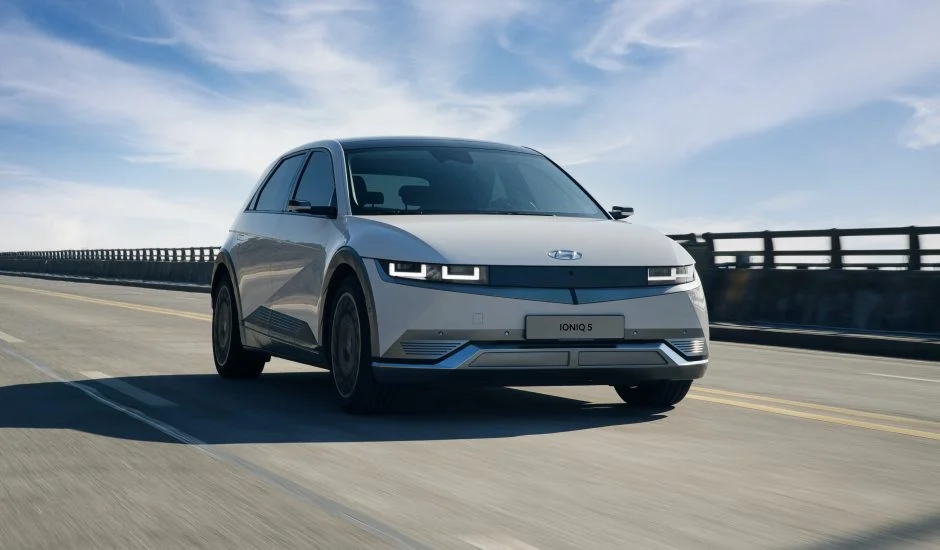
There are still a few conditions you need to meet, though!
Seen on https://siecledigital.fr – A recent study A study by ADEME (the French Environment and Energy Management Agency) shows that, over its entire lifespan, an electric car driven in France has a carbon footprint that is 2 to 3 times lower than that of a similar gasoline-powered model.
A lower carbon footprint
This was a report that professionals in the automotive industry had been eagerly awaiting. The comparison of The Carbon Footprint of Electric Vehicles, whose sales, for the first time, surpassed those of diesel in France, compared to internal-combustion vehicles should put an end to certain rumors. In fact, 50 % of the French population still believes that electric vehicles are more polluting than internal-combustion models. This study shows that in France, where the vast majority of electricity is carbon-free, an electric car « has a carbon footprint that is 2 to 3 times lower than that of a similar gasoline-powered model ». However, there are a few conditions that must be met.
In practical terms, the smaller and lighter the vehicle, the more likely it is to have a low carbon footprint. Furthermore, the study highlights the fact that the rise in electric car sales poses major challenges for France and for Europe more broadly. The experts write that « The capacity and performance of battery recycling plants are a key issue for the coming decade ». On the other hand, the supply of rare metals, which are needed to manufacture batteries—such as lithium, cobalt, nickel, and graphite—poses another strategic challenge « which requires coordination at the European level ».
What is the actual cost of an electric car?
In 2022, the electric vehicle market is booming. Industry professionals have embarked on a massive push toward electrification. This is the case, for example, with the Renault-Nissan-Mitsubishi Alliance, which has pledged to manufacture 35 new electric vehicles by 2030. France’s vehicle fleet currently consists of 40 million vehicles. However, ADEME estimates that while the electrification of vehicles is an essential step toward achieving carbon neutrality by 2050, it will not be enough « so that the transition is fully effective ».
Many drivers are still hesitant to switch to electric vehicles because of the cost of the vehicle. The ADEME report shows that over its lifetime, the total cost of an electric car equipped with a 60-kWh battery « is lower than that of a comparable internal-combustion vehicle»e." While the purchase price is indeed higher for consumers today, the cost of electricity is a real advantage compared to gasoline or diesel. The study shows that it costs 10 euros to travel 300 km using a home charger and 40 euros using a fast charger, compared to 30 euros for internal combustion engine vehicles.
Over the years, the used-car market has also been growing for electric models. Analysts estimate that, as with internal-combustion vehicles, this trend will also help increase the ownership rate in France. This should also make it possible to to extend the lifespan of electric vehicles and thus contribute to widespread adoption. For automakers, a key challenge lies in developing a lineup of smaller, more fuel-efficient, and more affordable vehicles to boost the adoption rate of electric vehicles.
What about charging stations?
This is another concern raised by the French: the issue of charging infrastructure. According to ADEME, it is essential to « continue and expand the development of charging stations ». Indeed, this factor remains a major obstacle to the adoption of electric cars. In any case, as early adopters have discovered, using electric vehicles requires us to change our charging habits. You can’t charge a 60-kWh battery in 2 minutes the way you can fill up a gas-powered vehicle. That would require drawing 1.8 MW of electrical power—the equivalent of the average electrical power drawn simultaneously by 1,500 households.
That is why local governments have a role to play. Various stakeholders are also working to expand the network of charging stations. This is the case, for example, with Renault and Mobilize, which are preparing to launch the « Mobilize Fast Charge ». What makes this network unique is that it will be accessible to all electric vehicles, regardless of their make. A total of 200 charging stations are expected to be set up across Europe, including 90 in France. This network is expected to rely on an innovative charging system « which helps limit the impact on the power grid », while maintaining high power output during simultaneous charging.
Furthermore, while the selection of electric vehicles meets everyday needs, it does not yet adequately meet the needs of long-distance travel. The issue of autonomy is crucial to increase the adoption rate.