




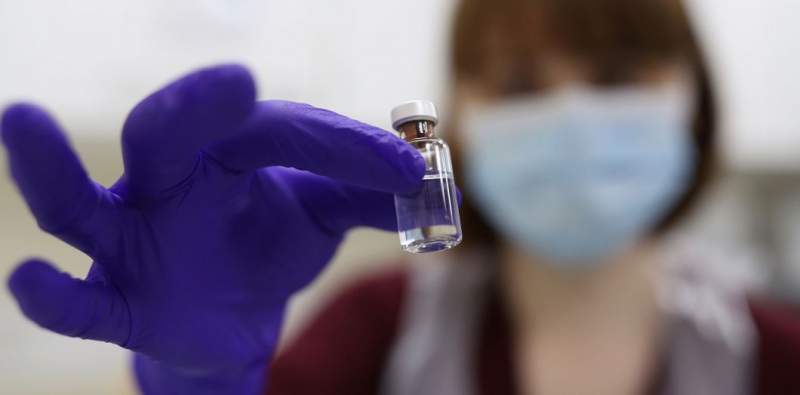
The Pfizer-BioNTech vaccine in the hands of a lab technician, December 4, 2020 | Yui Mok / POOL / AFP
This is the first time in the history of science that a vaccine has been developed so quickly.
Spotted by Nina Pareja for Slate
It all began in early January 2020 when a small metal box addressed to the professor Zhang Yongzhen is delivered to the Shanghai Public Hospital. Inside are samples taken from patients suffering from a strange respiratory illness in the City of Wuhan. Together with his team, they discover his [...], within forty-eight hours RNA, the 28,000-letter genetic code of this new coronavirus. The results are immediately shared with the rest of the world on the website virological.org.
It is thanks to this discovery that other scientists were able, for the first time in history, to develop a vaccine in less than a year. As Professor Stephen Griffin from the University of Leeds to the Guardian, it is also a sign of hope, since it establishes «a new benchmark for what can be achieved when sufficient resources are allocated to science and efforts are focused on global health».
This RNA sequencing of the SARS-CoV-2 enables the identification of a spike protein responsible for the virus’s spread throughout the human body. Researchers therefore assume that by sufficiently strengthening a person’s immune system to prevent this protein from entering their cells, the spread of the virus can be stopped. To do this, a way must be found to force the body to produce antibodies capable of attacking this protein.
Since 2008, BioNTech develops vaccines based on the RNA sequences of diseases and tailored to each specific disease. For the scientists at BioNTech—supported by Pfizer—as well as those at Moderna, the vaccine was developed quickly.
Thanks to a simple yet innovative chemical synthesis technology, the vaccine enables humans to produce the antibodies needed to combat this spiked protein of the virus.
In Oxford, a different approach was taken. The team of scientists led by Professor Sarah Gilbert has been preparing to develop new vaccines since the 2014–2016 Ebola epidemic. They have created a simple virus that does not cause infection but helps boost the immune system; its genetic code can be adapted to different viruses—all that is needed is the virus’s RNA. In collaboration with the pharmaceutical company AstraZeneca, the vaccine entered the testing phase very quickly. There are still 200 vaccines in this phase elsewhere in the world.
Of course, there are still some unanswered questions: these vaccines are supposed to protect individuals from developing severe forms of the disease, but will they prevent the transmission of the virus? During the trial phases of the vaccine developed at Oxford, the viral load in the noses and throats of vaccinated participants was lower than that of the group that received placebos. Furthermore, how long will they remain effective?
Most of the scientists interviewed by The Guardian had not expected such a high efficacy rate—50% rather than 90%—and remain optimistic about the future of this vaccine initiative.