




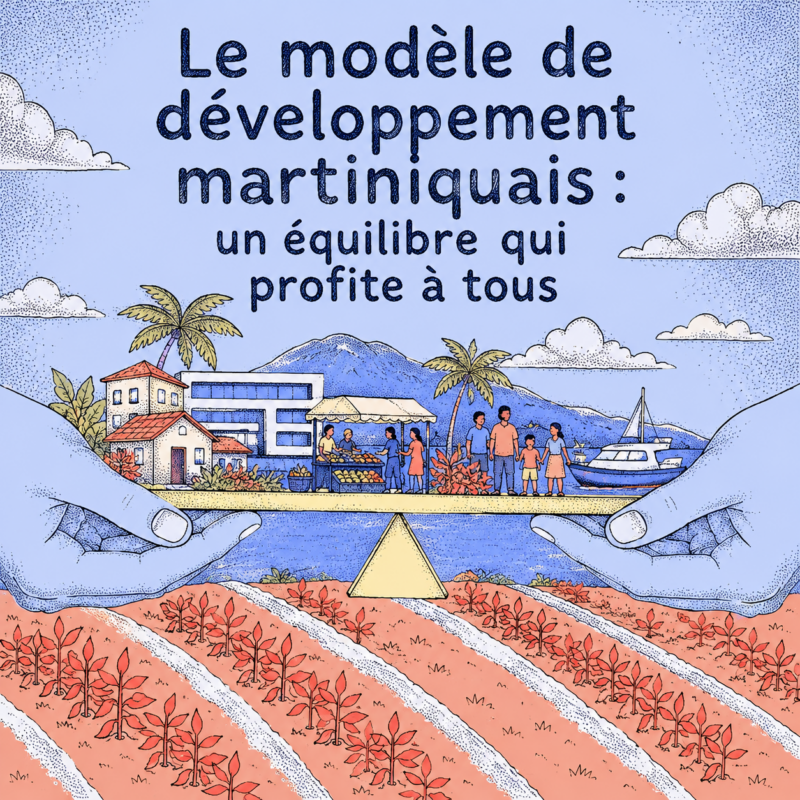
Martinique has gradually organized itself around a unique development model, largely shaped by public spending, financial transfers from the central government, and social protection. This system has ensured a standard of living and public services unmatched in the Caribbean, but it has also created a delicate balance that makes any reform particularly challenging.
In fact, nearly all segments of society benefit, to varying degrees, from this system.
Public officials enjoy job stability and relatively secure careers. Professionals—such as doctors, lawyers, certified public accountants, architects, notaries, and consultants—work in an environment where a significant portion of their business depends directly or indirectly on public spending and the level of income it supports.
The World of Business is one of the main beneficiaries of the system. Fueled by public sector wages, pensions, social benefits, and domestic transfers, consumer spending underpins a large portion of commercial activity. Parts of the manufacturing, construction, and service sectors also benefit from government contracts.
Retirees benefit from a comprehensive pension system, while associations, local governments, and many organizations rely in part on public funding.
Nearly 30 % of the population lives below the poverty line. For some of these households, social safety-net benefits, housing assistance, family benefits, integration programs, and food assistance are essential sources of income. These mechanisms play a major role in protecting people from financial insecurity. This raises the question of whether this group of citizens would like to see things change.
Thus, each social group derives certain benefits from the current system. Interests vary and are sometimes contradictory, but they often converge toward a form of stability. This situation helps explain why structural challenges remain relatively limited.
Nevertheless, this apparent stability does not dispel the unease. At regular intervals, Martinique experiences social unrest linked to the high cost of living, inequality, employment difficulties, housing issues, and a lack of prospects.
These crises reflect not so much a rejection of solidarity as a questioning of the region’s development. The real challenge now is to complement this system with a stronger drive toward wealth creation, innovation, investment, and local production. Without this progress, social tensions are likely to resurface, as they stem from the structural limitations of Martinique’s development.
Gérard Dorwling-Carter