

«What we're doing here is farming.» – Interview with Ms. Patricia Jean-Jacques
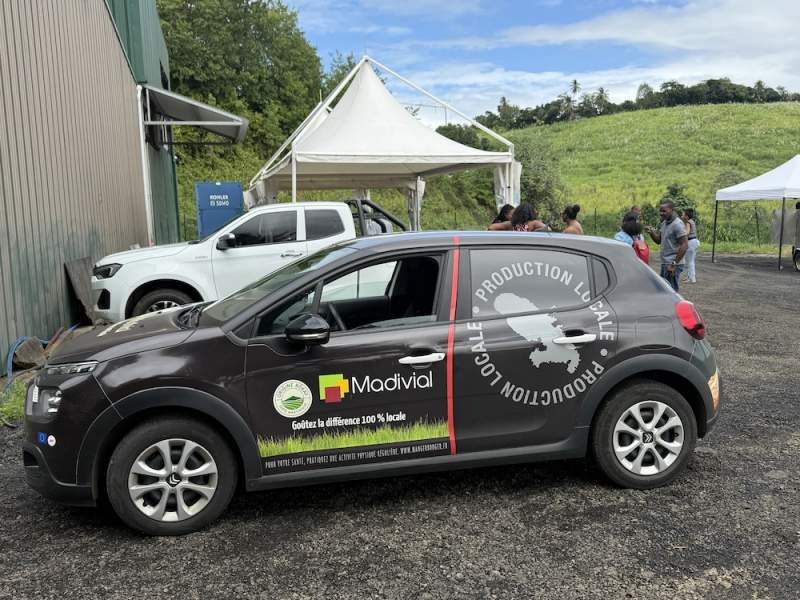
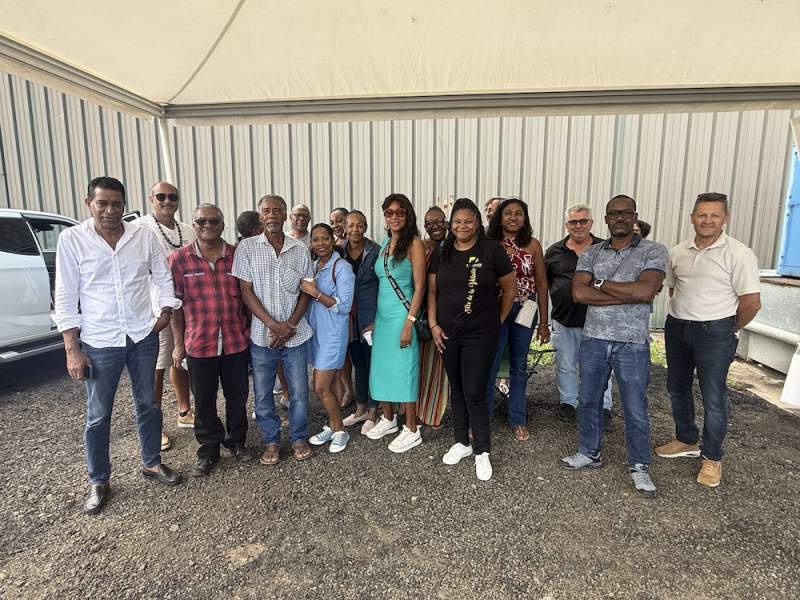
The mobilization of the Madivial* livestock farmers is no accident. On Saturday, December 20, 2025, the industry chose to hold a press conference in Ducos—Rivière la Manche—in front of the warehouse that stores and delivers feed to farms. Behind the scenes, there is simmering anger: the refusal to allow the facility to remain, even though it was built after obtaining two successive permits. The first permit, granted tacitly, had been issued before being revoked following a change to the municipality’s Local Urban Development Plan (PLU). A second permit was subsequently issued in full compliance with regulations by the municipality of Ducos.
Despite this, the book is now facing criticism, a situation that livestock farmers view as a direct challenge to their livelihood.
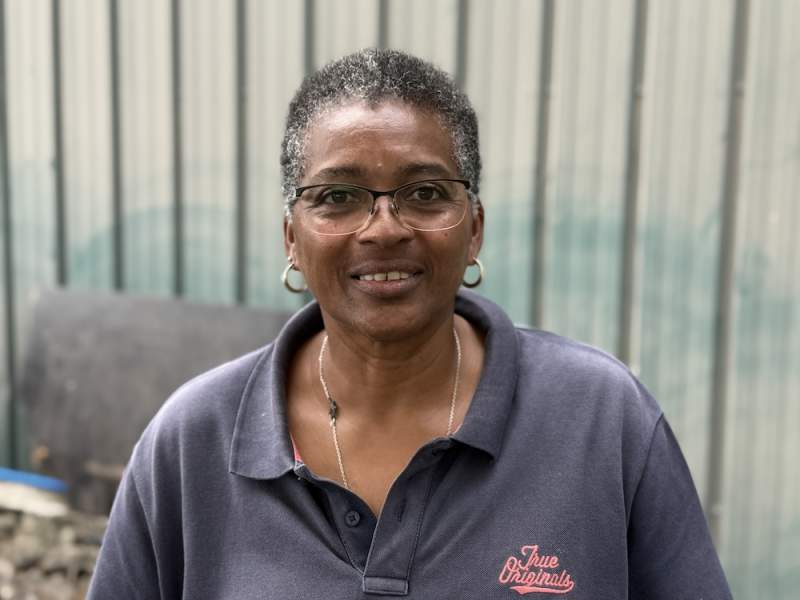
While there, we interviewed Ms. Patricia Jean-Jacques, a poultry farmer, to learn about her journey, her commitment, and what this situation, in her view, reveals about the challenges faced today by farmers in Martinique. Interview…
Could you please introduce yourself and tell us who you are?
My name is Patricia Jean-Jacques. I’m a poultry farmer. I started out on my own, very modestly, on a plot of about 400 square meters. Back then, it wasn’t much, but it was a real life choice. Today, each building can house up to 7,200 birds. None of this happened overnight. It was all built through hard work, patience, investment, and above all, a deep conviction: to produce locally, right here in Martinique.
Why did you feel it was important to speak at this event?
Because we want to show who we really are. We are farmers from Martinique. We’re not here to bother anyone, nor to bend the rules. What we do is useful, practical, and necessary. Livestock farming isn’t some abstract concept. It’s about feeding the population, creating jobs, and sustaining local production. These days, we sometimes feel that our profession is misunderstood, or even called into question.
What is the role of the warehouse in front of which you are gathered today?
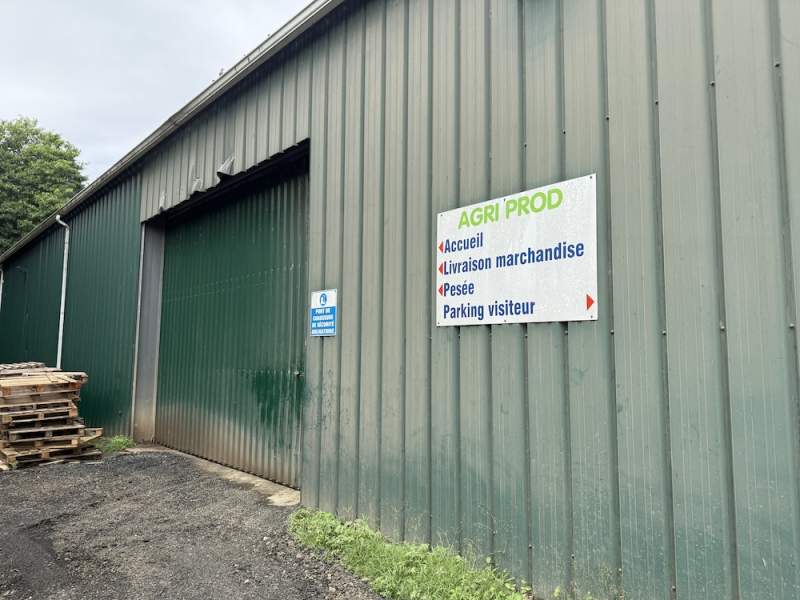
This warehouse is central to our business. Grain and poultry feed are stored here. From there, trucks deliver the supplies directly to the farmers. We don’t just do things haphazardly. There are precise quantities, defined volumes, and a rigorous organizational system. Nothing is purchased at random. Without this logistics facility, it’s simply impossible to operate effectively.
What exactly is the disagreement with the administration about?
They want to take away the tools we need to do our work. Originally, the land was a quarry. Later, it was rezoned as agricultural land. We’re now being told that this type of facility cannot be built on agricultural land. But what we’re challenging is this purely administrative interpretation, which is disconnected from the reality on the ground.
Why do you believe this building is indeed related to agricultural activity?
Because this silo is an integral part of the farms it supplies. Madivial is a livestock farmers’ cooperative: this building is not an independent or industrial facility, but a collective resource serving the farms. It provides storage for feed that is essential to livestock farming. Without this facility, the farms cannot operate normally. It is an integral part of the agricultural production chain. For us, there is no ambiguity: this building is an extension of the farms and is therefore entirely part of agricultural activity.
Have you tried to get this reality acknowledged?
Yes, on several occasions. We have provided a detailed explanation of how we operate, the cooperative’s structure, and the specific role this tool plays in the agricultural production chain. The relevant agencies are fully aware of all these details: the volumes, procedures, and health and regulatory controls are all in place. Despite this, we feel that we are constantly required to prove the legitimacy of our operations. Discussions are taking place, but they are lengthy and complex, and in the meantime, the farms remain in a state of uncertainty that undermines their long-term stability.
You also brought up the issue of poultry feed. Could you elaborate?
We have chosen to work with non-GMO feed out of a commitment to quality, health, and responsibility. This type of feed is not produced in Martinique; it must therefore be imported. This necessarily requires having the appropriate facilities to receive, store, and transport it to the farms. As a livestock farmers’ cooperative, these logistical resources are essential to the smooth operation of the industry. Today, the difficulties we face in obtaining recognition for and securing these facilities effectively deprive farmers of a resource that is essential to the continuation of their business.
What are the practical consequences of these blockades for livestock farmers?
This creates instability, anxiety, and real economic vulnerability. We invest, we take on debt, we make long-term commitments—and yet we feel that everything could be called into question by an administrative decision. It’s discouraging. Still, we keep going because we believe in our work and its value.
What message do you want to convey through this campaign?
We simply ask that our work and our status as farmers and ranchers be recognized. Decisions must be made with us, not against us. Martinique’s agriculture and livestock sectors need consistency, dialogue, and an understanding of the realities on the ground. What we do serves the common good, supports local production, and promotes food self-sufficiency. It is time for this to be fully recognized.
Interview by Philippe PIED
Madivial by the Numbers
- About 100 farmers
- 160 employees
- THAT: 22 million euros
- Production: 2,000 metric tons of meat
- Food cargo capacity: 6,000 metric tons