




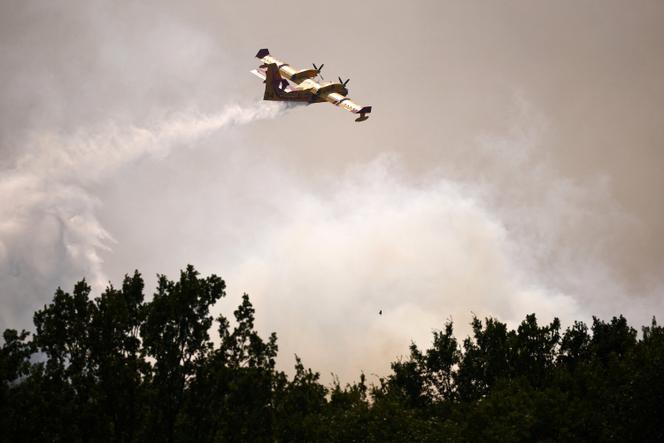
The increasing number of wildfires in Europe this summer cannot be attributed to a single cause. They result from a combination of several factors that have made the landscapes much more flammable than before.
The first factor is the exceptional sequence of heat waves.
Successive heat waves are gradually drying out the soil, forests, and brush, turning the vegetation into fuel.
The second factor is the prolonged drought.
In addition to the heat, the lack of rain over the past several months has weakened the trees and dried out the grass, while the winds are causing the flames to spread very quickly.
Climate change is an aggravating factor.
Scientific studies show that it increases the frequency, intensity, and duration of heat waves. It does not directly cause fires, but it creates conditions that are much more conducive to their occurrence and spread.
Most fires, however, require a source of ignition.
In many cases, the cause is human: cigarette butts, agricultural work, sparks from machinery, power lines, vehicles, barbecues, or deliberate acts.
Changes in the landscape also play a role.
The abandonment of certain agricultural lands encourages the accumulation of brush and young trees, creating a continuous layer of vegetation that facilitates the spread of fires.
Finally, fires are harder to control these days.
Strong winds, low humidity, and rugged terrain can turn a simple fire into a massive blaze that requires the deployment of significant emergency resources.
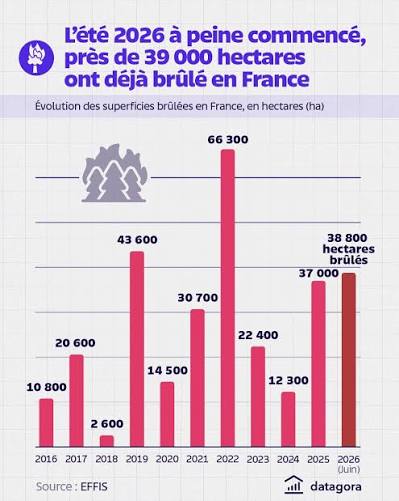
In summary, the fires of the summer of 2026 were the result of a combination of five factors:
very dry vegetation, repeated heat waves, winds that aid the spread of fire, fires caused primarily by human activity, and a climate context that increases the likelihood of these extreme events. Gdc