




The ruling invalidating a large portion of the tariffs imposed in the name of a ’national emergency« is not just a setback for Donald Trump. It marks a major constitutional milestone and redraws the balance of power between the executive and legislative branches in shaping U.S. trade policy.
The question posed to the Supreme Court was deceptively simple:
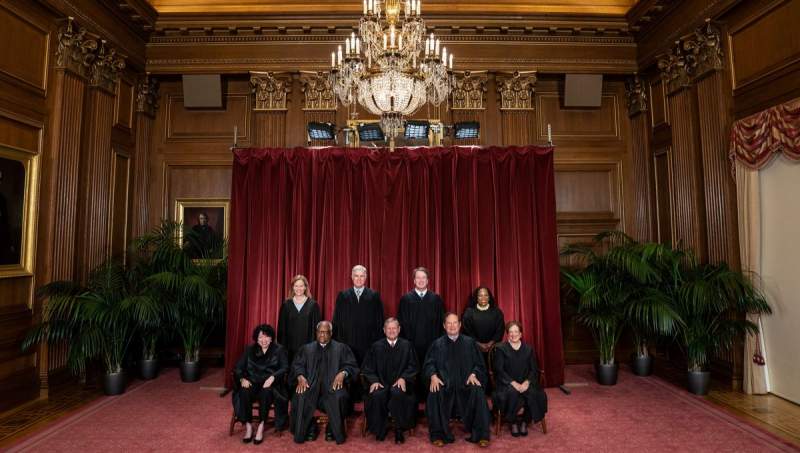
Can a president, citing an external threat, single-handedly overhaul the U.S. tariff system and impose massive surcharges on most of the country’s trading partners? By a vote of six to three, the justices answered in the negative, ruling that the International Emergency Economic Powers Act (IEEPA) of 1977 did not authorize such a structural shift.
At the heart of this line of reasoning lies a founding principle of American constitutionalism:
The power to levy taxes and duties belongs to Congress. Customs duties, the quintessential fiscal instruments, fall under this «power over the purse,» which underpins the separation of powers. Admittedly, over the decades, the legislature has granted delegations of authority to the executive branch. But these were specific, regulated, and limited. Interpreting a law designed to address specific threats as a blank check authorizing across-the-board increases of 20 %, 50 %, or more amounted to transforming an exceptional mechanism into a permanent tool of trade policy.
The decision is part of a broader body of case law that requires clear and explicit authorization from the legislature for any transformation of systemic scope.
Underlying this is the “major questions” doctrine: when a profound overhaul of the national economy is at stake, the executive branch cannot simply rely on general principles adopted in a different historical context.
For several years now, U.S. trade policy has become increasingly presidentialized. Through emergency declarations, invocation of national security, and a proliferation of unilateral measures, the executive branch has gradually expanded its influence in an area historically shared with Congress. The Court’s ruling does not eliminate all presidential discretion, but it does draw a line. Emergency measures cannot become the norm in international trade.
The economic consequences are far from minor.
The tariff hikes implemented as part of this strategy had triggered retaliatory measures and uncertainty, weighing on global value chains and fueling sector-specific inflationary pressures. The reversal of these measures opens the door to relative relief: lower import costs, greater predictability for businesses, and potential support for investment. But the transition will be uneven. Protected sectors could see a resurgence of foreign competition, while import-dependent industries would benefit from substantial relief.
Beyond the U.S. case, the decision has geopolitical implications.
She points out that, even amid heightened strategic rivalries, the U.S. institutional system remains bound by the rule of law. The president does not have unlimited authority over tariffs. However, there is nothing to prevent other legal instruments—such as those related to national security, anti-dumping, and targeted sanctions—from being used to pursue similar objectives. But the logic changes: global trade cannot be reshaped in a sustainable way without parliamentary debate.
By reaffirming that commercial taxation is within Congress’s purview, the Supreme Court does more than simply reject a broad interpretation of an emergency law.
It reintroduces a democratic requirement into the conduct of U.S. foreign economic policy. In a fragmented world, prone to protectionism and the temptation of permanent exceptionalism, this reminder is in itself a major political event.
Gérard Dorwling-Carter