



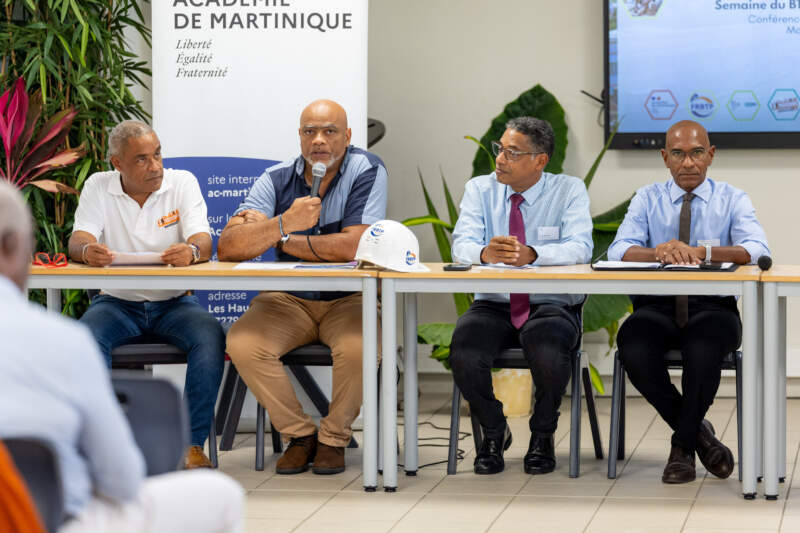
During Construction Week, held in the lead-up to the Salon des Bâtisseurs trade show, we met with Claude Maceno, the academic delegate for continuing education, and Olivier Catayée, principal of the Léopold Bissol vocational high school. Both emphasized the same need: to raise awareness of careers in the building and public works sectors, strengthen ties between training programs and businesses, and help young people view this field not as a default choice but as a path to a promising future.
«Our goal, through these memorable moments, was to show that we could inspire enthusiasm and ambition by revealing a different side of professions we thought we already knew.»
Claude Maceno

A week to make the industry more transparent
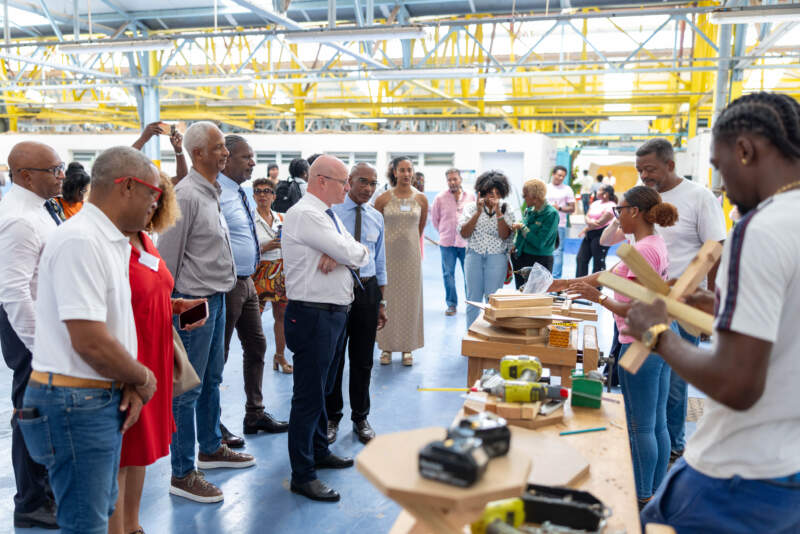
Construction Week kicked off on March 24 at Léopold Bissol High School in Le Lamentin with a launch press conference and a tour of the school’s workshops. Right from this first highlight, the goal was clear: to provide a firsthand look at what careers in the building and public works sectors truly entail.
Claude Maceno then pointed out that the construction industry plays a central role in Martinique’s regional and economic challenges. He explained that when young people were asked about this sector, many thought they already understood its scope, even though they often had only a partial view of it. Behind a profession that seemed clearly defined, he said, there was in reality a wide variety of roles, specializations, and career paths—which this week was designed to help shed light on. For the Martinique Academy, the goal was therefore to work closely with families, professionals, and educational institutions to make these training programs more understandable and appealing.
To show that the construction industry wasn't just a matter of a few clichéd images
In his remarks, Claude Maceno also emphasized that the construction industry draws on many different fields of training: electrical work, woodworking, carpentry, aluminum fabrication, energy, air conditioning, and refrigeration. This diversity, he argued, needed to be better organized to make it clearer to young people and their families. He stressed the need to develop clear career paths, even as some programs were struggling with low enrollment due to a lack of awareness about career opportunities.
He also noted that the relationship between schools and businesses needed to be strengthened. The agreement announced between the Martinique School District and the FRBTP was specifically intended to formalize existing ties and provide a clearer framework for initiatives carried out in collaboration with professionals. In his view, this cooperation was essential, not only for students but also for teachers, who needed to stay connected to developments in the field—whether regarding business practices, risk prevention, retraining, or the circular economy.
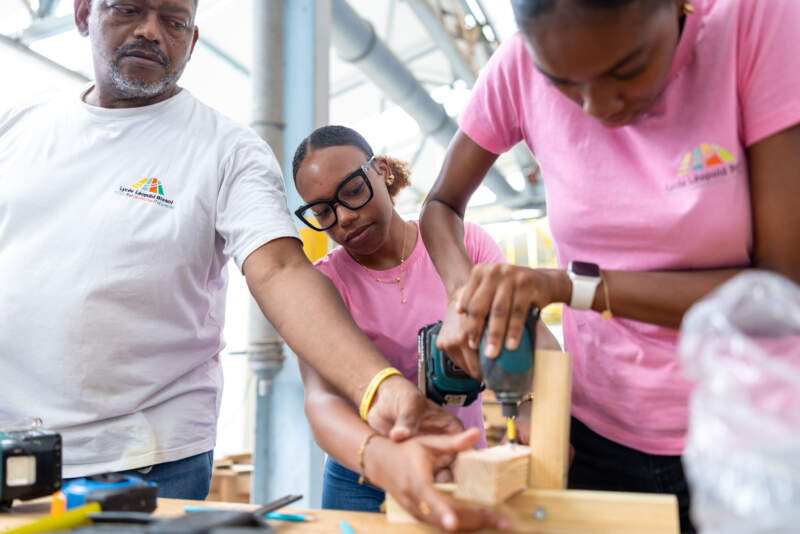
«We wanted to show that this was a field that was becoming more female-dominated, that wasn’t gendered, and that wasn’t reserved for men.»
Olivier Catayée
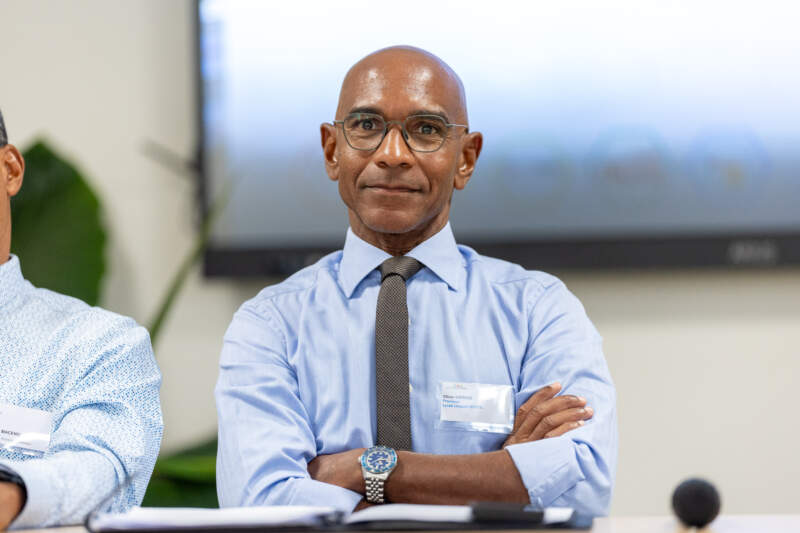
At Bissol High School, a practical and modern approach to careers
At the Léopold Bissol vocational high school, this commitment took on a very concrete form through the Bissol Career Fair, held from March 24 to 27. Olivier Catayée explained that the school focuses primarily on early-stage support regarding training, career guidance, and job placement. As part of this week, he wanted to make the open house more than just a simple tour, by showing middle school students the reality of the workshops, tools, and skills used in the program.
The principal emphasized several points. First, he noted that the sector was facing a labor shortage. Second, he emphasized the need to change the construction industry’s image, which is still too male-dominated. The school had therefore chosen to feature girls in the demonstrations as well, to show that these trades are open to everyone. Finally, he wanted to showcase a rapidly evolving sector, featuring virtual reality workshops, machinery demonstrations, and presentations of cutting-edge professional software—all against a backdrop where artificial intelligence was also beginning to transform certain applications.
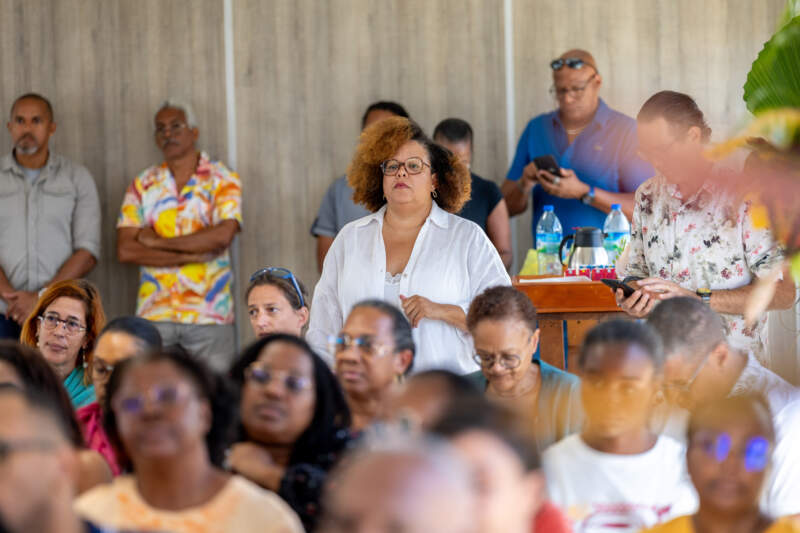
A career path that the school wanted to promote more effectively
Olivier Catayée regretted that vocational education is still too often undervalued, both in Martinique and in mainland France. On the contrary, he believed it represented a path to excellence, capable of opening up real opportunities for further education and employment. At Léopold Bissol, he noted, students could progress from the CAP to the vocational baccalaureate, then on to the BTS, with even the possibility of pursuing a bachelor’s degree in civil engineering. The challenge, therefore, was to help young people understand that they could build meaningful career paths in this sector.
With 390 students at the school and more than 437 middle school students expected To showcase the training programs offered during this week, the high school clearly wanted to position itself as a resource center for the industry. The goal was to help young people make more informed and proactive career choices, and to show them that the construction industry remains a thriving sector, poised to endure while evolving alongside technological and environmental changes.
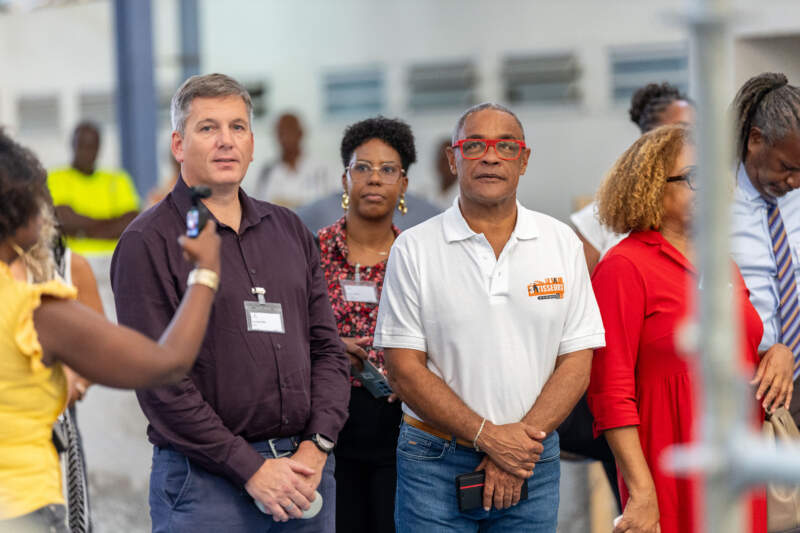
A trend that is set to continue over the long term
Ultimately, this Construction Week was not merely a series of events or meetings. It reflected a deeper commitment: to better integrate career guidance, training, and employment in a sector that is essential to Martinique. In the remarks by Claude Maceno and Olivier Catayée, one idea came up repeatedly: to make the industry more attractive, it needed to be made more visible, more tangible, and easier to understand.
In the run-up to the Salon des Bâtisseurs, this collective effort served as a reminder that the construction industry is not merely a matter of economic necessity. It also involves the transmission of expertise, the recognition of career paths, and the region’s ability to develop the workforce of the future.