




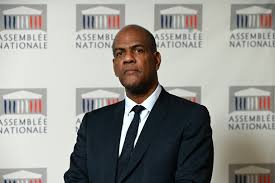
By announcing his intention to appeal to «defend his honor and integrity,» the president of the Territorial Collectivity of Martinique is taking an action that is both legal and political. Legal, because the right to appeal is a fundamental right guaranteed to every person subject to the law. Politically, because a territorial executive—especially one who carries on the legacy of Aimé Césaire—is not an ordinary litigant.
Exercising a right of appeal does not constitute either an attempt to evade justice or a challenge to the judicial system.
In a state governed by the rule of law, a trial court decision does not put an end to the debate. An appeal allows for a review of the facts, intent, legal interpretation, and the proportionality of the penalty. It is an essential procedural safeguard.
But the explicit reference to «honor» shifts the focus of the discussion.
It introduces a powerful symbolic dimension, particularly in Martinique, where the relationship with institutions remains marked by a long history of tensions and demands placed on public officials.
By choosing to frame his appeal in terms of defending his honor, Serge Letchimy positions his appeal within a context that goes beyond a mere criminal dispute. He is staking his moral authority, his political capital, and, by extension, the credibility of the institution he presides over.
However, case law is consistent: the higher the office, the greater the requirement for diligence. The liability of an experienced elected official is never assessed in the same way as that of an ordinary citizen. Hierarchical position, experience, and decision-making capacity are key factors in analyzing liability.
Since the enactment of the September 15, 2017, law on confidence in political life, the courts have placed greater emphasis on tailoring sentences to individual cases and on imposing ineligibility for office in cases of breaches of integrity. The issue is therefore not limited to a matter of image: it can affect one’s ability to hold elected office.
The issue is twofold. It concerns the personal reputation of Serge Letchimy, a central figure in Martinique’s political life and a self-proclaimed heir to a tradition rooted in high standards and public dignity. But it also touches on the institutional stability of the Territorial Collectivity of Martinique.
If the decision is overturned, the appeal will be seen as the legitimate exercise of a right. If it is upheld, the rhetoric of honor will have to contend with the strength of the facts established by the judges. The symbolic dimension will no longer suffice; only the legal reality will matter.
This case is a test of democracy. It calls into question a society’s ability to distinguish between the individual and the office, between the defense of individual interests and the public interest, and between individual responsibility and political accountability.
For Serge Letchimy, this is a decisive test. By overcoming it, he will definitively secure his political authority.
Gérard Dorwling-Carter