


«Residents need to understand the benefits, the constraints, and the safeguards…»
As the Caribbean accelerates its energy transition, Martinique must define its own path forward. Solar power is gaining ground, energy storage is becoming essential, and geothermal energy is opening up new possibilities—provided that safety, transparency, and public acceptance remain top priorities.
In the Caribbean, energy is no longer just a technical issue. It has become a matter of sovereignty, purchasing power, economic competitiveness, and territorial security. The latest issue of the Caribbean Economics Quarterly The Inter-American Development Bank clearly states:
«Caribbean countries now have very widespread access to electricity, but they remain heavily dependent on fossil fuels, high production costs, and international shocks to oil and gas prices.»
In the Caribbean, energy is no longer just a technical issue. It has become a matter of sovereignty, purchasing power, economic competitiveness, and territorial security. The latest issue of the Caribbean Economics Quarterly A report by the Inter-American Development Bank makes this clear: Caribbean countries now have very widespread access to electricity, but remain heavily reliant on fossil fuels, high production costs, and international shocks to oil and gas prices.
For Martinique, however, an important distinction must be made. As a non-interconnected area that is part of mainland France, our island benefits from the tariff equalization mechanism. In other words, consumers in Martinique do not pay the actual cost of electricity production on the island, which is heavily dependent on imported fuels. This additional cost is offset at the national level, allowing for rates similar to those in mainland France. This is a form of national solidarity, but it also represents a vulnerability: it partially masks the true cost of our energy dependence.
Martinique is not directly covered in the IDB report, which focuses on the Bahamas, Barbados, Guyana, Jamaica, Suriname, and Trinidad and Tobago. However, the regional insights are useful. They help us better contextualize our decisions within a Caribbean environment where the same challenges often arise: small, isolated grids; dependence on imports; high infrastructure costs; exposure to hurricanes; financing difficulties; and the need for grid stability.
For Martinique, three approaches now appear to be key: further expanding solar power, significantly increasing energy storage capacity, and seriously exploring geothermal potential.
Solar Energy: A Natural Choice That Needs to Be Organized
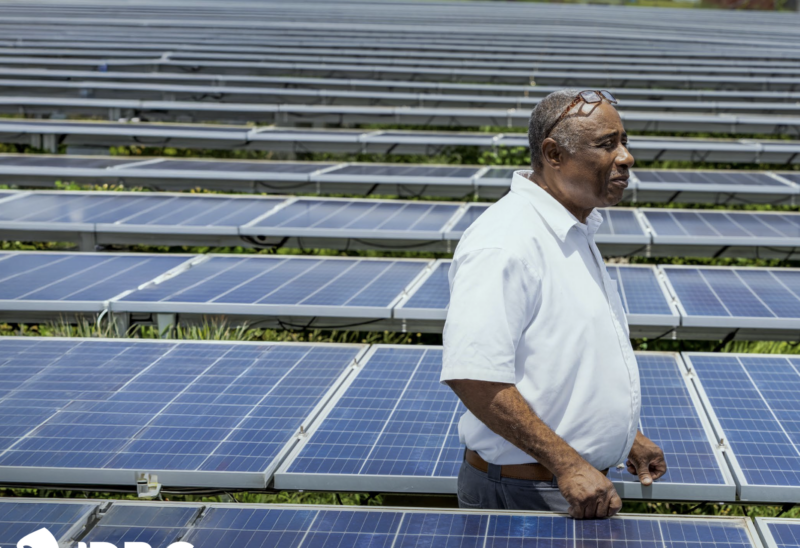
 Solar energy is probably the sector that can be mobilized most quickly. Martinique has abundant sunshine, an existing business network, numerous public and private rooftops, parking lots, commercial areas, agricultural buildings, and already developed spaces that can accommodate photovoltaic installations.
But the issue isn’t just about producing more. It’s also about producing better—in the right place and with the right business model. On an island where land is scarce and in high demand, priority should be given to areas that are already built up or degraded: rooftops of public buildings, schools, sports facilities, large retail stores, warehouses, parking lot canopies, brownfield sites, water treatment plants, port facilities, and business parks.
Solar energy can also help businesses and local governments reduce their energy bills. For hotels, retail businesses, refrigeration companies, tradespeople, pumping stations, and public facilities, self-consumption can be a viable option, provided that the technical and financial arrangements are clear.
The real challenge, therefore, will be less about “installing solar panels” and more about developing a coherent strategy: Which buildings should be prioritized? Which types of use should be targeted? What should be the balance between individual self-consumption, collective self-consumption, and feeding power back into the grid? What role should small local businesses play? How will this align with the objectives of the Multi-Year Energy Plan?
Storage: The Decisive Factor

The expansion of solar power cannot be considered without energy storage. This is one of the key lessons learned from experiences in the Caribbean. Variable renewable energy sources, such as solar and wind power, do not always generate electricity when demand is at its peak. In an island grid that is not connected to the main continental grid, this intermittency quickly raises stability concerns.
Martinique is already facing this reality. Solar power is on the rise, but the grid’s capacity to absorb more variable energy is becoming a key challenge. Without batteries, smart demand management, and investments in the grid, the island risks hitting a technical ceiling.
Energy storage must therefore be viewed as a strategic infrastructure, just like power plants. It can take several forms: centralized batteries managed by the grid operator, batteries paired with solar or wind power plants, storage in public buildings, controllable industrial equipment, smart charging stations for electric vehicles, and even more substantial solutions in the medium term.
It’s also an economic issue. The cost of batteries has fallen sharply worldwide, which is changing the outlook for small off-grid systems. But their deployment requires a clear framework: Who invests? Who operates them? Who pays for the service provided to the grid? How can we ensure that it isn’t just the large operators who are able to enter the market?
For Martinique, storage is not just an added benefit. It is a prerequisite for success.
Geothermal Energy: A Promising but Sensitive Option

The third option is geothermal energy. It is of particular interest for a volcanic island, as it can provide a more consistent source of renewable energy than solar or wind power. This is a major advantage for an island: a local energy source that can potentially be managed, capable of contributing to the stability of the power grid and, depending on the site, of generating electricity, heat, or cooling.
This approach appears set to play a more significant role in Martinique’s new Multi-Year Energy Plan, which is currently being revised for the periods 2024–2028 and 2029–2033. This PPE, developed jointly by the French government and the Territorial Collectivity of Martinique, is intended to set the course toward energy self-sufficiency and a 100% renewable electricity mix by 2030. In this context, geothermal energy is increasingly emerging as a strategic resource, alongside solar power, energy storage, and other renewable energy sources. However, we will have to wait for the final version of the PPE to accurately assess the role it will play.
It is also important to note one key point: there are currently no geothermal facilities in operation in Martinique. The sector is still in the exploration phase, working on resource assessment and obtaining permits. However, several potential sites have now been identified, which shows that the issue is no longer merely theoretical.
The most high-profile issue in recent news concerns the “Mount Pelée Permit,” proposed by CARIGEN SAS. A public comment period has been opened regarding this application for an exclusive permit to explore geothermal deposits. The announced area covers approximately 132 km² in northern Martinique, encompassing all or part of the municipalities of L’Ajoupa-Bouillon, Basse-Pointe, Grand’Rivière, Macouba, Le Morne-Rouge, Le Prêcheur, and Saint-Pierre. This is not a power plant project, but rather an exploration permit intended to continue investigations and, if warranted, to prepare for exploratory drilling, which will itself require specific authorizations.
But Mount Pelée is not the only area involved. In the center of the island, the “Cœur Martinique Permit,” granted in 2023 to TLS Geothermics and Storengy, covers a large area including, in particular, Ducos, Fort-de-France, Le Lamentin, Saint-Joseph, and Schœlcher. This area specifically refers to the Lamentin Plain, which has been under study for several years and where hot water sources have been identified. The benefits extend beyond electricity generation: geothermal energy could also be used to produce renewable cooling for public, commercial, and industrial buildings in the Fort-de-France metropolitan area, on an island where air conditioning accounts for a significant portion of energy consumption.
In the southwest, the “Pointe Sud-Ouest Permit,” granted in 2024 to TLS Geothermics and Storengy, covers the municipalities of Anses d’Arlet, Le Diamant, and Les Trois-Îlets. This area is significant because previous scientific studies have identified Anses d’Arlet, along with Mount Pelée, as one of the areas showing the most promising indications for high-temperature geothermal energy. Studies have even proposed—subject to confirmation through drilling—a power plant with a capacity of several megawatts in the Anses d’Arlet area.
These various studies show that Martinique has several geothermal prospects, but each is based on different principles. Mount Pelée and the Anses d’Arlet are more suited to high-temperature geothermal energy, which could generate electricity if the resource is confirmed. The Lamentin Plain could be better suited for direct heating or cooling applications, with practical benefits for business parks, public facilities, or heavily air-conditioned buildings.
It is therefore important to clearly distinguish between the different stages. An exploration permit is not a license to operate. It does not guarantee the presence of sufficient resources, the construction of a power plant, or that drilling will automatically take place. The next steps will depend on technical results, environmental studies, administrative approvals, safety requirements, costs, local consultation, and social acceptability.
Geothermal energy could be an opportunity for Martinique, but it cannot be treated as merely an industrial project. It affects sensitive areas, including the volcano, the landscape, biodiversity, water resources, rural communities, tourist areas, and deeply held cultural perceptions. It is precisely because it could become a strategic resource in the island’s future energy trajectory that it must be pursued with caution, transparency, and public debate.
For Martinique, the challenge is therefore not to choose between solar, storage, and geothermal energy, but to build a coherent energy mix. Solar power can be deployed quickly, storage will ensure its seamless integration, and geothermal energy could—if resources are confirmed—provide more stable generation. It is this synergy that will play a key role in achieving our energy independence.
What the Caribbean Teaches Us
Our Caribbean neighbors offer several lessons. Barbados is making significant strides in solar power and energy storage. The Bahamas is deploying solar projects combined with batteries to improve the stability of its grid. Jamaica is developing solar and wind power as part of a diversification strategy. Suriname stands out for its significant share of hydropower, even though its model is not directly transferable.
These examples show that there is no single solution. Each region must develop its own energy mix. For Martinique, the solution could be based on three pillars: widespread and well-integrated solar power, expanded energy storage, and geothermal energy that has been rigorously studied. Added to this must be demand management, energy-efficient building retrofits, efficient public infrastructure, reduced energy consumption in certain areas, and smart grid management.
The energy transition is therefore not limited to simply replacing one power plant with another. It requires a new structure for the electric power system—one that is more decentralized, more digital, and more local, but also more technically demanding.
Three Conditions for Success
The first requirement is clarity. The objectives must be clear to citizens, businesses, and investors. The PPE must set out a clear path:
What infrastructure should be built, at what pace, with what funding, and with what regional priorities?
The second condition is acceptability. Energy projects can no longer be imposed from above. Whether it’s ground-mounted solar, wind power, biomass, or geothermal energy, residents need to understand the benefits, constraints, and safeguards.
The third condition is local control. LThe transition cannot simply be a market open to outside operators. It must also help develop local expertise in Martinique, train technicians, support small and medium-sized enterprises, involve local governments, and create value within the region.
A Matter of Sovereignty
For Martinique, energy is one of the key issues for the coming years. Dependence on imported fuels makes the territory vulnerable. It places a strain on public finances, businesses, and the ability to achieve more self-sufficient development.
Solar power is already here. Energy storage is becoming essential. Geothermal energy could usher in a new era. But none of these approaches will be enough on its own. It is their combination, as part of a coherent strategy, that will enable Martinique to move toward a more reliable, more locally-based electricity system that is less vulnerable to external crises.
Martinique’s energy transition will not be just a matter of megawatts. It will also be a matter of trust, organization, and a regional vision.