


Antilla · Caribbean series · Rum
If we can combine our individual strengths, respect each other’s traditions and tell a coherent story together, Caribbean rum has an extraordinary future.
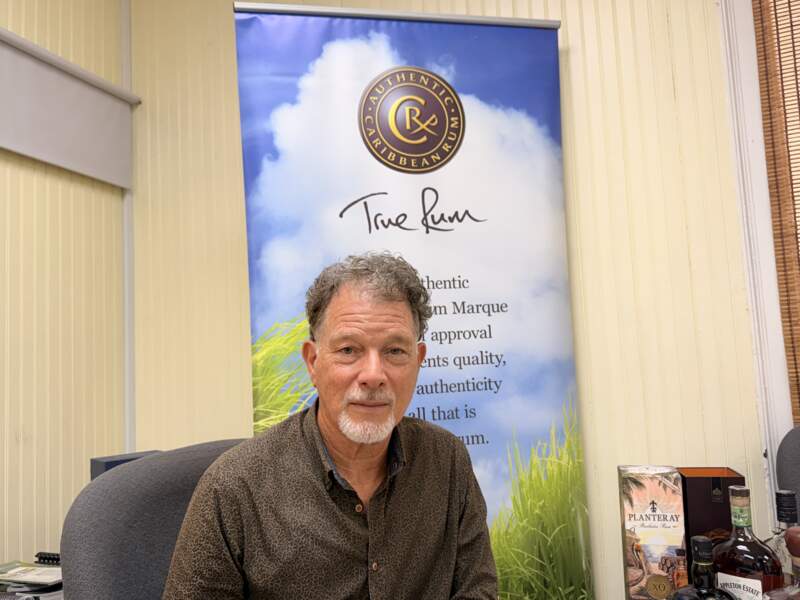
For more than fifty years, the West Indies Rum & Spirits Producers’ Association, WIRSPA, has represented and defended the interests of Caribbean rum producers. Its Chief Executive Officer, Vaughn Renwick, has worked with the organisation since 2003, after a career devoted largely to trade policy, regional integration and economic development.
From trade negotiations with Europe and North America to geographical indications, sustainability, research, premiumisation and cooperation with Martinique and Guadeloupe, Renwick describes an industry that must now prepare not simply for next year, but for the next twenty years.
You have been with WIRSPA since 2003. What was your background before joining the organisation?
My background is in engineering and energy, but most of my professional career has actually been in trade development and trade policy.
I worked extensively with the CARICOM Secretariat and was involved in the development of the CARICOM Single Market and Economy. I also worked with the Organisation of Eastern Caribbean States and spent several years working with the Government of Grenada, where I am from.
Before joining WIRSPA, I was Executive Director of the Caribbean Export Development Agency.
So I have always been very involved in regional integration. Moving to WIRSPA was a natural continuation of that work, except that CARICOM is public sector and WIRSPA represents the private sector.
What exactly is WIRSPA?
WIRSPA is one of the oldest trade associations in the Caribbean.
It began in the 1960s and was formally established in 1971. Initially, it brought together the larger English-speaking rum-producing countries such as Jamaica, Barbados, Trinidad and Guyana.
Its original purpose was very clear: to promote the interests of Caribbean rum and negotiate better access for Caribbean rum in international markets.
Over time, the organisation expanded to include smaller producers as well.
Today, our membership covers the fifteen countries of CARIFORUM, CARICOM plus the Dominican Republic.
We represent around thirty producers through national associations. In countries where there are several producers, those producers form a national association, which then becomes the member of WIRSPA.
Each country appoints a director to our board. Those directors have voting rights, but we invite all producers to participate in our meetings because we want to maintain direct contact with everyone, from the smallest producer to the largest.
Outside our region, people see us as the Caribbean
So WIRSPA represents very different types of producers?
Extremely different.
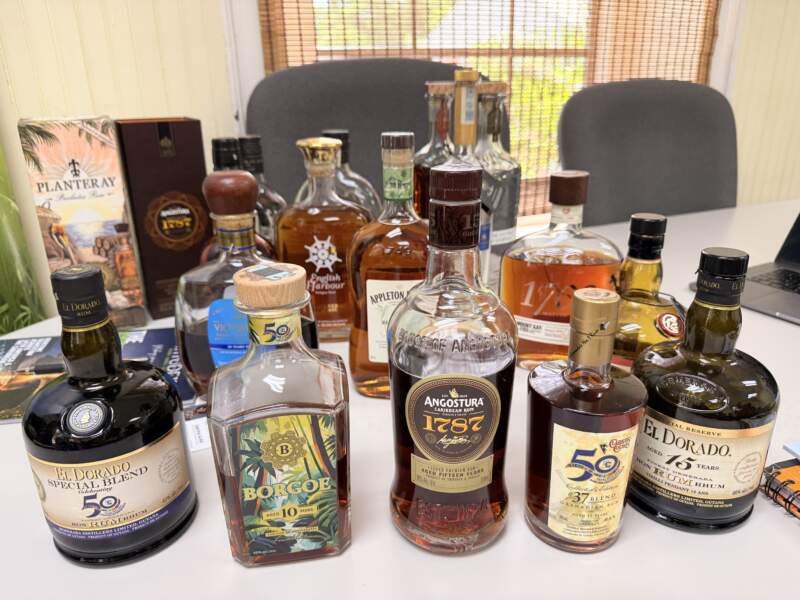
At one end, you can have a producer such as River Antoine Estate in Grenada, where they still use a water wheel, wood-fired pot stills, sugarcane juice and natural fermentation. They may produce only around 50,000 to 75,000 litres per year.
At the other end, you have large producers in places such as Jamaica, Trinidad or the Dominican Republic producing fifteen to twenty-five million litres annually.
That diversity is part of what makes Caribbean rum so interesting.
Historically, what was WIRSPA’s biggest battle?
Trade access.
In the early years, the objective was to get Caribbean rum into the major international markets without prohibitive duties.
The three principal markets were the United States, Canada and Europe.
We worked through different trade arrangements, including agreements with Canada, the Caribbean Basin Initiative with the United States and the Lomé agreements with Europe.
Europe was particularly complicated because Caribbean rum initially entered under quotas. Those quotas made it difficult for our indigenous Caribbean brands to develop because international brokers and larger brands often controlled access.
After many years of negotiation, those quotas were finally removed in 1996.
But then, shortly afterwards, the United States and European Union agreed to remove duties on spirits more generally. So almost immediately, an advantage that Caribbean producers had spent years negotiating effectively disappeared.
We then negotiated with the European Union for support, which eventually led to a major rum development programme beginning in the early 2000s.
That programme helped the Caribbean rum industry modernise.
What are the major challenges today?
The challenges have changed.
Trade remains very important, but sustainability, regulation, competitiveness, research and development, and market positioning are increasingly important.
The international market for rum has also contracted recently, especially for producers who are heavily dependent on bulk exports.
We expect the market to recover, but last year and this year have been difficult.
The challenge is therefore not simply to produce more rum. It is to create more value.
Bulk does not necessarily mean cheap commodity spirit. The real challenge is to create more value before the rum leaves the Caribbean.
Richard Seale told us that the Caribbean has to move away from a model based primarily on bulk rum. Do you agree?
I think we already have, that was the objective of the EU’s support programme which WIRSPA managed in the 2002- 2016 period. Under this programme Barbadian and other producers received support to build brands and to modernize equipment.
However there is an important distinction to make.
Bulk does not necessarily mean cheap commodity spirit.
There are bulk rums from the Caribbean that have significant value because of the way they are fermented, distilled or aged.
Jamaica, for example, still sells important quantities of bulk rum, but some of those products command much higher prices because they have very specific characteristics.
A producer can also age a rum for one or two years before selling it in bulk and create additional value before it leaves the country.
So I prefer to distinguish between bulk spirit and commodity spirit.
That said, the long-term direction for Caribbean producers is clearly towards greater value, stronger brands and premium products.
That does not mean abandoning bulk overnight. Most governments will take the view that a factory employing many people and earning foreign exchange must continue operating while that transition takes place.
Barbados has debated a Geographical Indication for years. Why has it been so difficult?
WIRSPA supports national geographical indications, but we do not intervene directly in the internal negotiations between producers within a country.
In Barbados, there has been considerable debate about what exactly the GI should contain, and producers have not yet reached full agreement.
But the broader principle is widely supported.
Jamaica already has a national GI, which is however under discussion by the industry. Saint Lucia has one. Guyana has a GI for Demerara Rum.
How different is the Martinique AOC from the approach traditionally taken in the English-speaking Caribbean?
Despite differences in our raw materials, I think our philosophy for quality rum is the same.
In many of our countries, the origin of the raw material is not necessarily the defining element because we have imported molasses for decades, from Guyana, Central America and sometimes much farther away.
For us, identity comes largely from our traditions, our knowledge, our processes and our reputation.
Fermentation is extremely important. Distillation is extremely important. The different combinations of pot stills and column stills are important.
We create flavour during fermentation and refine those flavours through distillation. Ageing then further refines the product.
I think most traditional rum producers would endorse this approach.
Is there enough cooperation between the English-speaking Caribbean and Martinique and Guadeloupe?
There has been cooperation for many years, particularly when we have shared interests in European regulations and trade.
We have worked together on issues such as the European definition of rum and on maintaining certain tariffs that protect Caribbean and French overseas rum from very low-value imports.
But I think we can do much more.
There are areas where Martinique has expertise that would be valuable to our producers, and areas where our producers have expertise that could be useful to Martinique.
For example, we have visited Martinique to look at waste-treatment systems.
We are also now developing what we call communities of practice in areas such as sustainability, quality, regulatory changes and maturation. I would be very happy to see Martinique producers participate in those groups.
Do you think Martinique sometimes distances itself too much from the rest of the Caribbean rum industry?
I think the important thing is that we do not look down on each other’s products.
There have been occasions where agricole rum has been presented as the “authentic” rum while molasses-based rum is described as “industrial rum”.
I think that terminology is highly negative for rum and should stop.
Molasses-based Caribbean rum is not simply an industrial product. It is the result of generations of knowledge, fermentation, distillation and blending.
We need to recognise that all of these traditions can produce quality products.
If you are in China, people do not necessarily see Martinique, Guadeloupe, Barbados or Jamaica as completely separate worlds. They see the Caribbean.
Outside Europe and North America, this becomes even more obvious.
If you are in China, people do not necessarily see Martinique, Guadeloupe, Barbados or Jamaica as completely separate worlds.
They see the Caribbean.
That is why I think it makes sense to collaborate and build a coherent Caribbean story while still protecting our individual identities.
Does WIRSPA consider “rhum agricole” to be a specifically French Caribbean identity?
Yes.
We have products in our member countries made directly from sugarcane juice, but we generally do not call them agricole.
We recognise that “rhum agricole” is an identity that was developed and promoted particularly by the French Caribbean.
We can produce similar types of spirit, but that terminology belongs to that tradition.
We must preserve our individual identities, but when we go out into the wider world, we should also recognise the power of presenting ourselves as part of something larger.
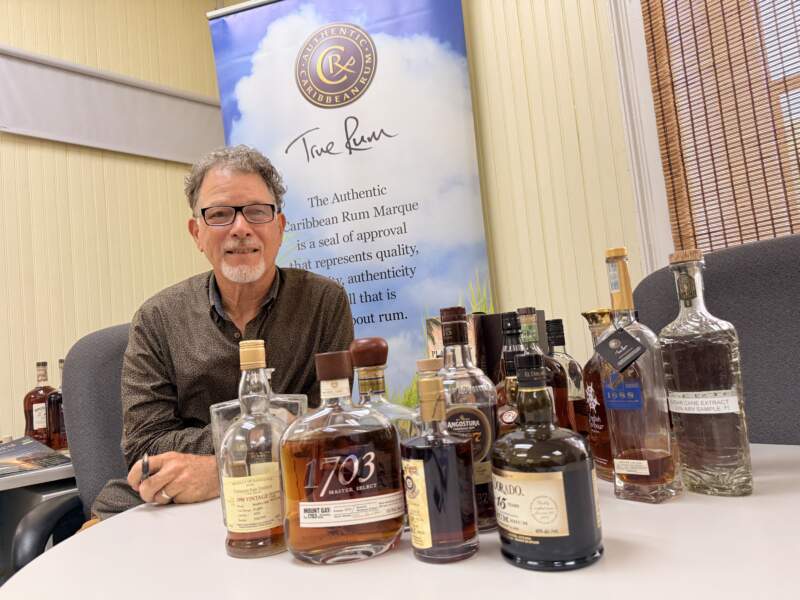
What does Authentic Caribbean Rum represent?
It provides a collective framework for Caribbean rum.
Not every country will necessarily be able to develop its own formal geographical indication immediately because GIs require considerable technical, legal and administrative work.
So we have also looked at ways in which producers without national GIs can still operate under a broader Caribbean quality framework.
Authentic Caribbean Rum is part of that approach.
It is also a way of communicating to consumers that these are products genuinely connected to Caribbean production and heritage.
You repeatedly use the word “premium”. Is premiumisation really the future?
For Caribbean producers, premiumisation is essential.
We cannot necessarily compete globally by being the cheapest producers.
Our opportunity is our history, our heritage, our production traditions and our ability to make distinctive spirits.
But premiumisation is not simply about putting a higher price on the bottle.
It means building brands, creating stories that are authentic, improving quality and thinking ten or twenty years ahead.
If you want to sell a twenty-year-old or twenty-five-year-old rum in the future, you have to anticipate that demand today.
How important is history in that premium positioning?
Very important, but we have to tell the whole history.
We cannot simply say that rum has been produced in the Caribbean for three hundred years and ignore the fact that its history is deeply connected to the triangular trade and the enslavement of millions of people.
That history is difficult, but it has to be acknowledged and explored.
The challenge is to incorporate it honestly into a story that moves forward positively without pretending the past was something it was not.
If we can tell our story authentically, then I believe Caribbean rum has a very strong opportunity internationally.
Where do you see the greatest opportunities?
Emerging markets will be important, particularly markets such as India and China.
If somebody walks into a store in China looking for a premium alternative to whisky or cognac, our ambition should be that they choose Caribbean rum.
Not simply “rum”, but Caribbean rum.
That requires long-term thinking, trade access, premium positioning and a coherent story.
Sustainability also seems to have become a major part of WIRSPA’s work.
Absolutely.
One of our biggest challenges is moving from ways of operating that have developed over the last fifty years towards more sustainable production.
Part of that change comes from regulation, but consumers are also increasingly interested in how products are made.
Our producers are investing in renewable energy, waste treatment, efficiency and more sustainable production systems.
But sustainability is expensive.
That is particularly challenging for smaller producers.
You also spoke about creating a regional research network.
Yes.
It does not make economic sense for the Caribbean rum industry to build one enormous dedicated research institution.
Instead, we want to identify capabilities that already exist across the region.
Our universities may have certain laboratories. Another institution may specialise in another field.
Martinique, for example, has the CTCS and strong technical expertise relating to sugarcane.
The idea is to create networks and relationships so that producers can access the research capabilities they need.
This is another area where greater cooperation between the English-speaking Caribbean and Martinique could be extremely valuable.
What does innovation mean to you?
Innovation does not necessarily mean buying new equipment or making rum faster or more efficiently.
Innovation can also mean looking backwards.
You can research how rum was produced one hundred years ago, rediscover fermentation methods, restore old stills and create products that use heritage in a new way.
Using that heritage to create a distinctive product and tell its story is also innovation.
Does the industry have another responsibility beyond producing and selling rum?
Yes. We also have a responsibility as corporate citizens.
Alcohol misuse has health and social consequences. Governments across the Caribbean face significant costs from non-communicable diseases, and alcohol can be one factor.
We therefore have a responsibility to promote responsible consumption.
That includes education, improved labelling and working with governments and international organisations.
The answer cannot simply be prohibition.
If you eliminate legal, regulated production, illegal alcohol will still exist.
The objective has to be sensible regulation and helping consumers drink more responsibly.
Finally, what is your vision for Caribbean rum over the next twenty years?
We have to think beyond next year.
Our future lies in premium products, strong brands, authentic stories, responsible production and greater cooperation.
We must preserve the individuality of Jamaica, Barbados, Guyana, Martinique, Guadeloupe and every other rum-producing territory.
But at the same time, when we go out into the wider world, we should recognise the power of presenting ourselves as part of something larger.
People outside the region often see us simply as the Caribbean.
If we can combine our individual strengths, respect each other’s traditions and tell a coherent story together, Caribbean rum has an extraordinary future.
Interview conducted in Barbados by Philippe Pied/Antilla. Caribbean series on rum.