


Legal analysis based on the published information, pending the full reasoning for the judgment
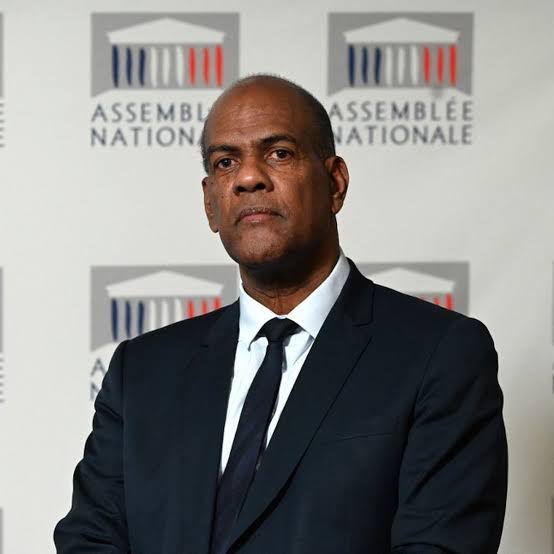
On February 19, 2026, the Paris Criminal Court sentenced Serge Letchimy, president of the Territorial Collectivity of Martinique (CTM), to an 18-month suspended prison sentence, a fine of 150,000 euros, and a five-year ban on holding public office for the offense of extortion.
Originally charged with embezzlement of public funds, the charge was reclassified. The court found that he had not held a fictitious position upon his reinstatement at the Fort-de-France City Hall in 2016, but upheld the charge under Article 432-10 of the Penal Code.
The analysis remains cautious: since the full reasoning behind the judgment has not yet been published, some questions may be answered upon a detailed review of the court’s reasoning.
The Facts of the Case
The case concerns the terms of Serge Letchimy’s retirement in 2016. After losing the 2015 regional elections while still serving as a member of the National Assembly for Martinique, he rejoined the municipality of Fort-de-France in the first quarter of 2016 as a local government engineer.
Amounts mentioned:
23,465 euros, equivalent to three months' salary; ;
67,552 euros as a retirement bonus; ;
approximately 97,000 euros in pension payments made between April 2016 and March 2019; ;
for a total of nearly 198,000 euros.
Reclassification as Extortion
The court ruled out the existence of a fictitious job but upheld the charge of extortion. This offense involves the receipt of a sum that the recipient knows is not due. Knowledge of the improper nature of the payment is at the heart of the legal debate.
Co-defendants Acquitted
Also facing charges were Didier Laguerre (mayor of Fort-de-France), Yvon Paquit (first deputy mayor), and Max Bunod (former director general of services). They were acquitted, as they were not found criminally liable.
Individual Liability Found
The conviction of the sole political decision-maker, combined with the acquittal of the administrative officials, highlights the distinction between collective administrative liability and personal criminal liability. Since criminal liability is personal (Article 121-1 of the Penal Code), proving the element of intent is decisive.
Issues in the Appeal
The appeal will focus primarily on establishing whether the defendants were aware that the funds they received were improperly obtained, and on the consistency between the acquittal of the executives and the conviction of the decision-maker.
Double standards in justice?
The ruling reveals a unique situation: no fraudulent scheme was found, no concerted organization was identified, and no complicity was established, yet the individual deemed to be the decision-maker was convicted.
The central legal question remains: if no structurally fraudulent mechanism has been established and if the administrative officials were not aware of any criminal irregularity, on what basis can it be established that the sole «decision-maker,» acting alone, was certain of it?
This individualization is legally permissible, but it requires rigorous evidentiary support. The review on appeal must meet this requirement for consistency.
Gérard Dorwling-Carter.