




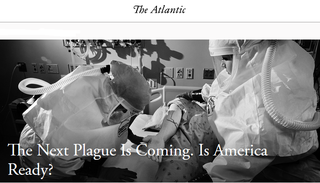
Dina Litovsky
The Atlantic
Ed Yong
How did we get here? A virus a thousand times smaller than a speck of dust has humiliated the most powerful nation on the planet. America failed to protect its people, leaving them sick and financially ruined. It has lost its status as a world leader. It has wavered between inaction and incompetence. The scale and scope of its mistakes are difficult to grasp at this moment.
During the first half of 2020, SARS-CoV-2, the novel coronavirus that causes COVID-19, infected 10 million people worldwide and killed approximately half a million. But few countries have been as severely affected as the United States, which accounts for only 4 % of the world’s population but a quarter of confirmed COVID-19 cases and deaths. These figures are estimates. The actual toll, while undoubtedly higher, is unknown, as the world’s richest country still lacks sufficient testing capacity to accurately count its infected citizens.
Despite numerous warnings, the United States squandered every possible opportunity to bring the coronavirus under control. And despite its considerable advantages—immense resources, biomedical power, scientific expertise—it failed. While countries as diverse as South Korea, Thailand, Iceland, Slovakia, and Australia have taken decisive action to flatten the curve of infections, the United States simply reached a plateau in the spring, which turned into a terrifying upward slope in the summer. «The United States has fundamentally failed in a way I could never have imagined,» Julia Marcus, an infectious disease epidemiologist at Harvard Medical School, told me.
Since the start of the pandemic, I have spoken with more than 100 experts in various fields. I have learned that almost everything that went wrong in the U.S. response to the pandemic was predictable and preventable.
The slow response of a government lacking expertise allowed the coronavirus to take hold. Chronic underfunding of public health has undermined the country’s ability to prevent the spread of the pathogen. A bloated and inefficient healthcare system left hospitals ill-prepared for the ensuing surge in cases. Racist policies that have persisted since thethe era of colonization and slavery have made Indigenous peoples and Black Americans particularly vulnerable to COVID-19. The decades-long dismantling of the nation’s social safety net forced millions of essential workers in low-wage jobs to risk their lives to make a living. The same social media platforms that sowed partisanship and misinformation during thethe 2014 Ebola outbreak in Africa and the 2016 U.S. election have become vehicles for conspiracy theories during the 2020 pandemic.
The United States has little excuse.
Over the past few decades, outbreaks of SARS, MERS, Ebola, H1N1 flu, Zika, and monkeypox have demonstrated the devastation that new and re-emerging pathogens can cause. Health experts, business leaders, and even middle school students have organized simulation exercises to try to stem the spread of new diseases. In 2018, I wrote an article for The Atlantic in which I argued that the United States was not prepared for a pandemic, and I warned about the fragility of the country’s healthcare system and the slow process of developing a vaccine. But the COVID-19 debacle has also affected—and implicated—nearly every other facet of American society: its short-sighted leadership, its disregard for expertise, its racial inequalities, its social-media culture, and its adherence to a dangerous strain of individualism.
SARS-CoV-2 is, in a way, an «anti-Goldilocks» virus: just bad enough in every respect. Its symptoms can be severe enough to kill millions of people, yet are often mild enough to allow infections to spread undetected within a population. It spreads quickly enough to overwhelm hospitals, but slowly enough that the statistics don’t rise until it’s too late. These characteristics have made the virus harder to control, but they have also softened the blow of the pandemic. SARS-CoV-2 is neither as deadly as some other coronaviruses, such as SARS and MERS, nor as contagious as measles. There are almost certainly more deadly pathogens. Wild animals harbor about 40,000 unknown viruses, a quarter of which could potentially spread to humans. “How will the United States fare when ‘we can’t even handle an emerging pandemic’?” Zeynep Tufekci, a sociologist at the University of North Carolina and author of an article in *The Atlantic*, asked me.
Despite its historic impact, COVID-19 is merely a harbinger of worse calamities to come. The United States cannot prepare for these inevitable crises if it returns to “normal,” as many of its residents are suffering from. It is “normalcy” that led to this. “Normalcy” was a world increasingly prone to a pandemic, yet increasingly unprepared to deal with it. To avoid another catastrophe, the United States must confront all the ways in which “normalcy” has failed us. It needs a full accounting of every misstep and every recent founding sin, every weakness and every warning ignored, every wound that is fading and every scar that is reopening.
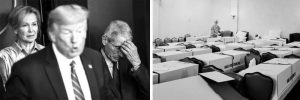
Left: President Donald Trump and the Coronavirus Task Force brief the press at the White House. Right: A record number of bodies being processed at a funeral home in Queens, New York. (Jabin Botsford / The Washington Post / Getty; Natalie Keyssar)
- A pandemic can be prevented in two ways: by preventing an infection from breaking out again, or by preventing an infection from spreading to thousands of other people. The first approach is probably impossible. There are simply too many viruses and too many animals that harbor them. Bats alone could harbor thousands of unknown coronaviruses; in some Chinese caves, one in twenty bats is infected. Many people live near these caves, take shelter in them, or collect guano from them to use as fertilizer. Thousands of bats also fly over these people’s villages and roost in their homes, creating opportunities for the viruses carried by the bats to be transmitted to their human hosts. Based on antibody tests conducted in rural areas of China, Peter Daszak of EcoHealth Alliance, a nonprofit organization that studies emerging diseases, estimates that these viruses infect a significant number of people each year. «Most infected people are unaware of it, and most viruses are not transmissible,» explains Mr. Daszak. But it only takes a single transmissible virus to trigger a pandemic.
In late 2019, the nasty virus jumped from a bat—perhaps via an intermediate host—to a human, then to another, and then to yet another. Eventually, it made its way to the Huanan Seafood Market, where it jumped to dozens of new hosts during an explosive superspreading event. The COVID-19 pandemic had begun.
«There’s no way to bring the spread down to zero,» Colin Carlson, an environmental scientist at Georgetown University, told me. Many environmentalists view outbreaks as opportunities to ban the wildlife trade or the consumption of «bush meat»—an exotic term for «game»—but few diseases have emerged through these two channels. According to Mr. Carlson, the main factors driving these impacts are land-use change and climate change, both of which are difficult to control. Our species has relentlessly expanded into previously wild areas. Through intensive agriculture, habitat destruction, and rising temperatures, we have uprooted the planet’s animals, forcing them to move into new, more confined spaces right on our doorstep. Humanity has overwhelmed wildlife around the world, and viruses have emerged.
It is easier to contain these viruses after they have spread, but this requires knowledge, transparency, and determination—all of which were lacking in 2020. There is still much we do not know about coronaviruses. There are no surveillance networks to detect them, as there are for the flu. There are no approved treatments or vaccines. Coronaviruses used to be a niche family, of primarily veterinary importance. Forty years ago, only about 60 scientists attended the first international meeting on coronaviruses. Their ranks swelled after SARS swept the world in 2003, but quickly dwindled when a surge in funding dried up. The same thing happened after the emergence of MERS in 2012. This year, the world’s coronavirus experts—and there are still not many of them—had to postpone their triennial conference in the Netherlands because SARS-CoV-2 made air travel too risky.
In the age of low-cost air travel, an epidemic that begins on one continent can easily spread to others. SARS already demonstrated this in 2003, and more than twice as many people now travel by air each year. To prevent a pandemic, affected countries must quickly alert their neighbors. In 2003, China concealed the early spread of SARS, allowing the new disease to take hold, and in 2020, history repeated itself. The Chinese government downplayed the possibility that SARS-CoV-2 could spread among humans and did not confirm it until January 20, after millions of people had traveled within the country for the Lunar New Year. Doctors who tried to sound the alarm were censored and threatened. One of them, Li Wenliang, later died of COVID-19. The World Health Organization initially followed China’s lead and did not declare a public health emergency of international concern until January 30. By that date, an estimated 10,000 people in 20 countries had been infected, and the virus was spreading rapidly.
The United States was right to condemn China for its duplicity and the WHO for its laxity, but the United States also let the international community down. Under President Donald Trump, the United States withdrew from several international partnerships and alienated its allies. It holds a seat on the WHO Executive Board but left it vacant for more than two years, filling it only last May, when the pandemic was in full swing. Since 2017, Trump has withdrawn more than 30 employees from the Centers for Disease Control and Prevention’s office in China, who could have warned of the spread of the coronavirus. Last July, he dismissed an American epidemiologist embedded with the Chinese CDC. “America First” was “Unconscious America.”.
Even after the warnings reached the United States, they fell on deaf ears. Since before his election, Mr. Trump has cavalierly dismissed expertise and evidence. He has filled his administration with inexperienced newcomers, while portraying career civil servants as part of a «deep state.» In 2018, he dismantled an office that had been created specifically to prepare for emerging pandemics. U.S. intelligence agencies warned of the threat posed by the coronavirus in January, but Trump generally disregards intelligence briefings. Health and Human Services Secretary Alex Azar offered similar advice and was ignored on two occasions.
«Being prepared means being ready to take action, »so that when something like this happens, you act quickly,«» Ronald Klain, who coordinated the U.S. response to the 2014 Ebola outbreak in West Africa, told me. “In early February, we should have set in motion a series of actions, none of which were actually taken.” Trump could have spent those crucial first weeks mass-producing tests to detect the virus, asking companies to manufacture protective gear and ventilators, and preparing the country for the worst. Instead, he focused on the border. On January 31, Mr. Trump announced that the United States would bar entry from China to foreigners who had recently traveled there, and urged Americans to avoid traveling there.
* Demic
* Pandemics leave us forever changed
Travel bans make intuitive sense, since travel obviously facilitates the spread of a virus. But in practice, travel bans are woefully ineffective at limiting either travel or the spread of viruses. They encourage people to seek indirect routes through third countries or to deliberately hide their symptoms. They are often porous: Trump’s ban included numerous exceptions and allowed tens of thousands of people to enter China. Ironically, they actually drive travel: When Trump later announced a ban on flights from continental Europe, a wave of travelers rushed to U.S. airports to circumvent entry restrictions. Travel bans may sometimes work for remote island nations, but in general, they can only delay the spread of an epidemic, not stop it. And they can create a harmful false sense of security, causing countries to «rely on bans at the expense of what they actually need—testing, contact tracing, and building up the healthcare system,» explains Thomas Bollyky, a global health expert at the Council on Foreign Relations. «This is very similar to what happened in the United States.».
It was predictable. A president fixated on an ineffective border wall—and who has portrayed asylum seekers as carriers of disease—was always going to seek travel bans as a first resort. And Americans who bought into his rhetoric of xenophobia and isolationism were particularly likely to believe that simple entry screenings were a panacea.
The United States has thus squandered its best chance to contain COVID-19. Although the disease arrived in the United States in mid-January, genetic evidence shows that the specific viruses that triggered the first major outbreaks in Washington State did not arrive until mid-February. The country could have used that time to prepare. Instead, Mr. Trump—who had spent his entire presidency learning that he could say whatever he wanted without consequence—assured Americans that «the coronavirus is very much under control» and that «as if by magic, it will disappear.» With complete impunity, Trump lied. And with complete impunity, the virus spread.
On February 26, Trump claimed that the number of cases «would be close to zero.» Over the next two months, at least one million Americans were infected.

Left: An unemployed woman in Houston. Right: Los Angeles under lockdown in March. (Elizabeth Bick; Adam Amengual)
When the coronavirus took hold in the United States, it found a nation through which it could spread easily, undetected. For years, Pardis Sabeti, a virologist at the Broad Institute of Harvard and MIT, has been trying to create a surveillance network that would allow hospitals in all major U.S. cities to quickly track new viruses through genetic sequencing. Had this network existed, once Chinese scientists published the SARS-CoV-2 genome on January 11, every U.S. hospital could have developed its own diagnostic test in anticipation of the virus’s arrival. «I spent a lot of time trying to convince numerous funders to finance it,» Mr. Sabeti told me. «I never managed to get anything.»
The CDC developed and distributed its own diagnostic tests in late January. These tests proved useless due to a defective chemical component. The tests were so scarce, and the criteria for obtaining them were so ridiculously strict, that by the end of February, tens of thousands of Americans had likely been infected, but only hundreds had been tested. The official data was so clearly flawed that The Atlantic launched its own volunteer-led initiative—the COVID Tracking Project—to count cases.
Since diagnostic tests were easy to develop, it seemed inconceivable that the United States would not create them. Worse still, they had no Plan B. Private laboratories were stifled by FDA bureaucracy. Meanwhile, Dr. Sabeti’s lab developed a diagnostic test in mid-January and sent it to colleagues in Nigeria, Sierra Leone, and Senegal. «We had functional diagnostic tests in those countries long before we did in any U.S. state,» she told me.
It is difficult to overstate the scale of the testing debacle that brought the United States to a standstill. People with debilitating symptoms were unable to find out what was wrong with them. Health officials were unable to break the chains of transmission by identifying those who were sick and asking them to self-isolate.
Read: How the Coronavirus Became an American Disaster
Water flowing along a sidewalk easily seeps into every crack, just as the unchecked coronavirus has seeped into every flaw in the modern world. Consider our buildings. In response to the global energy crisis of the 1970s, architects made structures more energy-efficient by insulating them from the outside air, thereby reducing ventilation rates. Pollutants and pathogens have accumulated indoors, «ushering in the era of «sick buildings,»» explains Joseph Allen, who studies environmental health at Harvard’s T. H. Chan School of Public Health. Energy efficiency is a pillar of modern climate policy, but there are ways to achieve it without sacrificing well-being. «We’ve lost our way over the years and stopped designing buildings for people,» says Allen.
Indoor spaces, where Americans spend 87 % of their time, have become venues for large-scale events. A study has shown that the chances of catching the virus from an infected person are about 19 times higher indoors than outdoors. Sheltered from the elements and among crowds gathered in close proximity for extended periods, the coronavirus spread through the conference rooms of a Boston hotel, the cabins of the Diamond Princess cruise ship, and a parish hall in Washington State where a choir rehearsed for just a few hours.
The buildings most affected were those that had been overcrowded for decades: prisons. Between harsher sentences imposed as part of the war on drugs and a crime-fighting mindset that prioritizes punishment over rehabilitation, the U.S. prison population has increased sevenfold since the 1970s, reaching approximately 2.3 million people. The United States imprisons five to 18 times more people per capita than other Western democracies. Many U.S. prisons are overflowing, making social distancing impossible. Soap is often in short supply. Inevitably, the coronavirus has run rampant. In June, two U.S. prisons each had more cases than the entire population of New Zealand. One of them, the Marion Correctional Institution in Ohio, had more than 2,000 cases among inmates, even though it had a capacity of 1,500 people.

Left: Blood samples in a Florida laboratory. Right: The USNS Mercy arrives in the Port of Los Angeles to assist overwhelmed hospitals. (Rose Marie Cromwell; Tim Rue / Bloomberg / Getty)
Other severely overcrowded facilities were also hard hit. Nursing homes and long-term care facilities in the United States house less than 1 % of the population, but by mid-June, they accounted for 40 % of coronavirus-related deaths. More than 50,000 residents and staff members have died. At least 250,000 others have been infected. These grim figures reflect not only the greater damage COVID-19 inflicts on the physiology of older adults, but also the quality of care they receive. Before the pandemic, three out of four nursing homes were understaffed, and four out of five had recently been cited for failures in infection control. The Trump administration’s policies exacerbated the problem by reducing the influx of immigrants, who make up a quarter of long-term care workers.
Although a Seattle nursing home was one of the first COVID-19 hotspots in the United States, similar facilities were not provided with tests or protective equipment. Rather than protecting these facilities from the pandemic, the Department of Health and Human Services suspended inspections of nursing homes in March, shifting responsibility to the states. Some nursing homes avoided the virus because their owners immediately stopped visits or paid caregivers to live on site. But in others, staff stopped working, fearing they might infect their patients or become infected themselves. In some cases, residents had to be evacuated because no one showed up to care for them.
America’s neglect of nursing homes and prisons, its dilapidated buildings, and the haphazard rollout of testing are all signs of its problematic approach to health care: «Prepare the hospitals and wait for the sick to show up,» as Sheila Davis, CEO of Partners in Health, puts it. «At first, we focused primarily on meeting the [COVID-19] needs of the 20,% people who needed to be hospitalized, rather than preventing transmission in the community.» This latter task falls to the public health system, which prevents disease in populations rather than simply treating it in individuals. This system clashes with a national mindset that views health as a matter of personal responsibility rather than a collective good.
By the end of the 20th century, thanks to improvements in public health, Americans were living, on average, 30 years longer than at the beginning of the century. Maternal mortality had fallen by 99 %, and infant mortality by 90 %. Fortified foods have virtually eliminated rickets and goiter. Vaccines have eradicated smallpox and polio, and have reduced the incidence of measles, diphtheria, and rubella. These measures, combined with antibiotics and improved sanitation, have reduced infectious diseases to such an extent that some scientists predicted they would soon be a thing of the past. But instead, these achievements have led to complacency. «Now that public health has done its job, it has become a target» for budget cuts, explains Lori Freeman, executive director of the National Association of County and City Health Officials.
Today, the United States allocates only 2.5 % of its massive health care budget to public health. Underfunded health departments were already struggling to cope with opioid addiction, rising obesity rates, water contamination, and easily preventable diseases. Last year saw the highest number of measles cases since 1992. In 2018, the United States reported 115,000 cases of syphilis and 580,000 cases of gonorrhea—numbers not seen in nearly three decades. There were 1.7 million cases of chlamydia, the highest number ever recorded.
Since the last recession in 2009, local health departments—already plagued by chronic difficulties—have lost 55,000 jobs, or a quarter of their workforce. When COVID-19 struck, the economic downturn forced the already overburdened systems to lay off even more employees. When states needed large numbers of public health workers to identify infected individuals and trace their contacts, they had to hire and train people from scratch. In May, Maryland Governor Larry Hogan stated that his state would soon have enough staff to trace 10,000 contacts per day. Last year, as the Ebola virus ravaged the Democratic Republic of the Congo—a country with a quarter of Maryland’s wealth and an active war zone—the Maryland government decided to launch an AIDS prevention program.

A woman prepares takeout orders at a restaurant in Manhattan's East Village. (Dina Litovsky / Redux)
A woman prepares takeout orders at a restaurant in Manhattan's East Village. (Dina Litovsky / Redux)
The coronavirus, which swept through American communities unchecked, infected thousands of people, who were then admitted to U.S. hospitals. It should have found facilities equipped with state-of-the-art medical technology, detailed pandemic response plans, and ample supplies of protective gear and life-saving medications. Instead, it found a fragile system on the verge of collapse.
Compared to the average among wealthy countries, the United States spends nearly twice as much of its national wealth on health care, about a quarter of which is wasted on ineffective care, unnecessary treatments, and administrative red tape. The United States gets little bang for its exorbitant buck. It has the lowest life expectancy among comparable countries, the highest rates of chronic disease, and the fewest doctors per person. This profit-driven system provides little incentive to invest in extra hospital beds, stockpiles of supplies, peacetime drills, and multi-tiered emergency plans—the very essence of pandemic preparedness. U.S. hospitals have been shaped and scaled by market forces to operate at near full capacity, with little flexibility to adapt in the event of a crisis.
When hospitals develop pandemic plans, they tend to fight the last war. After 2014, several hospitals set up specialized treatment units designed for the Ebola virus, a highly deadly but not very contagious disease. These units were virtually useless against a highly transmissible airborne virus like SARS-CoV-2. Nor were hospitals prepared to deal with an outbreak that would drag on for months. Emergency plans assumed that staff could endure a few days of grueling conditions, that supplies would hold out, and that hard-hit hospitals could be supported by unaffected neighbors. «We’re designed for discrete disasters» such as mass shootings, pile-ups, and hurricanes, explains Esther Choo, an emergency medicine physician at Oregon Health & Science University. The COVID-19 pandemic is not an isolated disaster. It is a disaster affecting all 50 states and one that will likely continue at least until a vaccine is ready.
Wherever the coronavirus struck, hospitals were stretched to their limits. Several states asked medical students to finish their studies early, rehired retired doctors, and deployed dermatologists to emergency departments. Doctors and nurses endured grueling shifts; their faces were chapped and bloodied when they finally removed their protective gear. Soon, that gear—masks, respirators, gowns, gloves—began to run out.
In the midst of the worst health and economic crises in generations, millions of Americans have found themselves impoverished and cut off from medical care.
U.S. hospitals operate on a just-in-time basis. They acquire the goods they need at any given moment through labyrinthine supply chains that wind around the world in tangled lines, from countries with cheap labor to wealthier nations like the United States. About half of the world’s masks, for example, are manufactured in China, some of them in Hubei province. When that region became the epicenter of the pandemic, the supply of masks dwindled just as global demand surged. The Trump administration turned to a stockpile of medical supplies known as the Strategic National Stockpile, only to find that the 100 million respirators and masks that had been distributed during the 2009 flu pandemic had never been replaced. Only 13 million respirators remained.
In April, four out of five frontline nurses reported that they did not have enough protective equipment. Some appealed to the public for donations or navigated a quagmire of misleading offers and online scams. Others made their own surgical masks out of bandanas and gowns out of trash bags. The supply of nasopharyngeal swabs—used in all diagnostic tests—was also low, as one of the largest manufacturers is based in Lombardy, Italy—initially the European epicenter of COVID-19. About 40% of intensive care medications, including antibiotics and painkillers, have become scarce because they rely on supply chains that originate in China and India. Once a vaccine is ready, there may not be enough vials to administer it, due to the long-standing global shortage of medical-grade glass—literally, a bottleneck.
The federal government could have alleviated these problems by purchasing supplies in bulk and distributing them based on need. Instead, in March, Mr. Trump told U.S. governors, «Try to get it yourselves.» As usual, healthcare was a matter of capitalism and connections. In New York, wealthy hospitals bought supplies to make up for their lack of protective equipment, while their neighbors in the city’s poorer and more diverse neighborhoods had to ration their supplies.
While the president dithered, Americans took action. Companies sent their employees home. People practiced social distancing even before Trump finally declared a national emergency on March 13, and before governors and mayors subsequently issued official stay-at-home orders or closed schools and stores.
A study has shown that the United States could have prevented 36,000 COVID-19 deaths if leaders had implemented social distancing measures just one week earlier. But better late than never: By collectively reducing the spread of the virus, America has flattened the curve. There was no shortage of ventilators, as there was in some parts of Italy. Hospitals had time to add extra beds.
Social distancing worked. But the indiscriminate lockdown was necessary only because U.S. leaders had squandered months of preparation. The implementation of this harsh policy measure came at an enormous cost. Unemployment reached 14.7 %, the highest level since records began in 1948. More than 26 million people lost their jobs—a catastrophe in a country that, uniquely and absurdly, ties health care to employment. Some COVID-19 survivors were hit with seven-figure medical bills. Amid the greatest health and economic crises in generations, millions of Americans found themselves cut off from medical care and impoverished.
They join the millions of people who have always lived this way.
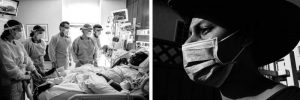
Left: Healthcare workers surround a COVID-19 patient at Lenox Hill Hospital in Manhattan. Right: A woman wears a mask in Los Angeles. (Sarah Blesener; Alexis Hunley)
The coronavirus has exposed, exploited, and exacerbated every inequality the United States has to offer. Older adults, already pushed to the margins of society, were treated as acceptable casualties. Women were more likely to lose their jobs than men, and also had to shoulder the additional burdens of childcare and housework, while facing rising rates of domestic violence. In half of the states, people with dementia and intellectual disabilities faced policies that threatened to deny them access to life-saving ventilators. Thousands of people endured months of COVID-19 symptoms that resembled those of chronic post-viral conditions, only to be told that their devastating symptoms were all in their heads. Latinos were three times more likely to be infected than white people. Asian Americans faced racist abuse. Far from being a «great equalizer,» the pandemic struck the United States unevenly, capitalizing on injustices that had been simmering throughout the nation’s history.
Read: COVID-19 Could Last Several Months
Of the 3.1 million Americans who still cannot afford health insurance in states where Medicaid has not been expanded, more than half are people of color, and 30 % are Black*—and this is no coincidence. In the decades following the Civil War, white leaders in the former slave states deliberately refused to provide health care to Black Americans, distributing medical care more according to the logic of Jim Crow than that of Hippocrates. They built hospitals away from Black communities, segregated Black patients into separate wings, and prevented Black students from pursuing medical studies. In the 20th century, they helped establish the U.S. system of private, employer-based health insurance, which prevented many Black people from receiving adequate medical treatment. They opposed every attempt to improve Black people’s access to health care, from the creation of Medicare and Medicaid in the 1960s to the passage of the Affordable Care Act in 2010.
A number of former slave-holding states also rank among those with the lowest levels of public health investment, the lowest quality of medical care, the highest proportions of Black citizens, and the widest racial health disparities. During the COVID-19 pandemic, these states were among the first to lift social distancing restrictions and re-expose their residents to the coronavirus. The harmful effects of these measures have been disproportionately borne by the poor and Black people.
As of early July, one in every 1,450 Black Americans had died from COVID-19—a rate more than twice that of white Americans. This figure is both tragic and entirely predictable, given the mountain of health disparities that Black people face. Compared to white people, they die three years earlier. Three times as many Black mothers die during pregnancy. Black people have higher rates of chronic conditions that put them at greater risk for fatal cases of COVID-19. When they go to the hospital, they are less likely to receive treatment. The care they do receive tends to be of lower quality. Aware of these biases, Black people are reluctant to seek treatment for COVID-19 symptoms and end up presenting at hospitals in the most severely affected states. «One of my patients told me, »I don’t want to go to the hospital because they won’t treat me right,«» explains Uché Blackstock, an emergency medicine physician and founder of Advancing Health Equity, an organization that fights bias and racism in healthcare. Another whispered to me, ”I’m so relieved that you’re Black. I just want to make sure someone will listen to me.”
Rather than countering misinformation during the pandemic, reliable sources have often made the situation worse.
Black people were both more concerned about the pandemic and more likely to be infected by it. The dismantling of the U.S. social safety net left Black people with lower incomes and higher unemployment rates. They make up a disproportionate share of the low-paid «essential workers» who had to staff grocery stores and warehouses, clean buildings, and deliver mail while the pandemic raged around them. Earning an hourly wage with no paid sick leave, they could not afford to miss shifts, even if they had symptoms. They had to endure risky commutes on crowded public transportation, while more privileged people worked safely from home, far from isolation. «There’s nothing about being Black that makes you more susceptible to COVID,» says Nicolette Louissaint, executive director of Healthcare Ready, a nonprofit organization working to strengthen medical supply chains. Instead, existing inequalities tip the odds in favor of the virus.
Native Americans were just as vulnerable. One-third of the Navajo Nation’s members cannot easily wash their hands because they are engaged in lengthy negotiations over water rights on their own lands. Those who do have access to water must contend with runoff from uranium mines. Most of them live in cramped, multigenerational homes, far from the few hospitals that serve a 17-million-hectare reservation. By mid-May, the Navajo Nation had a higher COVID-19 infection rate than any other U.S. state.
Americans often mistakenly view historical inequalities as personal failures. Stephen Huffman, a Republican senator and doctor from Ohio, suggested that Black Americans might be more likely to contract COVID-19 because they don’t wash their hands enough—a remark for which he later apologized. Louisiana Republican Senator Bill Cassidy, also a physician, pointed out that Black people have higher rates of chronic diseases, as if this were an answer in itself, rather than a pattern that required further explanation.
The clear dissemination of accurate information is one of the most important defenses against the spread of an epidemic. And yet, the largely unregulated, social-media-based communication infrastructure of the 21st century almost guarantees that misinformation will proliferate rapidly. «During every epidemic throughout the history of social media—from Zika to Ebola—conspiracy communities immediately spread content claiming that it’s all caused by a government, a pharmaceutical company, or Bill Gates,» says Renée DiResta of the Stanford Internet Observatory.
Of course, existing conspiracy theories—George Soros! 5G! Biological weapons!—have been repurposed to address the pandemic. An infodemic of lies has spread alongside the virus itself. Rumors have circulated on online platforms designed to keep users engaged, even if that means feeding them polarizing or false content. In a national crisis, when people need to act in unison, this is a disaster. «Social media as a system is broken,» Mr. DiResta told me, and its flaws are easily exploited.
.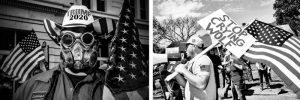
Left: A pro-Trump protester in Harrisburg, Pennsylvania, in April. Right: An anti-lockdown protest in Mount Wolf, Pennsylvania, in May. (Mark Peterson / Redux; Amy Lombard)
Starting on April 16, the DiResta team noticed an increase in online discussions about Judy Mikovits, a discredited researcher who has become a leading anti-vaccination advocate. The posts and videos portray Ms. Mikovits as a whistleblower who claims that the novel coronavirus was manufactured in a laboratory and describes Anthony Fauci, of the White House Coronavirus Task Force, as her archenemy. Ironically, this conspiracy theory has become intertwined with a broader conspiracy as part of a public relations campaign orchestrated by a fan of the anti-vaxxer and QAnon, with the explicit goal of «bringing down Anthony Fauci.» The culmination of this campaign was the video *Plandemic*, brilliantly produced and released on May 4. More than 8 million people watched it within a week.
Doctors and journalists have tried to debunk the many misleading claims in *Plandemic*, but these efforts have proven less successful than the video itself. Like pandemics, infodemics quickly spiral out of control if they are not detected in time. But while health agencies recognize the need to monitor emerging diseases, they are unfortunately not prepared to do the same for emerging conspiracy theories. In 2016, when DiResta spoke with a team at the CDC about the threat of misinformation, «their response was, ‘That’s interesting, but these are just things happening on the internet.’”
Excerpt from the June 2020 issue: Adrienne LaFrance on the significance of QAnon
Rather than countering misinformation during the early stages of the pandemic, reliable sources often made the situation worse. In January and February, many health experts and government officials downplayed the threat of the virus, assuring the public that it posed a low risk to the United States and drawing comparisons to the seemingly greater threat of the flu. The WHO, the CDC, and the U.S. Surgeon General urged people not to wear masks, hoping to preserve limited supplies for healthcare workers. These messages were presented without nuance or acknowledgment of uncertainty, so that when they were reversed—the virus is worse than the flu; wearing masks is recommended—the changes appeared to be about-faces.
The media added to the confusion. Drawn by the novelty of the situation, journalists gave a platform to the anti-lockdown protests taking place on the fringes of the demonstrations, while most Americans stayed quietly at home. They reported on all the scientific claims, even those that had not been verified or peer-reviewed.
There were a great many such claims to choose from. By linking career advancement to the publication of articles, the academic world already encourages scientists to produce work that attracts attention but is not reproducible. The pandemic has reinforced these incentives by triggering a rush of panic-driven research and promising ambitious scientists global attention.

New York City at the height of the pandemic (Dina Litovsky / Redux)
In March, a small, highly flawed French study suggested that hydroxychloroquine, an antimalarial drug, might treat COVID-19. Published in a minor journal, it would likely have been ignored a decade ago. But in 2020, it made its way to Donald Trump through a chain of gullibility that included Fox News, Elon Musk, and Dr. Oz. Trump spent months touting the drug as a miracle cure despite mounting evidence to the contrary, causing shortages for people who actually needed it to treat lupus and rheumatoid arthritis. The story of hydroxychloroquine was further muddled by a study published in a leading medical journal, *The Lancet*, which claimed that the drug was ineffective and potentially harmful. The article relied on questionable data from a small analytics firm called Surgisphere and was retracted in June.**
It is well known that science corrects itself. But during the pandemic, the same urgent pace that produced valuable knowledge at record speed also sent sloppy claims around the world before anyone could even raise a skeptical eyebrow. The resulting confusion—and the many genuine unknowns about the virus—created a whirlwind of fear and uncertainty that scammers sought to exploit. Quack doctors peddled ineffective “silver bullets” (including actual silver). Armchair experts, with little or no qualifications, found regular slots on the evening news. And at the center of this confusion stands Donald Trump.
During a pandemic, leaders must rally the public, tell the truth, and communicate clearly and consistently. Instead, Donald Trump has repeatedly contradicted public health experts, his scientific advisors, and himself. He stated that «no one ever thought something like [the pandemic] could happen» and that he «had a feeling it was a pandemic long before it was called a pandemic.» These two statements cannot both be true at the same time, and in fact, neither of them is true.
A month before his inauguration, I wrote that «the question is not whether [Trump] will face a deadly epidemic during his presidency, but when.» Based on his actions as a media personality during the 2014 Ebola outbreak and as a candidate in the 2016 election, I suggested that he would fail at diplomacy, close the borders, tweet without thinking, spread conspiracy theories, ignore experts, and display reckless self-confidence. And that is exactly what he did.
No one should be surprised that a liar who made nearly 20,000 false or misleading statements during his presidency would lie about whether the United States had the pandemic under control; that a racist who gave rise to «birtherism» would do little to stop a virus that disproportionately kills Black people; that a xenophobe who oversaw the creation of new immigration detention centers would order meat-packing plants with a large immigrant workforce to remain open; that a cruel and empathy-deficient man would fail to reassure fearful citizens; that a narcissist who cannot stand being sidelined would refuse to draw on the deep well of experts at his disposal; that a product of nepotism would entrust control of a coronavirus task force to his unqualified son-in-law; that an armchair polymath would claim to have a «natural aptitude» for medicine and demonstrate it by wondering aloud about the healing potential of injecting disinfectant; that a self-centered person incapable of admitting failure would try to divert attention from his greatest enemy by blaming China, undermining the WHO, and promoting miracle drugs; or that a president who has been shielded by his party from any accountability would say, when asked about the lack of testing: “I take no responsibility.”
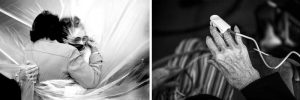
Left: A woman kisses her grandmother through a sheet of plastic in Wantagh, New York. Right: An elderly woman has her oxygen levels checked in Yonkers, New York. (Al Bello / Getty; Andrew Renneisen / The New York Times / Redux)
The key factor is a complication of the COVID-19 pandemic. It is not solely responsible for the U.S. fiasco, but it is the central factor. A pandemic requires the coordinated efforts of dozens of agencies. «Even under the best circumstances, it’s hard to get the bureaucracy moving quickly,» said Ron Klain. «The president has to stand on a table and say, »Act quickly.» But things don’t really get moving if he’s sitting at his desk saying it’s no big deal.”.
In the early days of Trump’s presidency, many believed that U.S. institutions would rein in his excesses. They did so, in part, but Trump also corrupted them. The CDC is just his latest victim. On February 25, the agency’s director of respiratory diseases, Nancy Messonnier, shocked the public by raising the possibility of school closures and stating that «the disruption to daily life could be severe.» Trump was reportedly furious. In response, he appears to have sidelined the entire agency. The CDC has led the way in all recent domestic disease outbreaks and has served as an inspiration and model for public health agencies around the world. But during the three months in which some 2 million Americans contracted COVID-19 and the death toll surpassed 100,000, the agency did not hold a single press conference. Its detailed guidelines on reopening the country were put on hold for a month, while the White House released its own, unnecessarily vague plan.
Once again, ordinary Americans have done more than the White House. By willingly accepting months of social distancing, they have bought the country time, at a substantial cost to their financial and mental well-being. Their sacrifice came with an implicit social contract: that the government would use this precious time to mount an extraordinary and vigorous effort to eliminate the virus, as Germany and Singapore did. But the government did not do so, much to the surprise of health experts. «There are instances in history where humanity has truly moved mountains to defeat infectious diseases,» says Caitlin Rivers, an epidemiologist at the Johns Hopkins Center for Health Security. «It’s appalling that in the United States, we haven’t mustered that kind of energy around COVID-19.»
Instead, the United States has fallen into the worst-case scenario: People have suffered all the debilitating effects of a lockdown with few benefits. Most states felt compelled to reopen without having built up sufficient testing capacity or contact tracing resources. In April and May, the nation was stuck on a grim plateau, averaging 20,000 to 30,000 new cases per day. In June, the plateau turned into an upward slope once again, reaching record highs.
Read: Ed Yong on Life in a Patchwork of Pandemics
Trump never united the country. Although he declared himself «president in wartime,» he merely presided over a culture war, turning public health into yet another politicized cage match. Backed by supporters in the conservative media, he portrayed measures to protect against the virus—from masks to social distancing—as liberal and un-American. Armed anti-lockdown protesters demonstrated outside government buildings while Trump encouraged them, urging them to «FREE» Minnesota, Michigan, and Virginia. Several public health officials resigned from their positions due to harassment and threats.
It is no coincidence that other powerful nations that have elected populist leaders—Brazil, Russia, India, and the United Kingdom—have also responded poorly to COVID-19. «When people are elected on the basis of a lack of trust in the government, what happens when trust is exactly what you need most?» explains Sarah Dalglish of the Johns Hopkins Bloomberg School of Public Health, who studies the political determinants of health.
«The president is the key,» she said. «How could this possibly go well?»
The countries that fared best against COVID-19 did not follow a one-size-fits-all approach. Many of them made extensive use of masks, which was not the case in New Zealand. Many conducted large-scale testing; Japan did not. Many had science-minded leaders who acted early; Hong Kong did not follow suit, but a grassroots movement made up for the government’s lax approach. Many were small islands; not so the large, continental Germany. Each nation succeeded because it did enough things right.
Read: What Really Undermined the U.S. Response to the Coronavirus
Meanwhile, the United States has underperformed across the board, and its mistakes have only gotten worse. The lack of testing has led to even more unconfirmed cases, which have overwhelmed hospitals that have run out of masks—essential for limiting the spread of the virus. Twitter amplified Trump’s misleading messages, which fueled people’s fear and anxiety, leading them to spend more time searching for information on Twitter. Even seasoned health experts underestimated these heightened risks. Yes, having Trump at the helm during a pandemic was worrisome, but it was tempting to think that the nation’s wealth and technological superiority would save America.
. «We are a wealthy country, and we believe we can stop any infectious disease because of that,» says Michael Osterholm, director of the Center for Infectious Disease Research and Policy at the University of Minnesota. «But dollar bills alone are no match for a virus.».
COVID-19 is an attack on the body of America, and a referendum on the ideas that drive its culture.
Public health experts speak wearily of the «panic–neglect» cycle, in which epidemics trigger waves of attention and funding that quickly fade once the diseases are in retreat. This time around, the United States is already teetering on the edge of complacency, even before the panic phase has ended. The virus was never defeated in the spring, but many people, including Trump, claimed that it was. Each state has reopened to varying degrees, and many have since recorded record numbers of cases. After cases in Arizona began to rise sharply in late May, Cara Christ, the director of the state Department of Health Services, said, “We won’t be able to stop the spread. And so we can’t stop living our lives either.” The virus might not agree.
At times, Americans seemed to collectively give in to COVID-19. The White House Coronavirus Task Force was disbanded. Trump resumed holding rallies and calling for fewer tests, so that the official numbers would be higher. The country has behaved like a character in a horror movie who believes the danger has passed, even though the monster is still on the loose. The long wait for a vaccine will likely end predictably: Many Americans will refuse to get it, and among those who want it, the most vulnerable will be the last to receive it.
There is, nevertheless, reason for hope. Many of the people I interviewed suggested that the upheaval caused by COVID-19 could be so significant that it would permanently alter the nation’s mindset. Experience, after all, sharpens the mind. The East Asian countries that experienced the SARS and MERS outbreaks reacted quickly when threatened by COVID-2, spurred by the cultural memory of what a rapidly evolving coronavirus can do. But the United States had been largely untouched by major epidemics in recent decades (with the exception of the H1N1 flu). In 2019, Americans were more concerned about terrorists and cyberattacks than about outbreaks of exotic diseases. Perhaps they will emerge from this pandemic with both cellular and cultural immunity.
There are also some signs that Americans are learning important lessons. A survey conducted in June showed that 60 to 75 % of Americans were still practicing social distancing. A partisan divide exists, but it has narrowed. «In U.S. public opinion polls, the fact that 60 % of people agree on anything is a surprising result,» says Beth Redbird, a sociologist at Northwestern University who led the survey. Polls in May also showed that most Democrats and Republicans supported mask-wearing and believed it should be mandatory in at least some indoor spaces. It is almost unheard of for a public health measure to go from zero acceptance to majority support in less than six months. But pandemics are rare situations where «people desperately need guidelines and rules,» explains Zoë McLaren, a professor of health policy at the University of Maryland, Baltimore County. The closest analogy is pregnancy, she says, which is «a time when women’s lives change and they can absorb a ton of information.» A pandemic is similar: »People are actually paying attention and learning.”.
Ms. Redbird’s study suggests that Americans did indeed seek out new sources of information and that news consumers from conservative sources, in particular, broadened their media diet. People across the political spectrum have become more dissatisfied with the Trump administration. As the economy plummeted, the healthcare system deteriorated, and the government crumbled, belief in American exceptionalism waned. «Periods of major social upheaval call into question things we thought were normal and standard,» Redbird told me. «If our institutions are failing here, in what ways are they failing elsewhere? And which ones are failing the most?”
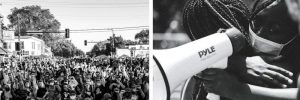
Left: Protesters at the Minneapolis intersection where George Floyd was killed by police. Right: Protesters in Washington Square Park in Manhattan in June. (Brandon Bell; Mel D. Cole)
Americans were in the mood for systemic change. Then, on May 25, George Floyd—who had survived a COVID-19 infection that had affected his respiratory system—suffocated under the crushing pressure of a police officer’s knee. The harrowing video of his murder circulated through communities still reeling from the deaths of Breonna Taylor and Ahmaud Arbery, as well as the disproportionate toll of COVID-19. America’s simmering outrage reached a boiling point and spilled out onto the streets.
The protesters, who were wearing masks, took to the streets in more than 2,000 cities and towns. Support for Black Lives Matter has grown: For the first time since its founding in 2013, the movement has received the endorsement of a majority of racial groups. These protests were not about the pandemic, but individual protesters had been galvanized by months of shocking missteps by the government. Even people who might once have ignored evidence of police brutality recognized yet another broken institution. They could no longer look the other way.
It is difficult to look directly at the greatest problems of our time. Pandemics, climate change, the sixth mass extinction of wildlife, food and water shortages—their scope is global, and the stakes are overwhelming. But we have no choice but to face them. We now know all too well what happens when global catastrophes collide with historical neglect.
COVID-19 is an attack on the body of America, and a referendum on the ideas that drive its culture. Recovery is possible, but it requires radical self-reflection. America would be well advised to help reverse the destruction of the natural world—a process that continues to drive animal diseases into the human body. It should strive to prevent diseases rather than profit from them. It should build a healthcare system that prioritizes resilience over fragile efficiency, and an information system that prioritizes light over heat. It should rebuild its international alliances, its social safety net, and its trust in empiricism. It must address the health inequalities that stem from its history. In particular, it should elect leaders endowed with sound judgment, strong character, and respect for science, logic, and reason.
The pandemic has been both a tragedy and a lesson. Its very etymology offers a clue as to what is at stake in the greatest challenges of the future and what we must do to meet them. Pandemic. Pan and demos. Everyone
Error: Contact form not found.