


Close Menu
ANTILLA MARTINIQUE | Avec vous depuis 1981

    Subscribe

    Get the latest creative news from ANTILLA on art, design, and business

    Current Trends

    Diversification agricole : la Martinique doit obtenir une réforme structurelle du POSEI

    August 14, 2026

    « Que représente la CARICOM pour la jeunesse ? » : La jeunesse caribéenne répond

    August 14, 2026

    Les centres de formation technique et professionnelle de Sainte-Lucie se font l’écho de l’appel régional aux compétences

    August 14, 2026
    Facebook X (Twitter) Instagram
    ANTILLA MARTINIQUE | Avec vous depuis 1981ANTILLA MARTINIQUE | Avec vous depuis 1981
    • Sections
      • Editorial by Henri PIED
      • Ecology / Environment
      • Art/Culture
      • Caribbean
      • Companies
      • Gdc's Perspective
      • Heritage
      • Politics
      • Health
      • Sports
      • Opinion Pieces
    • Our Files
      • Great Figures
        • Édouard Glissant
        • Aimé Césaire
        • Frantz Fanon
        • Pierre Aliker
        • Camille Darsières
        • Alfred Marie-Jeanne
        • Patrick Chamoiseau
        • Raphaël Confiant
        • Serge Letchimy
      • Key Issues
        • Sargassum
        • Rum
        • High Cost of Living
        • The Press in Martinique
      • Profile or Investigation
    • About
      • About Us
      • Media Kit
    • Contact
    • Change language to Français
    annonces
    SUBSCRIPTION
    ANTILLA MARTINIQUE | Avec vous depuis 1981
    Home » Is secularism in danger?.
    Opinion Pieces

    Is secularism in danger?.

    December 11, 2020No Comments
    Facebook LinkedIn WhatsApp

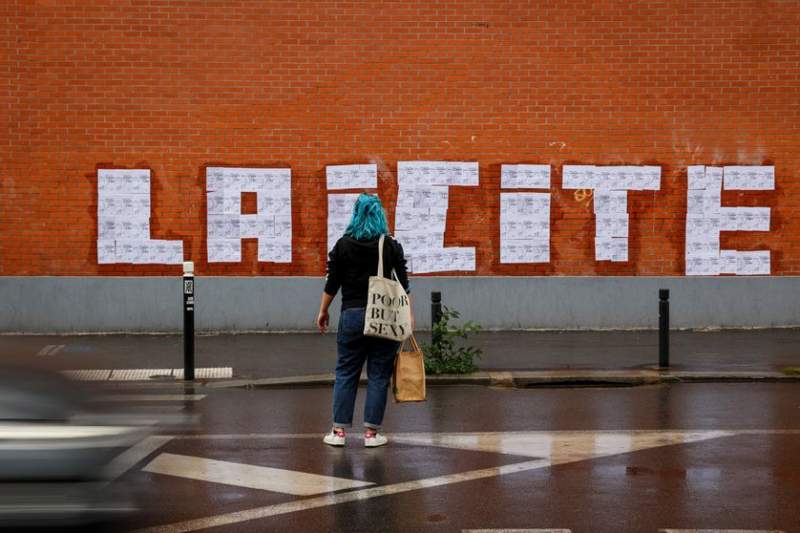
    Secularism Day was this Wednesday, December 9 • Credits: AFP – AFP

    One hundred and fifteen years after the enactment of the 1905 law establishing the separation of church and state, the murder of Professor Samuel Paty last October calls into question a principle that had until then been inextricably linked to the history of France


    Today, secularism is the focus of discussion on France Culture. On the occasion of Secularism Day, which is being observed today, let’s discuss this legal principle that is inextricably linked to the French Republic. As the bill on republican principles is set to be reviewed by the Council of Ministers this morning, the government aims to redefine secularism—a topic that has consistently been at the heart of societal debates since the enactment of the 1905 law. Symbolic of this is the concept of religious separatism, which—since Emmanuel Macron’s speech in Les Mureaux last October and following the tragic death of teacher Samuel Paty—has been at the center of the government’s new policy on the matter. Why is there no longer a consensus on the 1905 law today? Why is the principle of secularism so closely tied to the French Republic? 

    To discuss this, Guillaume Erner is joined by Patrick Weil, historian, research director at the CNRS at Paris 1, and author of “On Secularism in France” which will be published in March 2021 by Grasset.

    What does the 1905 law say about the principle of secularism?

     » Freedom of conscience is absolute. There are no restrictions imposed by the state; in your heart of hearts, you can think whatever you want. Now, until recently, when people asked the Ministry of the Interior, the Ministry of Justice, or political leaders in general what freedom of religion meant, they would say it was the right to go to church or to a mosque. But that’s not what it is. We must return to the words of Aristide Briand, who was the chief rapporteur for the 1905 law. Briand made two points. He said that the practice of religion consists of the outward expressions of beliefs and religions. And he added that this word was chosen because it is the legally established term.. »

    Secularism is, first and foremost, the freedom to believe or not to believe without pressure. Then there is Article 2 on the separation of church and state. Why is Article 2 necessary? Because freedom of conscience and worship cannot logically be conceived without the absolute neutrality of the state. There is no true freedom where there is no complete equality under the protection of the law. However, a state that protects or subsidizes certain religions places others in a position of legal inferiority. And it violates the rights of nonbelievers. Therefore, separation means affirming the equality of citizens before a state that does not take a position on the existence of God. Patrick Weil

    « The 1905 law was enacted after the Dreyfus Affair. The Church had interfered in the affair. And even before that, the Church had grown accustomed to regarding France’s political affairs as its own business. The Church was the official religion until the Revolution. There was a strong interplay between the Church, the military, and the state. Separation was not a given. It was the Socialists who championed it. They secured a majority by a single vote in the committee tasked with reviewing the proposed legislation. The 1905 law would not have passed without the implicit consent of the Church of France.. »

    Is a law from 1905 still relevant in today's society?

    France isolates itself when its leaders spout nonsense about secularism. France underwent secularization during the 20th century, with a decline in religious practice, and then suddenly a resurgence of religion among part of the population. The 1905 law was enacted at a time when France was a religious country, and Catholic practice was very widespread. The 1905 law was by no means enacted at a time when atheists and agnostics were in the majority, as they are today. So it was entirely appropriate. We’ve simply forgotten the context. Those who fought for separation were sometimes anti-religious, and sometimes they confuse secularism with the fight against religion or against religious dogmatism. They are fighting for freedom of thought, but someone who is a believer and who respects the law is part of secularism. Patrick Weil

    Related Posts

    «What if the real change were a shift in Martinican political culture?» By Franck A

    August 11, 2026

    BACCHA FESTIVAL: A Resounding Success—When the Facts Speak for Themselves!

    August 10, 2026

    French West Indies: Is “Europeanization” the New Horizon?

    August 10, 2026
    Add A Comment

    Comments are closed.

    Caribbean News
    Caribbean

    « Que représente la CARICOM pour la jeunesse ? » : La jeunesse caribéenne répond

    St Lucia Times PaKherim Nelson À l’occasion de la Journée internationale de la jeunesse, les jeunes des Caraïbes ont pu exprimer à la CARICOM ce…

    Les centres de formation technique et professionnelle de Sainte-Lucie se font l’écho de l’appel régional aux compétences

    August 14, 2026

    Saint Lucia Officially Launches a 1,000 EC$ Allowance for Newborns

    August 4, 2026

    OECO delegates review Sargassum management strategies following their mission to French territories

    August 2, 2026

    Pierre: Emancipation is incomplete without economic freedom.

    August 2, 2026
    SUBSCRIBE TO OUR CHANNEL!
    Post Your Legal Notices

    Subscribe

    Get the latest news from Antilla Martinique.

    Thank you! Your request has been received.

    View legal notices
    View our back issues
    Our Different Sections
    Archives
    © 2026 Copyright ANTILLA. All rights reserved. Programmed by ANTILLA.
    • CONTACT
    • MARKETING
    • LEGAL NOTICE
    • LEGAL NOTICES
    • ABOUT ANTILLA

    Type above and press Enter to search. Press Esc to cancel.