




BY STÉPHANE BÉCHAUX FRANÇOIS DESRIAUX / Found on Santé et tra
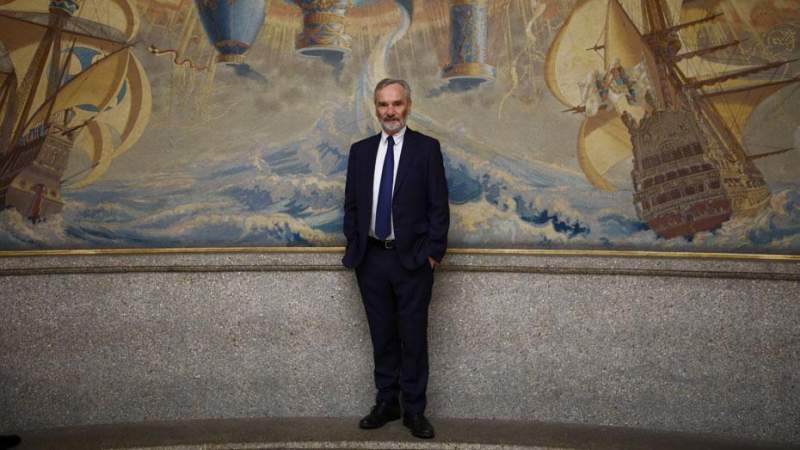
Alain Supiot, professor emeritus at the Collège de France, is one of our most eminent legal scholars in the field of labor law. A vocal critic of the erosion of social public policy, he shares his analysis of the health crisis and the future of work.
What lessons have you learned from the health and economic crisis that marked 2020?
Alain Supiot: This crisis highlights the illusory nature of certain arguments about an economy that has become intangible, entirely in the hands of «symbol manipulators,», to borrow the phrase of American economist Robert Reich. With the COVID-19 pandemic, «routine» workers—who are poorly paid and some of whom were predicted to be replaced by machines in the near future—have proven to be «essential.» We must therefore draw conclusions from the central importance of these essential tasks by improving the wages and working conditions of those who perform them.
The defining characteristic of the human species is the division of labor. It did not begin with Fordism; it is a constant feature of the organization of all societies. This crisis reminds us of our interdependence on one another. Establishing a working community—whether at the level of a company or a nation—requires putting effective mechanisms of solidarity in place. Yet for many, many years, we have been striving to dismantle them! While the fragmentation of society into individuals has been exacerbated by lockdowns, it is now revealing its limitations; taken to the extreme, this model is unsustainable.
The health crisis has also bolstered the platform economy, often accompanied by deteriorating working conditions. Is the “Uberization” of the labor market inevitable?
A. S.: The digital revolution has been accompanied by numerous attempts to promote forms of work that fall short of salaried employment. This is, in fact, nothing new. In the 1960s, the industrialization of agriculture was accompanied by «integration contracts,» which subjected farmers to agribusiness firms and deprived them of any autonomy in their work, without, however, recognizing them as employees. These so-called self-employed workers have no control over anything but must work extremely hard to earn an income that is often below the minimum wage. And they cannot have this relationship reclassified as an employment contract because, in 1964, lawmakers intervened to prevent it—just as they are now attempting to ban it for «Uberized» workers. Given that the agricultural sector has the highest suicide rate, this does not bode well for the health of platform workers… This «third way,» between salaried employment and self-employment, is a social dead end.
Around the world, including in the United States, courts have reclassified the employment of delivery workers and drivers on ride-hailing platforms as employment contracts. In my view, it is essential that judges retain the authority to decide whether or not to grant this reclassification. Today, under intense lobbying pressure, lawmakers seem determined to remove platforms from the scope of labor law. This is a very dangerous game, and we do not fully appreciate the risks involved. Furthermore, the design of algorithms should be the subject of a robust debate and even fall within the scope of collective bargaining. This requires a legislative framework. Otherwise, nothing will happen; platforms will simply continue to tout worthless and ineffective charters.
The health crisis has also given a tremendous boost to remote work. Should we be happy about this?
A. S.: The “economic” perspective is blind to invisible labor—the kind that takes place outside the market, particularly in the education of children. Among working-class families, especially single mothers, the deregulation of working hours undermines the family’s ability to provide a proper education. Then we lament the dramatic decline in academic performance in certain areas and the fact that young people left to fend for themselves are turning to crime! My fear is that remote work will serve to amplify these negative trends.
In the 19th centurye In the 19th century, the Industrial Revolution disrupted the rhythms of human life that nature had imposed. Since that time, the purpose of labor law has been to establish rules for balancing work and personal time that take into account life outside of work, whether social or family-related. It is inconceivable that remote work could thrive outside of this framework and these constraints. In this regard, it is essential that its implementation not be left solely to individual contracts or company-level agreements. A much broader collective framework is needed, one that applies to all companies.
We’re not heading in that direction. The legislature is pushing for a reversal of standards and the primacy of company-level agreements…
A. S.: You’re right. But this ambivalence isn’t new. In 1982, the Auroux laws were certainly intended to introduce democratic mechanisms into the workplace. But even before those laws, two earlier executive orders gave companies the option to deviate from the law in certain cases. At the time, some executives saw the «collective company agreement» as a way to circumvent the Labor Code.
Collective bargaining was originally conceived as a tool for regulating competition. Today, however, there is a tendency to subordinate it to free competition—if not to turn it into a tool of competition itself. Since the Macron decrees, Article L. 2261-25 of the Labor Code provides that the Minister of Labor may refuse to extend a collective agreement «for reasons of public interest, in particular for excessive interference with free competition.». This is a complete reversal! The ongoing erosion of industry-wide collective bargaining agreements upsets the balance of power, without which company-level collective bargaining is not a tool for democratization, but rather one of collective submission. This also violates International Labor Organization Convention No. 135, which requires that «that the presence of elected representatives should not be used to undermine the position of the unions.».
Does this imply a different strategy on the part of the unions?
A. S.: Historically, labor unions have acknowledged that the issue at stake was striking the right balance between the economic exchanges in the employment relationship: time for money. They fought against exploitation at work, not against oppression in the workplace. The labor movement thus excluded the content and meaning of work from the concept of social justice. Today, the digital revolution and the ecological crisis must compel us to bring them back into the picture—that is, to avoid thinking solely in terms of the fair distribution of wealth.
The issue that needs to be added to the realm of social justice is that of a fair division of labor. We must recognize that what we produce—and how we produce it—are also subjects for collective discussion within the company. Until we do so, there will be no true economic democracy. At the heart of this lie real challenges related to occupational health and safety, environmental issues, and the use of new technologies.
What would be the key factors for initiating this change?
A. S.: Occupational health and safety is an extremely powerful legal lever. The assertion that people should not die or become ill on the job is a difficult argument to refute, even for the most liberal thinkers. In her day, even Margaret Thatcher acknowledged this. It is all the more urgent to address this issue given that, with the data-driven management of work and the misuse of information technology, we are witnessing a significant rise in mental health issues. In the past, work could wear you down; today, it drives you crazy! If we incorporate mental health into the health and safety obligations that employers are required to fulfill, we allow judges to peer into the “black box” of management. And that is a powerful lever for guiding companies toward the proper use of digital tools.
We must therefore get out of this situation at all costs «governance by numbers,», the title of one of your books?
A. S.: Companies have become trapped in a numerical representation of their business, relying on spreadsheets and ratios. This “governance by numbers” is reminiscent of the Soviet Gosplan. By the end of the USSR, leaders no longer knew what was happening in the country, yet they continued to set production targets. This risk looms over our companies, which are run by Excel spreadsheets. Leaders must draw on the knowledge of their employees, who know all too well what is happening on the ground. Unions, too, remain a powerful tool for staying grounded in the reality of workers’ experiences, which are inevitably very diverse. The digital revolution could move in this direction. But that requires room for autonomy, creativity, consultation, and collective thinking.