




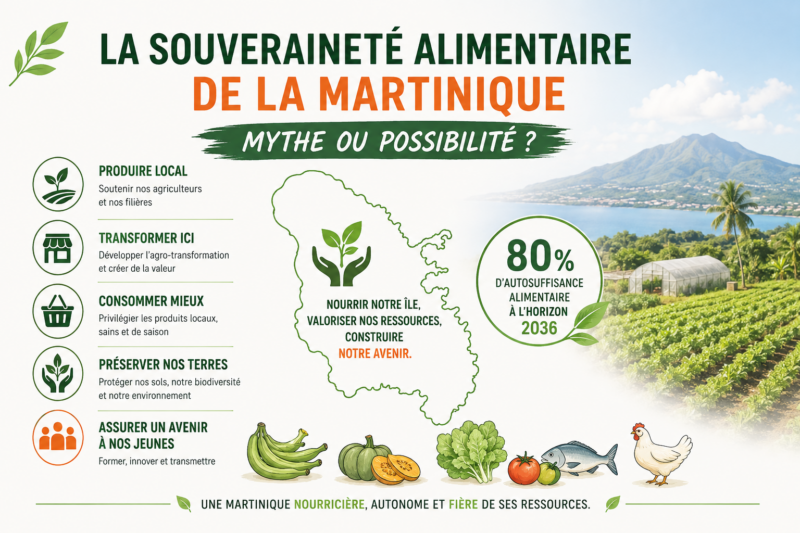
Mikaël Glondu-Monnerville’s discussion paper concludes with a conviction: food sovereignty will not rest solely on land, financing, or supply chains. It will also require mastery of digital tools and artificial intelligence, which can improve production, logistics, and traceability.
Data-Driven Agriculture
The document proposes using AI to forecast harvests, monitor weather conditions, optimize irrigation, and reduce losses. The goal is to help farmers make faster and more reliable decisions while improving yields.
From the Field to the Plate
Digitization can also improve the traceability of local products through digital tools that track every step of the food supply chain. This transparency would help build consumer confidence and promote products from Martinique.
Innovation for Producers
The report notes that European funding is already available to support the digital transition of agricultural businesses. AI is therefore not presented as a substitute technology, but as a tool to support producers, training, and innovation.
Moving from Thought to Action
The document concludes with a call to transform food sovereignty into a genuine societal project. Martinique now has a strategy, financial tools, successful pilot projects, and recognized expertise. The challenge is no longer to envision an alternative model, but to coordinate these initiatives in order to build an agricultural sector that is more self-sufficient, more resilient, and better at creating value.
Mikaël Glondu-Monnerville