





Several books have recently been published on the topic of «Reunionese children in the Creuse.» Among them is a concise little book written by experts who authored a report on this painful history, with the aim of setting the record straight and dispelling common misconceptions.
It has now been about twenty years since the story of the 2,015 minors from Réunion who were separated from their families and sent to mainland France between 1962 and 1984 was revealed to the general public—sometimes with errors or inaccuracies, misunderstandings and stereotypes, preconceived notions, and even a reinterpretation of the facts.
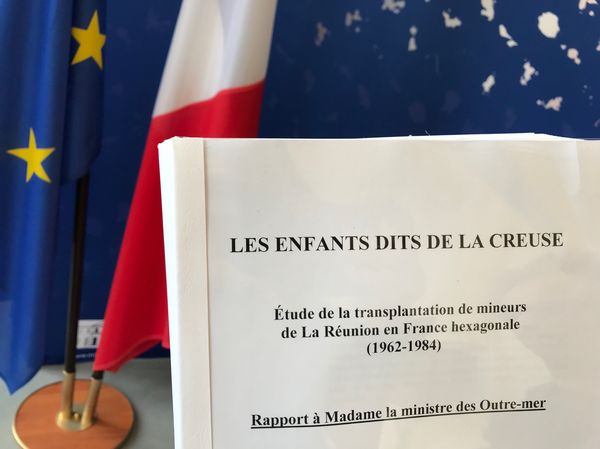
In 2016, a national commission of five experts «on information and historical research» was appointed by the government to shed light on this matter. Composed of sociologists, historians, a geographer, and a former social services inspector, this commission released its report in 2018. It was a 690-page document—factual, precise, and exhaustive—but completely unreadable for the general public.
Three years later, four members of that commission—Wilfrid Bertille, Prospère Eve, Gilles Gauvin, and its chair, sociologist Philippe Vitale, have just published a short book to make the results of their research available to as wide an audience as possible and to raise awareness of this history by setting the record straight and challenging common misconceptions.
A Gap Between History and Memoirs
For today, the experts« assessment of the developments and handling of this case is harsh: »We are clearly dealing with a disconnect between history and memory, and at times with opportunism and demagoguery,” the authors argue.
This episode has already caused collateral damage—for the migrants, of course, but also for their families, for the children, for the people of Réunion who saw them leave and are now reunited with them after decades, and also for the host departments, such as Creuse, which does not understand the label of “slave-driver” that is sometimes applied to it
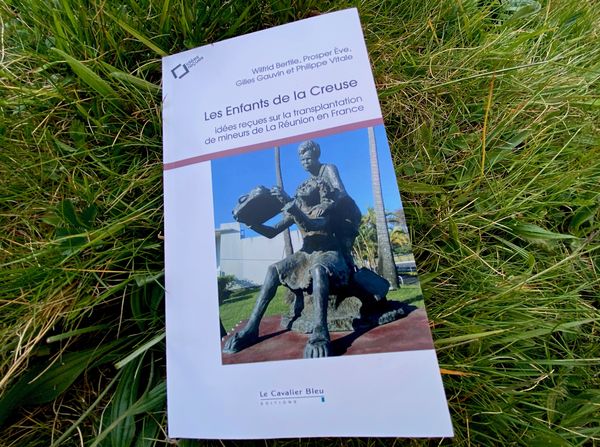
In the small, 135-page pocket-sized book published by Éditions du Cavalier Bleu «The Children of Creuse: Common Misconceptions About Organ Transplants for Minors from Réunion in France» So you can find all the factual information about this story to help inform your thinking.
Is Réunion Overpopulated?
In 1954, the extremely rapid growth of Réunion’s population was a major concern. Its demographic trends mirrored those of the Third World, with a considerable natural population growth, a very high birth rate, and a mortality rate in free fall.
In 1967, people under the age of 20 accounted for 55.6% of the population. This situation was viewed as a threat by the authorities, who feared a worsening of social conditions and a breeding ground for demands for autonomy championed by the Réunion Communist Party against the backdrop of the Cold War.
Michel Debré's Responsibility
The idea of sending young people from Réunion to mainland France dates back to the 1930s.
The famous «1945 ordinance,» which established the maternal and child health service, was extended to Réunion in 1947. But by 1960, the service had only 10 social workers for 340,000 residents.
Starting in the 1960s, migration to mainland France was organized through a new agency: BUMIDOM (Office for Migration from the Overseas Departments). It was justified by demographic pressure from young people of working age. Very quickly, it began to include young people under state guardianship.
Michel Debré, who had not been prime minister since 1962 and who was elected to the National Assembly from Réunion in May 1963, was therefore not the originator of the idea of migrating minors from Réunion to mainland France, even though he used all his authority to develop a large-scale emigration policy.
At the time, it was a particularly zealous civil servant, Jean Barthe—who served as director of the DDASS in Réunion in 1964 before being appointed to the same position in Creuse in 1966—who specifically organized this relocation of minors.
A story that took place between 1962 and 1984
The first organized migrations of minors to mainland France took place in 1962, with 135 boys and girls that year.
In November 1981, a memo from the Ministry of Overseas Territories stated that, from then on, «only the economic development of the overseas departments and the creation of local jobs could be considered as real solutions» to reduce economic tensions and the consequences of high birth rates. It concluded: «Integration must take precedence over migration.».
Transfers of minors continued until 1984. Adoptions of children from Réunion by families in mainland France continue to this day.
The Use of the Term «Deportation»
In their work, the authors of the report chose to use the term «transplantation» to refer to the exile endured by minors from Réunion. But in Réunion, this story has rekindled memories of slavery.
In 1965, the communist daily newspaper from the island, *Témoignages*, wrote in its columns, «Just as in the days of slavery, Creole children are being deported 10,000 km from their homeland.».
In 1975, Professor Denoix, Director General of Health, asked Michel Debré to put an end to the «deportation» (the word is in quotation marks) of children from Réunion.
Other doctors following the case have sounded the alarm, citing the latest research in child and adolescent psychiatry. The removal of the child from his or her family environment is beginning to be criticized, along with its consequences: significant psychological distress.
It was Dr. Myriam David, a renowned child psychiatrist who was herself deported by the Nazis, who introduced the term in her work to denounce the French policy in effect within Child Welfare Services of «placement» in rural areas for children in distress? She likens it to deportation.
Michel Debré, a member of the Resistance and the grandson of a rabbi, naturally attached a completely different meaning to the word «deportation.».
As for the Creuse department, it was the one that took in, hid, and saved the most Jewish children in France from deportation during World War II.
Lying to minors and their families?
Today, after decades of uncertainty regarding their identity and administrative status, minors from Réunion who have been separated from their families often face enormous difficulties in locating their individual files.
Often, these files do not contain all the documents one might expect. Often, these documents shed light on questionable practices on the part of officials from the ASE (Child Welfare Services), whether in Réunion or on the French mainland.
Certain acts of parental relinquishment or authorization for minors to leave the country—attested only by a simple fingerprint or a shaky signature—raise doubts about their sincerity.
Above all, they reflect the administration’s indifference toward a segment of the population considered socially unfit, both in Réunion and in mainland France.
The term «stay» used in the documents could in fact imply a return to Réunion, which will not take place, especially since it is not planned. For BUMIDOM, whose goal is to relocate a «demographic surplus,» it was clear that nothing had been planned or budgeted to facilitate the return of minors to Réunion.
Another lie: the promise to «go to college» in mainland France. Even Jean Barthe, who served successively as director of the DDASS in Réunion and then in Creuse—and was a zealous architect of this relocation—would eventually call on the press in 1966 to put an end to the «deceptive promises» made to the minors upon their departure, for, he said with prescient clarity, «their disappointment will only be all the more acute afterward.».
As for the change in identity and place of birth—which was particularly traumatic—it affected one-third of the minors from Réunion who were relocated. The method was also used for children from mainland France during the same period. Initially, it was intended only for «foundlings» or children for whom the mother had requested confidentiality, and the new identity was meant to be only temporary.
The abuse of this practice by Child Welfare Services constituted a serious violation of minors’ fundamental rights.
Separated Siblings
Very often, for minors from Réunion, the pain of being separated from their brothers and sisters compounded the trauma of exile.
But according to the book’s authors, the fate of the young people from Réunion who were placed in foster care was no different from that of other children in mainland France at the time. It simply highlights the practices and shortcomings of the Child Welfare Services.
The figures indicate that 20% of the young transplanted children who arrived in Guéret between 1964 and 1970 were part of a family of at least five siblings. Although some documents suggest that they were aware of the problem, the Creuse ASE services therefore faced serious difficulties in finding family or professional placements that would not separate siblings.
If we add to this the fact that the prevailing policy at the time was to remove children from their original environments, it becomes clear how many minors were isolated.
For some, this separation was a tragedy—or is becoming one today—with the discovery of brothers, sisters, half-brothers, or half-sisters who have been out of their lives for decades.
However, the authors also point out that, very often, the breakdown of sibling relationships had already begun in Réunion, due to highly complex family situations involving blended families that did not always have the financial means or the desire to keep all the children within the family circle.

Is poverty less painful under the sun of Réunion?
In the 1950s and 1960s, in Réunion, economic and social hardship resulted in a very low average standard of living, dilapidated or even unsanitary housing, incomplete or nonexistent schooling, widespread deprivation and domestic violence, and numerous emotional and psychological disorders. Poor families had to struggle to survive, to feed themselves, to clothe themselves, and to find shelter, and they did not necessarily provide their children with a very nurturing environment.
But that didn't stop most families from offering affection, the joy of living together, and a zest for life.
The situation was different when minors found themselves abandoned or excluded from their family environment. Many minors were placed in institutions. In 1961, out of 354 minors in care, 74% were suffering from severe emotional deprivation.
These emotional deficiencies were exacerbated by placements in certain institutions on the island, where minors were sometimes subjected to violence and abuse.
When they moved to France, the change of environment, the language barrier, and acculturation exacerbated their emotional, intellectual, and social instability.
Ultimately, according to the authors, this relocation was motivated less by «concern for the children» and more by demographic considerations and the availability of places in institutions in mainland France—places that were not available in sufficient numbers in Réunion at that time.
Putting the Numbers into Perspective
Between 1962 and 1984, 2,015 minors were relocated from Réunion to 83 departments in metropolitan France, including 10% in the Creuse department.
This resettlement of minors was just one component of the proactive and ambitious migration policy pursued by the authorities at the time. It accounted for 3,25% of the 62,000 departures organized by BUMIDOM.
In 1970, the DDASS services on Réunion were caring for 3,136 children on the island. 119 of them—or 3.79%—were relocated to mainland France that year.
Other countries around the world have implemented similar policies. Between 1870 and 1960, 50,000 Aboriginal children in Australia—the «Stolen Generation»—were taken from their parents and placed with families or in institutions where they received a «Western-style» education.
The authors estimate that today, of the 2,050 children from Réunion who were transplanted, 1,800 are still alive and 150 are physically identifiable. About 100 of them publicly disclose their status through four associations and one federation, the FED DROM.
But beyond the numbers, most of the minors have endured suffering and trauma. Abandoned or in danger on their island, they have also had to endure the hardships of relocation, acculturation, and—for some—abuse, humiliation, and a loss of identity.
Weren't all minors who received transplants actually «wards»?
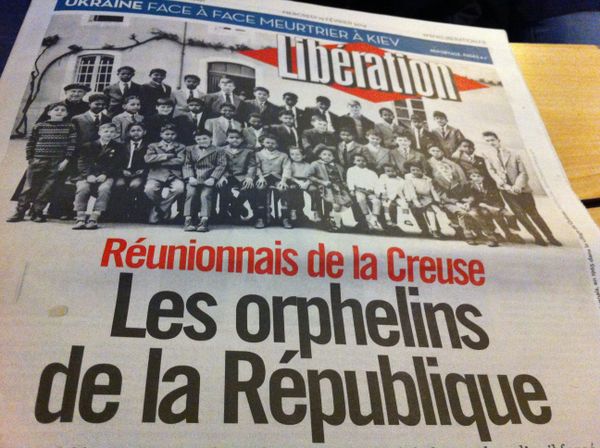
Of the 2,015 minors who received transplants, 49% were between the ages of 6 and 15. It was undoubtedly for this group that life in exile was the most difficult to endure.
But among these children, the law required that two categories of «wards» be distinguished: Orphaned Wards (PO), whose parents had died, and Morally Abandoned Wards (PA). It was the latter group that sometimes faced an ambiguous and questionable fate. Many believe that they should not have been adopted since they had parents, even if those parents had lost their parental authority.
Others—minors «in custody» (EG)—were placed under the protection of government agencies by court order.
Finally, minors classified as «temporarily placed» (RT) were, as their name suggests, placed in the care of the state—in theory for a temporary, fixed period—whether at the request of their parents or as a result of intervention by social services. In practice, however, these minors remained «placed» in foster families or institutions until they reached the age of majority.
Once again, in Réunion as well as in mainland France, right up until the 1970s, the guiding principle of Child Welfare Services was to keep children away from their parents, for «their well-being» and their «healthy psychological development .».
Were mostly Black children deported?
For the authors of the book, the issue of skin color did not arise within social services. However, whether in Réunion—among the few families at the time seeking to adopt and capable of taking on this responsibility—or in mainland France, Black children found it more difficult to find an adoptive family.
Under pressure from the Réunion Communist Party at the time, which accused the government of pursuing racist and colonialist policies, BUMIDOM—the agency responsible for organizing migration—had asked its departments to compile statistics on migrant departures based on skin color.
These statistics show that 42% of the miners were «light-skinned Creoles» or «little whites,» 44% were «brown Creoles» (Indo-Afro-Malagasy mixed-race individuals), 8% were Malabars (Indians), and 3% were «browns.» Thus, 42% of the resettled minors were not considered «blacks» by BUMIDOM.
Contrary to stereotypical «metropolitan» perceptions, the population of Réunion is multi-ethnic, multicultural, and largely of mixed heritage.
Conversely—and this is no coincidence—it was the urban areas of Réunion that provided the largest number of relocated minors: 54% of them came from the island’s three major cities. In these cities, characterized by uncontrolled urban sprawl, endemic poverty flourished, bringing with it a trail of alcoholism, violence, and social and family breakdown. Rural areas provided fewer transferred minors despite overpopulation and a certain degree of rural poverty.
The map showing the origins of the relocated miners thus mirrors the distribution of the greatest social deprivation at the time, rather than the skin color of Réunion’s inhabitants.
Abuse by Foster Families in Rural Areas of France
As evidenced by newspaper articles from that time, in the 1950s and 1960s, all children in the public welfare system who were placed in rural areas of France were subjected to extremely harsh, even appalling, conditions. Beaten, abused, housed in barns, and malnourished—the testimonies are shocking.
The children from Réunion who were relocated were no exception to the general rule of the time—it was almost like a double punishment on top of the trauma of exile and acculturation.
According to the authors, «the vast majority of minors from Réunion who have been relocated to rural areas and are of an age to be placed in apprenticeships do indeed constitute a labor pool for farmers. Some have exploited them to make easy profits.».
But they add that, while this in no way diminishes the suffering experienced by transplanted people from Réunion at that time, the farmers« biological children were also raised »the hard way« and were sometimes even »exploited at will.”.
The destruction and disappearance of certain files on transplanted minors?
Today, some former child laborers from Réunion who have moved elsewhere are having difficulty accessing their administrative files or the full contents of those files.
When they manage to obtain these documents, they are sometimes taken aback by how little information they contain. This poses an obstacle to piecing together their life stories and identities, and creates an additional challenge in locating family members who remained in Réunion.
Officially, the administrative records documenting their care in France are kept in the host department.
In Réunion, the small staff of the Child Welfare Service in the 1960s (10 social workers for 280 minors «placed in care» and 5,000 «rescued» in 1960), the lack of rigor and the absence of a culture of archival preservation fully account for the scarcity and loss of many case files.
Although often mentioned, the 1966 fire that destroyed a wing of the Prefecture building housing the offices of the DDASS in Réunion appears, however, to have had little impact on whether or not the majority of the archives held in Réunion at the time were lost.
For the authors, the Réunion Departmental Archives have now chosen to collect as comprehensive a collection as possible of all documents related to the relocation issue. These documents serve as records that can help former child miners piece together their history and assist researchers in writing a political, social, and economic history of Réunion.

In conclusion
The relocation of 2,015 minors from Réunion to mainland France over a period of two decades caused a great deal of trauma and suffering.
Despite the «good intentions» behind the utopian ideal of republican assimilation, this is a complex issue. It bears the mark of colonization. Above all, it reveals what the administration of Child Welfare was like—its practices and its shortcomings—both in Réunion and in mainland France.
That policy was a mistake
In 2014, the National Assembly acknowledged that «the State had failed in its moral responsibility toward these wards.».
In 2017, the President of the Republic stated that «this policy was a mistake because, in many cases, it had exacerbated the distress of the children it was intended to help.».
Today, in the families of former miners, it is the children—the second and third generations—who sometimes bear the consequences of this history.
Despite their efforts, many of them still cannot break free from a past that is destroying them—«a past that won't go away.».
See also : The Story of the Miners of Réunion in Comics
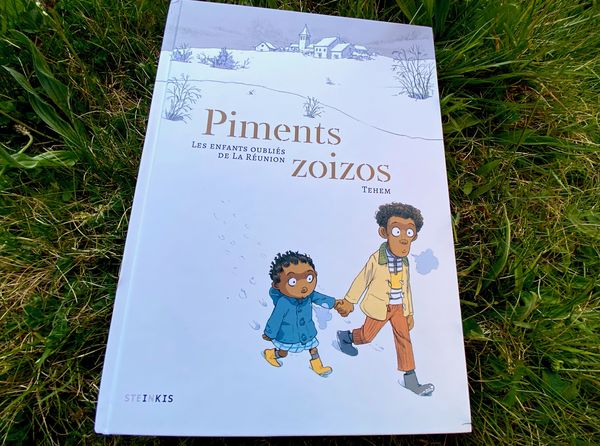
Those interested in the history of the «Reunionese children of the Creuse» can also learn a great deal from Tehem’s graphic novel *Piments Zoizos*, published in September 2020 by Steinkis.
Supervised by Gilles Gauvin, one of the historians who authored the report on the history of this case, it is particularly well-documented.
To go to the source : The official report on the history of the children from Réunion who were relocated: