Claude-Alexandre Gustave: First, we need to clarify which variant we are referring to. The term «Brazilian variant» can be misleading because, depending on the source, it can refer to at least three different variants: the B.1.1.28 lineage, as well as two «descendants» known as the P.1 variant (initially described in Manaus) and the P.2 variant (initially described in Rio). These three lineages are related, but it is indeed the P.1 variant that is of greatest concern and the focus of genomic surveillance. Assessing its spread is difficult because it relies, on the one hand, on the detection of SARS-CoV-2 infections, and on the other hand, on genomic surveillance (sequencing) to formally identify the variant associated with these infections. In the first case, the WHO estimates that only 10% of infections are actually detected (in France, we detect 30%). As for sequencing, apart from a few countries where it is carried out extensively (the United Kingdom, Denmark, Australia, Japan…), most countries sequence little more than 1 to 2 samples per 1,000 positive cases (2.4 per 1,000 in France)! Data on the spread of this P.1 variant must therefore be analyzed with caution, as they are likely very incomplete.
To date, this variant is obviously present in Brazil, where it accounts for nearly 40% to 50% of the sequences analyzed, and appears to have curbed the spread of the British variant B.1.1.7 . It has also been detected in 37 other countries, either as sporadic cases (linked to isolated cases brought in by travelers) or in connection with community outbreaks (with chains of transmission involving people who had not traveled).
Source: https://www.who.int/publications/m/item/weekly-epidemiological-update—March 16, 2021
In France, the first cases linked to this P.1 variant were officially recorded on February 4, 2021, in the Var department, in the AURA region, and on Réunion Island . Among these cases were, in particular, a direct import from Manaus via São Paulo, Frankfurt, and then Marseille; and the infection of a healthcare worker practicing in the hospitals in Geneva and linked to about ten secondary cases in France . Cases are regularly detected, most recently in a schoolchild and among the friends of a middle school student in the Orne department, leading to the closure of two classes . However, according to recent data provided by Santé Publique France through its «flash surveys,» it is noted that the proportion of the P.1 variant remains very low among the sequences analyzed (around 0.1% in early March ). It is still too early to assess the threat posed by this variant in France. We know that it carries mutations associated with increased transmissibility (notably N501Y), as well as mutations associated with immune escape (notably E484K and K417T). It therefore poses a cause for concern but appears to be contained for the time being. It should be noted, however, that the «seeding» of the country by this variant (the number of initially imported cases) is significantly lower than what we observed with the British variant B.1.1.7. It may therefore take longer for the P.1 variant to reach the critical threshold beyond which it could enter a phase of rapid spread. It should also be noted that cases associated with the P.1 variant (as well as the South African variant B.1.351) are subject to Stricter public health measures compared to other variants . Close contacts of 1er level (those directly exposed to a carrier of the variant) must take a screening test starting on Day 0 and repeat it on Day 7 if the result is negative. The isolation period is extended to 10 days for infected individuals and close contacts. For carriers of the variant, isolation may be lifted only starting on Day 10, provided they have been fever-free for more than 48 hours and have tested negative. If the test taken upon release from isolation is still positive, quarantine is extended by 7 days. Contact tracing rules have also been strengthened, with a «contact warning.» Thus, close contacts of 1er level (those directly exposed to the person carrying the variant) must, in turn, contact the people they have been in close contact with (close contacts of 2th level) so that they can strengthen their adherence to preventive measures, reduce their social interactions for 7 days, work from home, and get tested at the first sign of any suggestive symptoms. Specific rules are also in place in schools, with entire classes being closed as soon as a student is either a carrier of the P.1 variant or a close contact of someone infected with that variant. These measures have likely contributed to the lack of significant spread of this variant in France to date.
What are its characteristics? Is it more dangerous? Claude-Alexandre Gustave: The P.1 variant was initially identified in the Manaus region (Brazil) in mid-December 2020 . At that time, it already accounted for 42% of the sequences analyzed locally, whereas it was completely absent from the genomes collected between March and November 2020. It therefore appears to have undergone rapid expansion in the Amazon region at the very end of 2020. This P.1 variant is defined by 25 mutations, including 17 point mutations associated with an amino acid change, 10 of which affect the spike protein (a protein involved in the virus’s binding to our cells via the ACE2 receptor, and also a target for neutralizing antibodies). Among these mutations is the N501Y mutation. As with the British variant B.1.1.7 and the South African variant B.1.351, in particular, this mutation is associated with an increased affinity of the spike protein for our ACE2 receptor. It therefore contributes to increased transmissibility. According to initial epidemiological studies and models based on Brazilian data, this transmissibility could be even higher than that of the British variant B.1.1.7. While the B.1.1.7 variant is 50 to 70% more transmissible than Compared to the «historical» strains of SARS-CoV-2, the P.1 variant is estimated to be 40 to 120% , or even 140 to 1,801 TP3T, which is more transmissible than the «historical» strains of SARS-CoV-2 . It is therefore currently the most transmissible variant. A recent study even showed that this P.1 variant, as well as the South African B.1.351 variant, had acquired the ability to infect «wild» rodents» , whereas previously, SARS-CoV-2 could only infect transgenic rodents carrying the human ACE2 receptor. These two variants have thus gained a new reservoir in which they will be able to accelerate their spread and evolution.
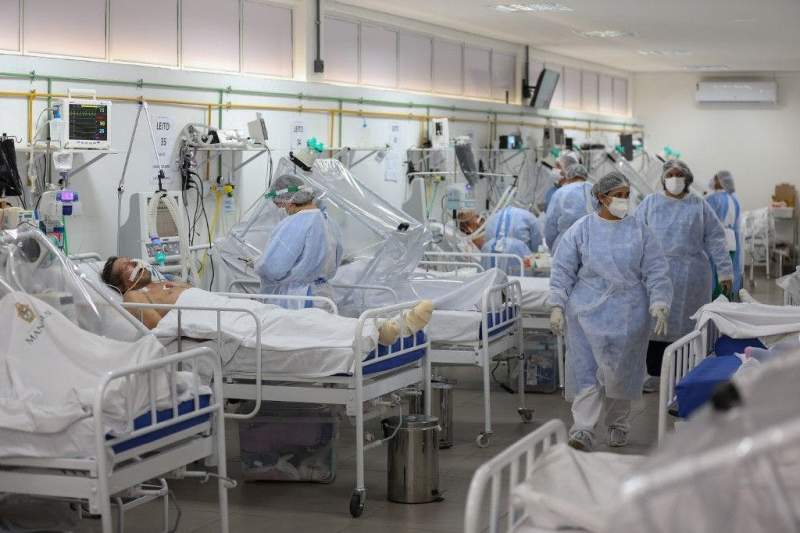
Two other variants of concern have been identified—K417T and E484K—because they appear to be associated with this variant’s resistance to neutralization by antibodies induced by other viral lineages; this is referred to as immune escape. This phenomenon has been described using monoclonal antibodies (For E484K ; for K417T ). Resistance to neutralization by antibodies may be associated with reduced effectiveness of acquired immunity against viral transmission and reduced protection against the progression of the infection to a pneumonic form. Data from Brazil suggest that reinfections are Indeed, cases of 25 to 61% are more common with this P.1 variant . Data from Manaus indicated that approximately 78% of the population was immune to SARS-CoV-2 when this variant was identified in December 2020. From that point on, Manaus experienced its worst wave of COVID, with four times as many cases as at the peak of 2020, and hospitals so overwhelmed that they ran out of oxygen for their intensive care units. During this massive surge, 28% of the cases were attributed to reinfections with the P.1 variant . This suggests that reinfections associated with the P.1 variant are common; but it also indicates that, despite a population with 78%-level immunity, herd immunity appears to have been completely ineffective not only against reinfections but also against severe cases of COVID.
This raises the question of the vaccine’s effectiveness against this variant. At this stage, little or no clinical data is available. The J&J vaccine is often cited as being 85% effective against severe cases associated with the P.1 variant. This is incorrect. One need only read page 37 of the filing submitted by J&J to the FDA (U.S. Food and Drug Administration) to see that no cases associated with the P.1 variant was not observed during clinical trials ; these were cases associated with the original Wuhan-H1 D614G strain, as well as the P.2 variant (which carries neither the N501Y mutation nor the K417T mutation). For mRNA vaccines or the AstraZeneca vaccine, no clinical studies have yet evaluated their efficacy against the P.1 variant. Therefore, only studies in vitro . For AstraZeneca’s adenovirus-vector vaccine, there is only one viral neutralization study available in vitro , showing a reduction in this neutralization by a factor of 2.9 . The impact of the P.1 variant on the humoral immunity induced by this vaccine therefore appears to be much less than that of the South African B.1.351 variant, which causes a 9-fold drop in neutralization! For mRNA vaccines, The reduction in viral neutralization varies by a factor of 2.6 , whereas it decreases by a factor of 7 to 9 with the B.1.351 variant. The P.1 variant may therefore be better «covered» by current vaccines than the South African B.1.351 variant, which demonstrates a high capacity for immune escape. The good news is that the 2.0 vaccines currently under development against the South African variant B.1.351 should provide satisfactory cross-protection against the P.1 variant. In fact, a recently published study suggests that individuals immunized against the B.1.351 variant possess antibodies which are three times more effective at neutralizing the P.1 variant .
As for cellular immunity mediated by CD8+ T lymphocytes, although it does not protect against the development of severe forms of COVID-19, it is correlated with survival in these severe cases. At this time, few studies have been published on the impact of these variants on cellular immunity. However, the data available to date do not show any impact from mutations in the B.1.1.7 or B.1.351 variants, or P.1 on the targets (epitopes) of CD8 T cells .
Finally, in terms of virulence and lethality, although epidemiological data have not confirmed any changes, Brazilian doctors and scientists are relentlessly warning the international community about a massive wave of the epidemic that has now spread throughout Brazil due to the P.1 variant . The country is experiencing a record death toll Meanwhile, the strain on hospitals is so severe that nearly 80% of intensive care units are now unable to admit new patients. Doctors are also reporting a significant mortality rate in patients aged 20 to 30 with no comorbidities .
Will screening travelers be essential to prevent the Brazilian variant from spreading in France? What can we learn from the past experience with the British variant, which we were unable to stop due to a lack of health screenings at the borders? Claude-Alexandre Gustave: On this point, we always come back to the same requirements, the same measures that we still haven’t implemented after a year of the pandemic. It is therefore worth revisiting these issues, but doing so feels futile because it is clear that these measures will once again not be enforced, and that France will soon have to contend with the pressure posed by the South African B.1.351 and Brazilian P.1 variants in the coming months. These two variants are already established in the country. Their spread has therefore already begun locally. Initially, they were likely imported into the country much less frequently than the British variant B.1.1.7. As a result, their spread is slower. They are also subject to stricter public health measures than other variants, which contributes to their slower spread. However, none of this will be enough to protect us from these variants in the long term.
The first key point is border control to prevent the importation of cases associated with these variants, and thus avoid «fueling» their local spread. Border control cannot be achieved through screening tests (and certainly not with simple antigen tests, which have a sensitivity of only about 60%), but rather through the quarantine of all incoming travelers (with testing serving only to direct those who test negative to a hotel and those who test positive to a medical facility). The duration of this isolation must be at least 14 days, as the period of contagiousness associated with these variants is longer than that observed with the «historical» strains. Some countries in Southeast Asia have extended this isolation period to 21 days.
Second, to combat at the local level the spread of transmission chains already active in the area. This depends on testing and sequencing capabilities (which should be a priority not only to address these variants but also to prepare for future mutations). Since only about 30% of infections are detected, testing alone is not sufficient. It must therefore be combined with contact tracing—not manual and self-reported (which is inherently ineffective and highly incomplete), but automated and digital (enabling very extensive detection of close contacts, including among people whose identities are unknown to the index case).
Finally, the only measure that can effectively break the chain of transmission is the isolation of infected individuals and their close contacts. This isolation must last at least 14 days.
As always, we consistently see a combination of border management and international trade, along with the “test, trace, isolate” approach, which could also be supplemented by wastewater monitoring to expand the detection of variants at the population level. It must be acknowledged, however, that these approaches appear to have been definitively abandoned in France, where the decision has been made to live with the virus, even with a high level of community transmission. We will therefore likely face a sharp rise in the spread of the B.1.351 and P.1 variants in a few months, particularly once the population has been largely immunized (which will confer a selective advantage on variants capable of immune escape). All we can do now is keep our fingers crossed that the vaccines will at least be effective against the mortality caused by these variants.
Are there currently border controls in France to prevent people who have tested positive (and who may be carriers of a variant) from entering the country? Christophe Daunique: Health screening at the borders has generally been inadequate in France since the start of the epidemic. Today, health screening is officially in place, as described on the website https://www.diplomatie.gouv.fr/fr/conseils-aux-voyageurs/informations-pratiques/article/coronavirus-covid-19-31-janvier-2021 but it has several shortcomings:
It is not legible. The page mentions a distinction between travelers coming from a country within the European Economic Area and those coming from a country outside the European Economic Area and other than Australia, South Korea, Israel, Japan, New Zealand, the United Kingdom, and Singapore—but at no point are the specifics of this latter category (Australia, South Korea, etc.) clearly outlined. This last category, in fact, makes no sense from a public health perspective, since it includes countries with a “Zero COVID” strategy—such as Australia and New Zealand—which therefore have no cases, as well as countries that had to impose strict lockdowns in response to a surge in infections, such as the United Kingdom and Israel. It’s too lax. While there is a PCR test, it doesn’t provide an absolute guarantee against infection. I’d also like to point out that a family returning from the United Kingdom to Marseille for the holidays infected several people despite two negative PCR tests. True safety would require a 14-day quarantine, but this is not mandatory. In fact, the page only mentions a sworn commitment to self-isolate for seven days upon arrival in France, followed by a second virological screening test (RT-PCR) at the end of that seven-day period. With such wording, the requirement can only be considered a light one. Furthermore, even if it were followed, the quarantine period is far too short. Without access to the decision-making process, I can only speculate on why the French authorities have refused to implement this health screening at the borders:
Doubts about the effectiveness of the measure given the country’s epidemiological situation. Strictly speaking, the arrival of infected travelers will not fundamentally alter the dynamics of the epidemic, since it is already widespread in our country. This could, in fact, justify the differentiated approach for countries within the European Union. On the other hand, this is absolutely not justified for travelers coming from areas where dangerous variants exist, such as Brazil or South Africa. I would also like to point out that the Scientific Council suspects a soldier returning from Mayotte of being the source of the South African variant in Moselle. There are doubts about the effectiveness of the measure in the absence of European coordination on the issue. Without harmonized border controls for European travelers and the opening of land borders in Europe, the measure is indeed less effective, since it is still possible for a traveler to “shop around” for less stringent controls by choosing a country with looser regulations to arrive by plane and then crossing land borders to reach the country of their choice. However, this is a defeatist stance. France would be better off advocating for the harmonization of controls at the European level rather than passively accepting the arrival of variants. An ideological reason that I cannot entirely rule out. Closing borders is associated with far-right rhetoric—wrongly, in my view—and the government has always been reluctant to close them on the grounds that the virus knows no borders. This is factually incorrect. Since the virus is carried by people, limiting people’s movement effectively reduces the spread of the virus, and this is even more true when it comes to variants originating in specific countries. https://www.bfmtv.com/sante/variant-sud-africain-en-moselle-le-patient-zero-un-militaire-de-retour-de-mayotte_AN-202102240468.html
Are quarantine measures being followed? Christophe Daunique: Currently, there appear to be two types of quarantines, according to the MAEE website
A 40-day quarantine for people who were unable to take a PCR test before departure and who must remain in isolation for seven days at a hotel on a list approved by French authorities. A 40-day quarantine based on a sworn statement to self-isolate for seven days, which can therefore, in principle, be carried out somewhere other than a hotel—for example, at home if the traveler has a residence in France. In the absence of public information on the subject, it is difficult to be certain about the effectiveness of the quarantine, but two subtle signs lead me to believe that it is, in fact, completely ineffective:
Tweets on Twitter in which people cite examples of others returning from high-risk areas who reportedly were not subject to any screening; Even more concerning is a recent investigation featured on a television news program in which a reporter contacted one of these well-known hotels to inquire about the situation and was told that there was only one person in quarantine. Once again, without access to the decision-making process, I can only speculate about the French authorities’ refusal to implement these quarantines
A resource issue. Implementing mandatory quarantine requires a whole logistical process to screen people upon arrival, transport them to the quarantine facility, and ensure they comply with quarantine requirements while there. The authorities may have concluded that resources were insufficient to devote to this measure, the usefulness of which they do not fully appreciate. A legal issue. I’m not sufficiently familiar with the law in this area, but it must be acknowledged that this quarantine represents both a cost—since the traveler must pay for the hotel—and a restriction on personal freedom, as it prevents the traveler from moving about freely. Perhaps the legal basis is too weak under current law, even for foreign nationals. I can only hope that an in-depth legal analysis will be conducted on this matter, but assuming that current law does not permit it, it would seem appropriate to me for the law to evolve so that it does, for example, by linking it to a public health emergency. Here again, a European approach would make sense to ensure a minimum level of regulatory convergence. An ideological problem, partly linked to the legal issue, in which authorities no longer dare to use law enforcement to enforce compliance, even though current public health conditions would justify doing so. Which countries could we look to for inspiration when implementing health screenings at the borders? Christophe Daunique: To identify model countries, we need to look at those that have successfully managed the pandemic. Off the top of my head, I think of the countries with a “Zero Covid” strategy in Asia and Oceania. The cases of Australia and New Zealand, with their mandatory quarantines, have already been discussed in other newspapers, so I won’t go over them again. One country that strikes me as particularly interesting in this regard is Vietnam, which I write about regularly—and to which I’ve actually dedicated an article. Without going into detail, here’s what I think is essential to keep in mind:
The country's borders are closed, including its land borders, and the military has been deployed. Only Vietnamese nationals and foreign experts are allowed entry. The 14-day quarantine is mandatory for anyone returning from abroad, with no exceptions; therefore, this also applies to Vietnamese nationals. It never takes place at home but rather at two types of dedicated facilities: either military facilities with basic amenities but very low costs, or dedicated hotels, generally 4-star. This is the model France could draw inspiration from for air travelers. The authorities handle all logistics from arrival in the country to departure from the quarantine hotel: travelers are transported to the hotel by bus while wearing protective gear; their luggage is disinfected; the elevator used to access the rooms is reserved exclusively for travelers; the room is reserved for the traveler, who is strictly prohibited from leaving it for 14 days, and meals are delivered to the door without any contact with staff to minimize risks During their stay, travelers are tested twice using PCR. They may only leave if both tests are negative. Quarantine hotels are under constant surveillance by police and medical staff. All expenses are the traveler's responsibility: health insurance to cover medical expenses in case of illness, PCR tests, and lodging (approximately 100 $ per night). In everything I have just described—everything related to logistics from the moment an air traveler arrives in France—it seems to me that this is practically feasible for a country like France, especially given that hotel capacity is high at the moment. The simplest solution would be to automatically direct foreign travelers to hotels at the airport where they arrive to undergo quarantine. One could imagine that border police would be in charge of this system, with medical support.
All countries with effective border health screening use quarantine hotels to minimize risks. Another potential option would be to isolate people in their homes if they have one, but this involves managing the risk associated with transporting the person from the airport to their home and then ensuring that they actually comply with isolation requirements. However, such monitoring does not currently exist in practice for patients, so this would amount to taking a significant risk.
With regard to land borders, it is clear that implementing such a system would effectively entail their physical closure, which would have enormous collateral impacts. On the other hand, it might make more sense at the EU’s external borders.
Finally, in conclusion, France could also draw inspiration from the border quarantine models implemented in the United Kingdom and Ireland. It should also be noted that Ireland targets specific countries based on risk and has therefore added Brazil and South Africa to its list of affected countries.
https://www.lemonde.fr/planete/article/2021/02/15/covid-19-comment-l-australie-et-la-nouvelle-zelande-reussissent-a-eradiquer-le-virus-sur-leur-territoire_6070019_3244.html
https://www.rfi.fr/fr/europe/20210322-irlande-quinze-jours-de-quarantaine-%C3%A0-l-h%C3%B4tel-pour-des-passagers-venant-de-l-%C3%A9tranger