




Frantz Fanon, the Rebellious Humanist: Between Psychiatry and Politics, a Legacy That Lives On.
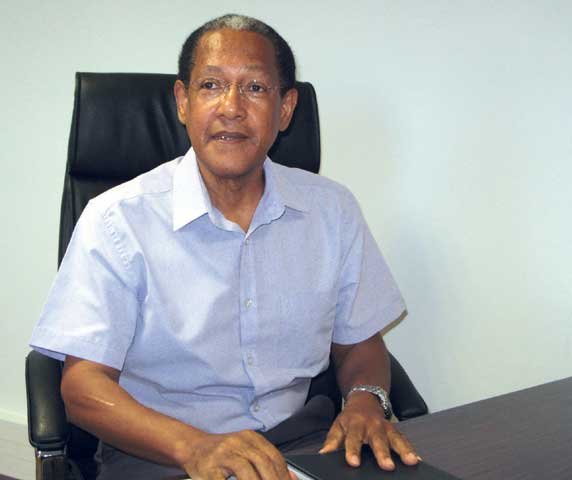
The international symposium on ethnopsychiatry, held at the Maurice-Despinoy Hospital Center, provided an opportunity to revisit a central figure in anti-colonial thought and humanistic psychiatry: Frantz Fanon. Among the speakers, Dr. Alex Bottius, a hospital psychiatrist and former department head at the CHMD, offered valuable insights into the evolution of psychiatry in Martinique and Fanon’s enduring influence.
Before Fanon: Imprisonment as a Paradigm
«Before Frantz Fanon, the treatment of mental disorders was based on a logic of exclusion,» Dr. Bottius recalls. Patients were institutionalized in asylums, isolated, dehumanized, and treated as mere medical objects. This form of medicine, which failed to see or listen, was part of a system of domination that viewed madness as a social nuisance to be contained rather than as suffering to be understood.
A Humanist Revolution
With Fanon, and alongside figures such as Maurice Despinoy at Saint-Alban Hospital, a major turning point took place. A new approach to care took hold: placing the individual at the center of the therapeutic process, reestablishing the connection with the family, and considering cultural determinants in the analysis of symptoms. «Fanon gave a face back to those who had been made invisible,» says Dr. Bottius. This psychiatric revolution also became a political one.
Psychiatry and Politics: An Inseparable Link
For Fanon, colonial psychiatry was not neutral: it actively contributed to oppression. «He sought to overturn a psychiatry that served the purposes of domination,» Bottius emphasizes. In Algeria, his political and therapeutic commitment was aimed at de-alienation—not only of patients but also of colonized peoples. Fanon and Despinoy waged this struggle on two fronts—in Algeria and in Martinique—driven by a shared desire for liberation.
A legacy that is still very much alive in Martinique
Fanon’s legacy lives on in current practices, even though, according to Dr. Bottius, «there is still resistance, deep-seated prejudice, and a difficulty in fully accepting mental disorders.» The Fanonian model continues to call for a more open form of psychiatry, rooted in the patient’s social and cultural reality. The challenge is to make psychiatry a tool for liberation rather than marginalization.
A a centennial to celebrate
Dr. Bottius calls for celebrating «an exceptional destiny, a universal commitment.» For Fanon, a native of Martinique and an internationalist activist, is part of the global history of emancipation. His work remains a guide for all those who refuse to separate care from dignity, or politics from humanity.