



«Producing is never easy. Consuming is so much easier!»
In response to the GDC article on the four barriers hindering Martinique’s food sovereignty, Maurice Laouchez believes that these obstacles could be overcome provided there is genuine political will, reflected in a specific development plan.
According to Maurice Laouchez, the four barriers identified by GDC are not insurmountable obstacles. Overcoming them would depend above all on a clearly stated commitment and its translation into a structured plan, complete with objectives, resources, and a timeline.
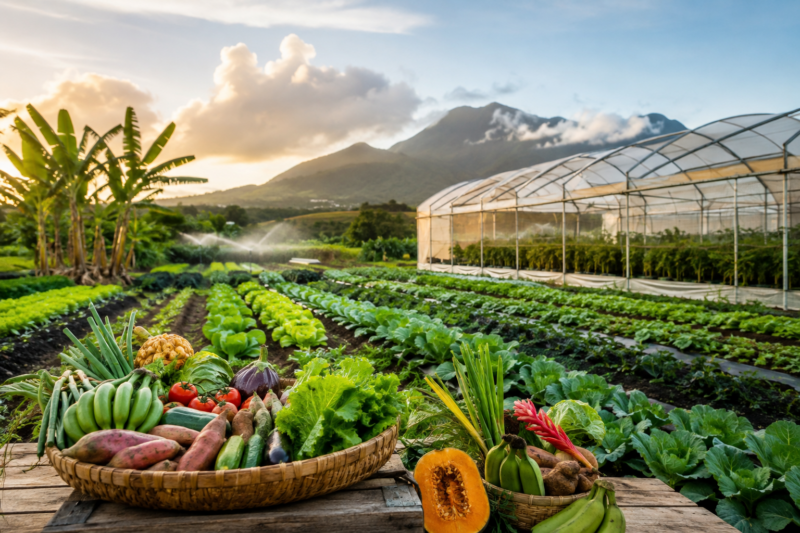
With regard to agricultural land, he believes that 2,000 hectares would be more than enough to launch an ambitious food self-sufficiency policy. According to him, Martinique has approximately 15,000 hectares of fallow land. He therefore believes it should be possible to identify, among these areas, land suitable for food crops and free of chlordecone contamination.
He does not believe that the balance of power between local producers and large retailers is set in stone either. In his view, farmers who are organized collectively and able to guarantee consistent volumes, organic quality, and competitive prices over the long term could quickly strengthen their position against imported products.
As for climatic constraints, Maurice Laouchez believes they can be mitigated through appropriate investments, particularly in irrigation and greenhouse cultivation. He cites the examples of Spain, Morocco, and Portugal, where difficult natural conditions have not prevented the development of productive agriculture.
For Maurice Laouchez, the real obstacle is therefore less technical than political and collective. Food sovereignty involves deciding to produce, structuring supply chains, and sustainably organizing the connection between local production and consumption.